
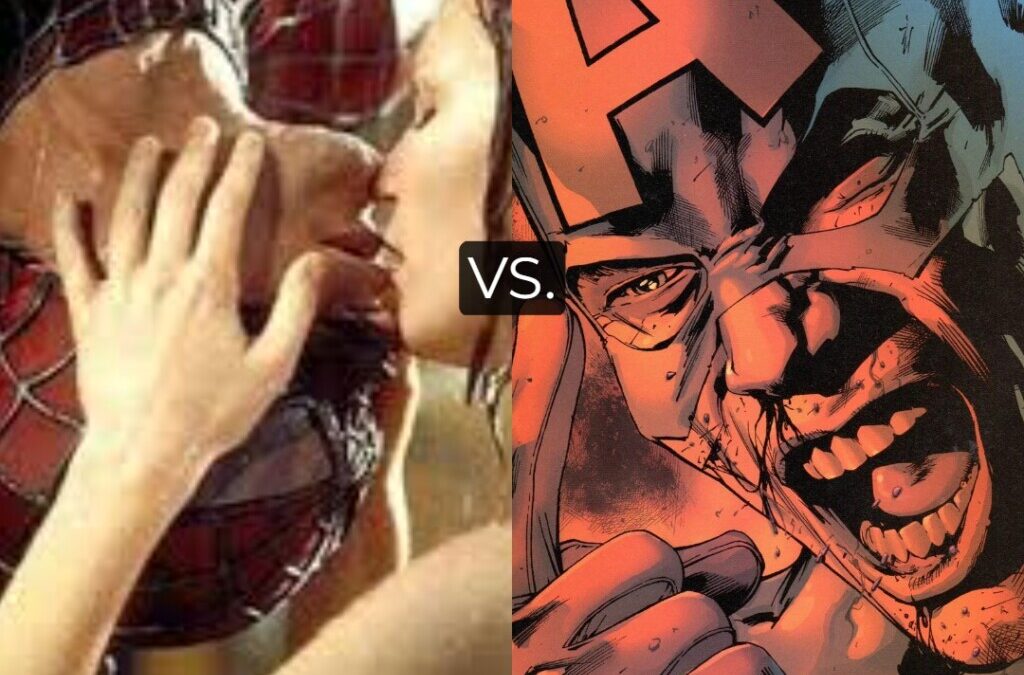
I am, for the most part, annoyed by the practice of pitting character depictions against one another.
You know what I mean: people arguing who’s the best live-action Batman between Michael Keaton, Christian Bale, Ben Affleck and Robert Pattinson instead of accepting that different versions of the characters did different things well. (Or acknowledging that the dearly departed Kevin Conroy put them all to shame with his voice alone. Mr. Conroy, we miss you, man.)
Because of this, it took me a while to warm up to Sam Raimi’s Spider-Man films. It’s nothing Sam Raimi did, but devotees of his Spider-Man films hold them in an almost religious regard, and make that clear in any comment section that mentions Andrew Garfield’s and/or Tom Holland’s respective tenures as Spider-Man, especially the latter.
But I did eventually warm up to Raimi’s films. That was in part because of the best quality of Raimi’s Spider-Man films: their sincerity.
There’s a lot to poke fun at in Raimi’s Spider-Man film trilogy, affectionately or maliciously. See: r/raimimemes. Many special effects have aged poorly—you have intentionally funny moments like Peter asking J. Jonah Jameson to pay him in advance and whatever this is, unintentionally funny moments like Tobey Maguire’s crying face or “I’m gonna put some dirt in your eye.”
But despite, or maybe because of, that goofiness, there’s a sort of earnestness from the Raimiverse that I don’t see much anymore, on the big screen or in real life.
What I do often see reminds me of another Marvel property released around the same time as Raimi’s first Spider-Man flick: The Ultimates.
In 2000, Marvel launched Ultimate Marvel, a reboot universe which was supposed to simplify the teetering tower that was/is the Marvel Universe’s inner workings. The flagship title was The Ultimates, a rebooted Avengers team who fought terrorists and amongst one another rather than evil robots, alien tyrants and/or despots from the future. The man behind The Ultimates was notorious edgelord Mark Millar, author of The Unfunnies (a comic you Google at your own risk). Even if you’re not a devoted comic book fan, you might recognize a famous panel from The Ultimates, one that encapsulates the tone in a single drawing:
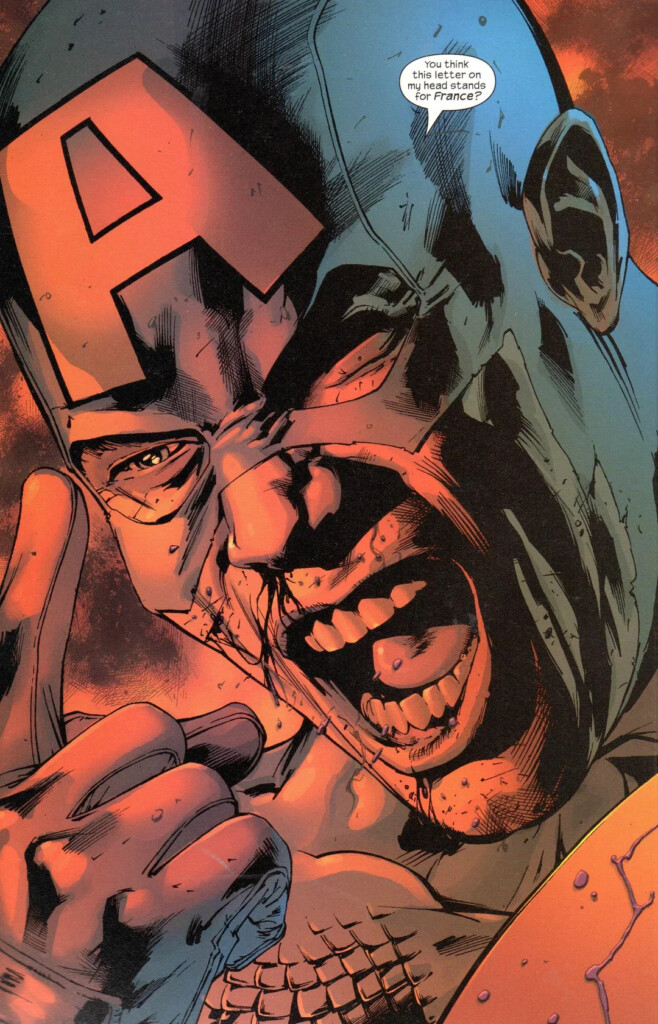
(Credit: The Ultimates vol. 1, #12, Bryan Hitch and Mark Millar)
We live in a world that’s more Ultimates than it is Spider-Man. A world where nonchalance, or the appearance of it, gives you “aura” and effort is seen as “cringe.” A world where the journey of finding your person has collapsed under the weight of “the ick,” ghosting, situationships, and man- and woman-hating social media discourse. A world where in TikTok comment sections, corporate accounts act like people and people act like corporations. A world where everything is trying to sell you something, make you angry about something, convince you of something, or keep you engaged long enough so that they can get data on you to better sell you/make you angry about/convince you of something. A world where bot accounts [allegedly] outnumber flesh-and-blood human beings on social media, anything that goes viral immediately has people finetooth combing it to see if it’s AI, and politicians have worn the public’s trust so threadbare that acts of political violence are dismissed as false flag operations before the news outlets can even get proper headlines together.
It’s a cynical, disillusioned, continually disappointed world we live in. Which is why I want to live life more like Tobey Maguire’s Spider-Man.
The Maguireverse isn’t a place free of hardship or tough stuff. No film universe that contains this, this or this can be called happy-go-lucky. And that’s only talking about content. Throughout the trilogy, Peter struggles. His story starts with him as the school punching bag. When he first gets his spider powers, he tries to use them to make some money in pro wrestling, but the promoter shorts him. Peter does nothing when the promoter is robbed, and it costs him when the same robber (we’re initially led to believe) kills his beloved Uncle Ben in a carjacking. He struggles to find steady employment, in his relationship with Mary Jane, in supporting Aunt May. His best friend Harry Osborn, believing Peter killed his father the Green Goblin, first torches their friendship, then becomes the second Green Goblin to try and avenge his father. In the second film, his powers fail him entirely. All the while, Peter’s good deeds are misconstrued by J. Jonah Jameson and the Daily Bugle.
Yet, with every reason to become bitter or more self-serving, and with powers that means no one could stop him taking what he wants or needs by force, Peter never gives up and never stops being a good person.
When the Green Goblin tries to force a choice on him—save Mary Jane or save a cable car full of kids—Peter manages to rescue both. He tries to appeal to the human sides of Doctor Octopus and Venom. With no powers, Peter charges into a burning building to rescue a little girl trapped inside.
And the sincerity of good people doesn’t stop at Peter.
J. Jonah Jameson is a grouch, but when the Green Goblin attacks the Daily Bugle looking for Peter, Jameson covers for him, even with the Goblin’s fingers around his throat.
When the Green Goblin tries to trap Spider-Man in an ultimatum, it’s regular ol’ NYC citizens providing a distraction that lets Peter rescue all of the endangered parties. Similarly, after saving a runaway train, passing out from the effort, and losing his mask, the passengers help Peter in through a broken window, making a silent gentleman’s agreement to keep Spider-Man’s identity a secret, and form a human blockade when Doctor Octopus bursts in seeking round two.
When Peter, under the influence of the Venom symbiote, loses his temper with his landlord, Mr. Ditkovich trusts Peter’s character. “He is a good boy,” he tells his shocked daughter. “He must be in some kind of trouble.”
Sandman, once he realizes Spider-Man is Ben Parker’s nephew, tearfully reveals he was Uncle Ben’s killer, albeit by accident. He apologizes for the hole he left in Peter’s life, and Peter in turn forgives him.
And Harry, still grieving the loss of his father, reconciles with Peter, saves him when Sandman and Venom have him dead to rights, and ends up sacrificing himself so Peter and Mary Jane can live to see another day.
Sincerity, kindness, and selflessness beget sincerity, kindness, and selflessness.
Here’s the thing about cynicism: it’s self-reinforcing.
Some self-serving jerk screws over everyone around them. The people ground under their gears see this horrible human being living a great life and let their anger fester. What’s the point of being a good person when bad people don’t try to hide their badness and are rewarded for it? Consciously, via throwing away their morals, or unconsciously, by letting their resentment take the wheel, people emulate the people who hurt them.
Psychological projection poisons the world in ways no one seems to be talking about. People refuse to believe kind people and good Samaritans have no ulterior motives, because the only way they could motivate themselves to do something nice is by attaching strings to it. People cheat and retroactively justify it by saying “monogamy is impossible” when what they really mean is “monogamy is impossible for me.” People sneer and dismiss activists and movements as “virtue signalling” because if they ever supported a good cause, they would be putting on a performance. Edgelords like Mark Millar (or who he was—credit where credit’s due, he’s come down off his edge horse in recent years) make their versions of comic book characters into barely-heroic headcases because they would be barely-heroic headcases if they had the super-serum or Iron Man’s armor.
Cynical, self-serving people’s brains short-circuit at the sight of sincerity. And, to make this cynical, disillusioned, continually disappointed Ultimates-esque world not those things, we need more sincerity all around.
Gratefully, I’m starting to see more of it.
Last summer, Superman demonstrated my point. Grifting right-wing influencers hypnotized their listeners into thinking Superman was wOkE pRoPaGaNdA. Those who actually saw it (coughMEcough) were touched by the film’s Raimiesque earnestness. Superman, even when the public turns on him and his whole identity’s kicked out from under him, never wavers in using his power to make the world a better place.
I started drafting this in March, only two months into Zohran Mamdani’s mayorship of New York City. Seven months in, Zohran has both Republicans and establishment Democrats quaking in their boots as he shows how easily politicians can make their constituents’ lives better when their focus isn’t punching down on minorities, maintaining the status quo, and/or lining their pockets with AIPAC money.
In conclusion, I think I have a new question to ask myself: do I want to live in a world that seems like it’s written by Mark Millar
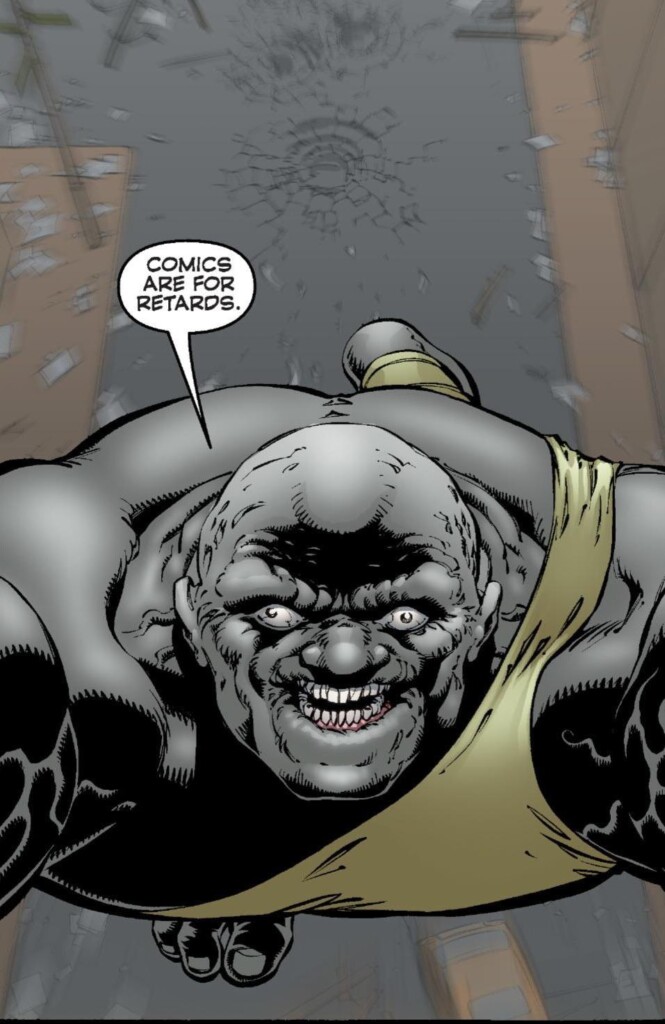
(Credit: The Authority Vol. 1, #14, Mark Millar)
or a world that seems like it’s directed by Sam Raimi?
One more comic panel I couldn’t figure out where to insert, but it’s relevant, both because of the point and the guy who wrote it: Mark Waid, who made a name for himself writing lighthearted stories in the middle of the edgefest 90s.
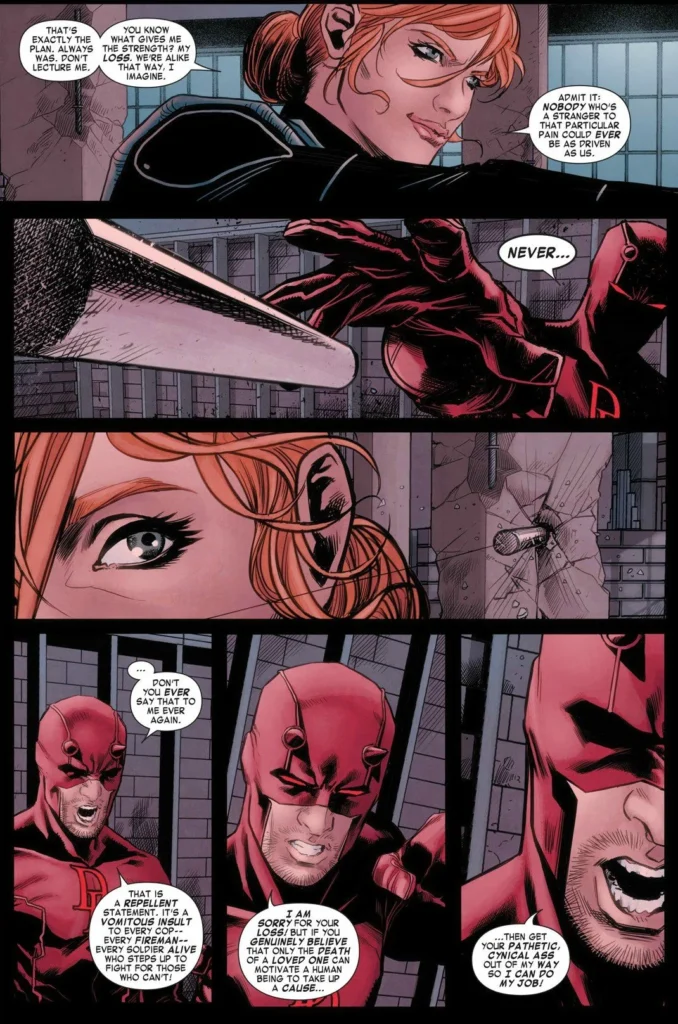
(Credit: Daredevil #11–The Omega Effect, part 3, Mark Waid)

Noah Keene graduated from Calvin University in December 2021 with a major in creative writing and a minor in Spanish. He currently resides in his hometown of Detroit, Michigan. He spends his free time reading and putting his major to good use by working on his first novel. See what he’s reading by following him on Instagram @peachykeenebooks and read his other personal writing by going to thekeenechronicles.com.


That Doc Oc hospital room scene absolutely gave me nightmares in my youth. Thanks for the commentary, Noah.