
Let’s start out with something cheery, shall we? I’ve been pondering death this week.
It just sort of kept coming up, and I got to thinking a little too much. First, I was working on the reflection I’ve been asked to give at Professor Vande Kopple’s memorial service today. It’s been nice, actually, pulling together a few thoughts to say in front of a group of people who loved and admired him as much as I did.
Then on Monday, a Michigan state trooper was shot and killed when he pulled over a car for a routine traffic stop. Local news sources went crazy, covering the reactions of people all across the state, digging into the criminal records of the suspect, and basically telling the trooper’s life story to the world.
And yesterday was the anniversary of September 11, 2001. Speeches were given, wreaths were laid, and names were read. Two pillars of light shone up into the New York sky where the towers once stood.
At the convergence of these three events, I began to think about how we commemorate those who have died. It’s a little bit different for each situation, isn’t it? I’m not sure that I have anything profound to say about this, but it’s an interesting place to go. Why do we fly the flag at half mast for some deaths, but not others? Do we commemorate the death of someone innocent in the same way as someone who has done us wrong? What kind of legacy does one have to leave in order to get his picture on the news?
No one who has been part of the Calvin English department in the past decade or so will have any trouble remembering Professor Vande Kopple. A service is being held at Calvin this afternoon, and we’ll laugh and cry and share stories as a community. I’ll post the reflection I’ve written for the service below, but take a few moments today to do some of your own commemorating of Vande Kopple or other people close to you who have died. It’s not always pleasant, but it certainly is important.
***
“Let me begin with something you already know. Calvin College English majors are a verbose and eloquent group of students. While a few of us might have come to college already accomplished and secure writers, most of us were taught and molded by the excellent professors in the department. We leave Calvin with more than enough confidence to express ourselves in any number of situations. We can do it easily, and perhaps even beautifully.
So when I sat down to write this reflection on the role that Professor Vande Kopple played in the lives of students, I knew right where to look for inspiration. I decided to go back and read the many Facebook and blog posts written by my classmates and other people who knew him.
That was a big mistake. Along with sending a crashing wave of sadness slash nostalgia down on me, reading those posts made writing this reflection exponentially harder. Because what, really, is left to be said after dozens, maybe hundreds, of English majors have gotten a hold of a subject like Professor Vande Kopple?
The answer, my friends, is not a whole lot. I can’t stand here and pretend that I have something uniquely poignant to say. And though I’ve been asked to speak here because I was a student of Vande Kopple’s, I can’t be the voice of the thousands of students whose lives he brightened. But what I can do is compile and pass on the words of my peers. All of the following comments were made by former students. This is what we loved, what we still love, about Professor Vande Kopple.
He was big and tall and loud. He didn’t do anything by halves. He listened. He gave us relationship advice, often unsolicited and with a wry smile. He taught us the difference between periodic and cumulative sentences. He tried to get us excited about fishing. He used his power as department chair to sign off on course substitutions because we just really wanted to take creative nonfiction instead of Victorian literature. He encouraged us to take risks. He danced with us. He laughed at our bad jokes and puns, and asked us to write more. He told us stories. He praised our successes and ignored our failures. He threw snowballs at us. He wrote our recommendation letters. He celebrated when we got jobs or grad school acceptance letters. He sent us thoughtful and silly Facebook messages. He suggested books to us. He talked to us about God.
I could go on and on and on. But far and away the most common note made by students and colleagues of Professor Vande Kopple’s was that he listened and he encouraged. He had this way of making everyone feel like they were the most important person in the room. Almost every student who knew him has a story of sitting in his office, utterly confused or discouraged about something, and all of those stories end with Vande Kopple’s words of encouragement.
He and I talked about encouragement once, sitting on a sofa in the English department. He told me the etymology of the word “encourage.” “It comes from the old French, which comes from the Latin. It means, ‘to put the heart into,’” he said.
I love a good etymology, many thanks to Calvin’s lovely linguistics courses, and that one has stuck with me. Every time I write an encouraging note to a student or encourage a friend who’s struggling, I think about putting the heart back into them. Vande Kopple always seemed able to find the place where we lost our hearts, and then stick them right back into us.
I guess the only thing I can add to the volume of Vande Kopple tales, one thing that hasn’t been said, is a personal story.
It was a cold and sleety-snowy day in January on the New England Saints interim. We were wet and frosty from standing in the elements all morning, but we had another appointment close approaching. Our fearless leader Professor Schmidt was gone for the day, leaving Vande Kopple in charge. The group was a bit disheveled, and he seemed a bit at a loss for what to do. I volunteered to find the phone number for the next museum we were supposed to visit and ask them to push back our tour time a couple of hours so we could change into dry clothes and eat a warm lunch.
It was a simple thing to do, just making that phone call. But nothing good ever went unnoticed when Vande Kopple was around. He made it feel like I had saved the day. He mentioned that little act over and over in the next few days until I felt like a hero. He even bought me a book of Hemingway short stories as a thank you. On the first page, he wrote the day’s date and a note: “What would we have done without you?” it said.
All summer, I’ve been turning that phrase around. “What will we do without you, Vande Kopple?”
I think all that’s really left to do is pass on what he taught us. To share that Vande Kopple smile and willingness to listen. We can encourage our friends and families and teachers and students. We can do our part to put the heart back into the people we love.”
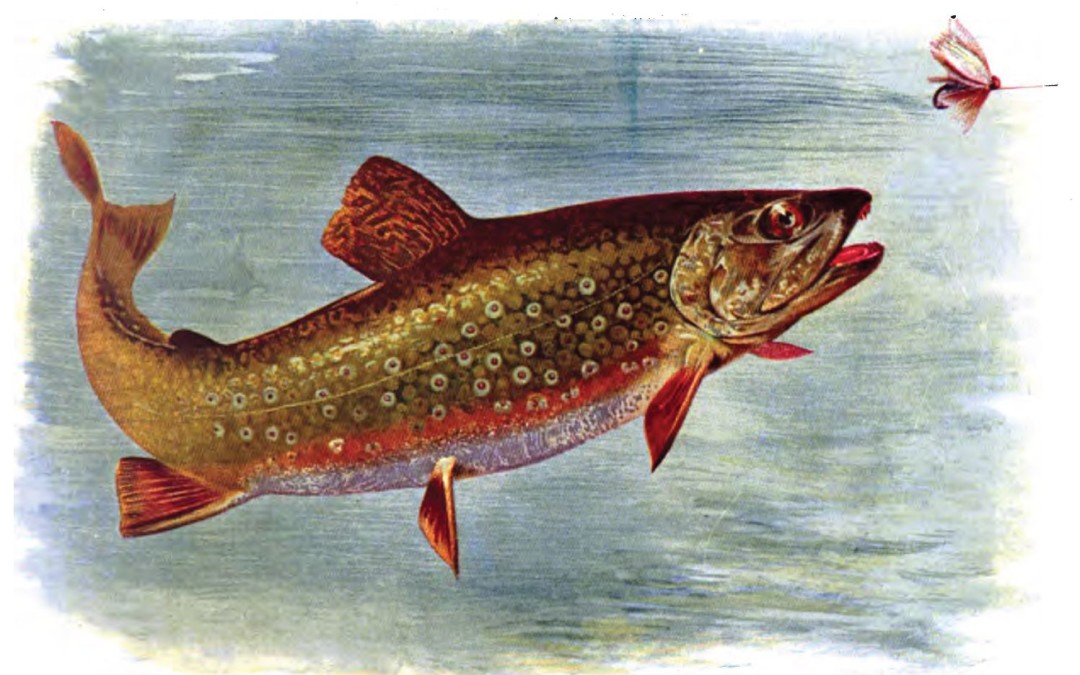
The photo accompanying this post is a fish because Vande Kopple loved to fish almost as much as he loved to teach. Okay, maybe even more.

Abby Zwart (’13) teaches high school English in Grand Rapids, Michigan. She spends her free time making lists of books she should read, cooking, and managing the post calvin.

