
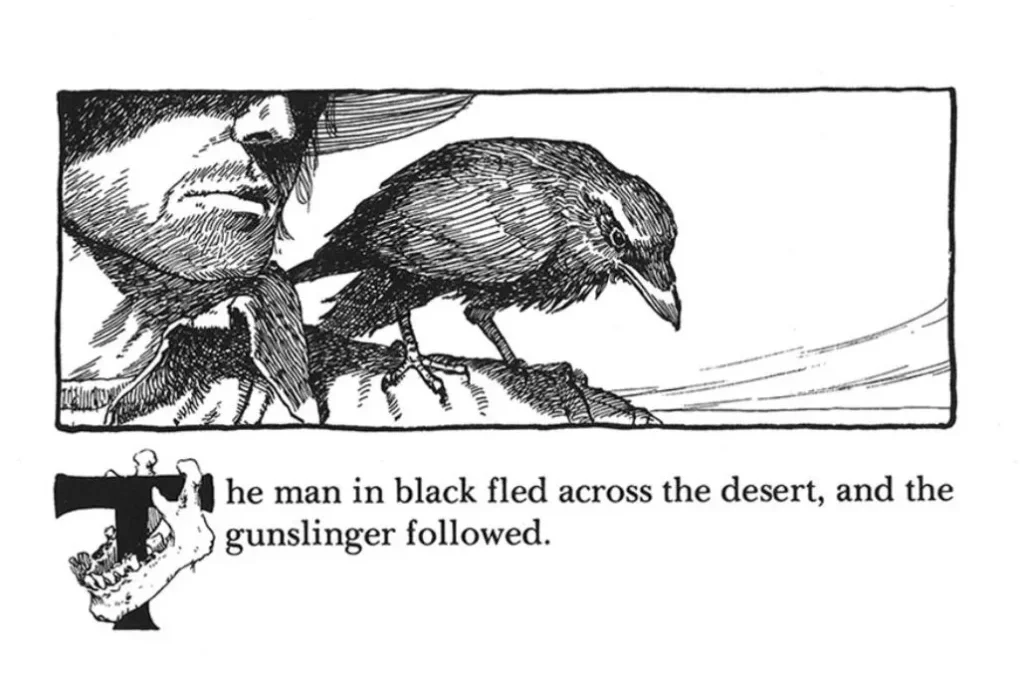
I finally started The Dark Tower. That’s going to be the only real difference between this versus the previous three.
Let’s go.
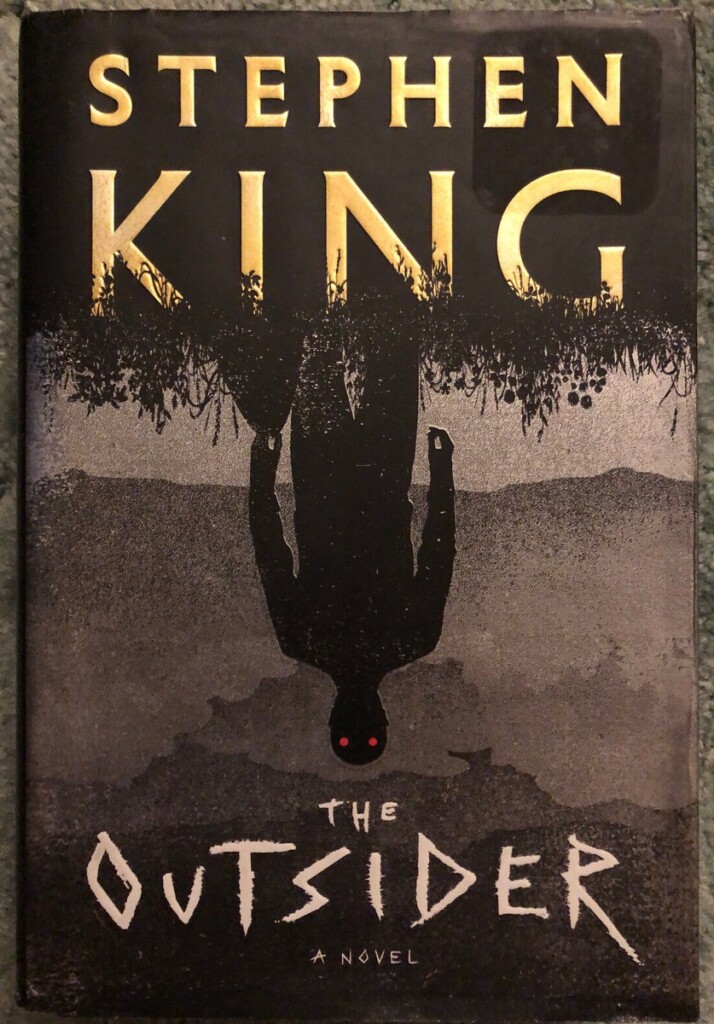
The Outsider (2018, 561 pages)
A seemingly open-and-shut crime turns into the strangest case of Detective Ralph Anderson of the Flint City Police Department’s career. A preteen boy is found horrifically raped and murdered in a local park, and multiple eyewitnesses saw Terry Maitland, a local teacher and the victim’s Little League coach, leaving the area soaked in blood. Ralph, whose son was coached by Maitland, eagerly arrests Terry at one of his baseball games.
And then the wrench: video evidence emerges showing that while Terry Maitland was supposedly tearing a young boy to pieces, he was also hundreds of miles outside the city at a teacher’s conference.
Terry Maitland was apparently in two places at once. …or was he?
As tragedies start to stack up, evidence of Terry’s innocence becomes clearer, and Ralph learns of more murders where the killer was seemingly in two places at once, he has to consider the unthinkable: he’s dealing with an Outsider.
Not a killer from outside the state or the country.
Someone–or something-from outside our known reality.
Brief review: The best Holly Gibney novel in my opinion. Also, spoiler alert: this is a sequel/spin-off of the Bill Hodges Trilogy (Mr. Mercedes, Finders Keepers, and End of Watch) with deuteragonist Holly Gibney taking lead.
I said in TSKB&WITOT III that End of Watch shoehorning in supernatural elements was worth it because it paved the way for The Outsider, and I stand by that opinion. Also, I’ve heard the HBO miniseries adaptation is pretty great. You could watch it for its good reception, or you could watch it to see what Cynthia Erivo looks like with long hair while not rocking green skin.
Good first King read? Depends. This is still great without the full context of the Bill Hodges Trilogy, but if you’re as fanatically devoted to reading King’s books in their release order as I am, read the prequels first.
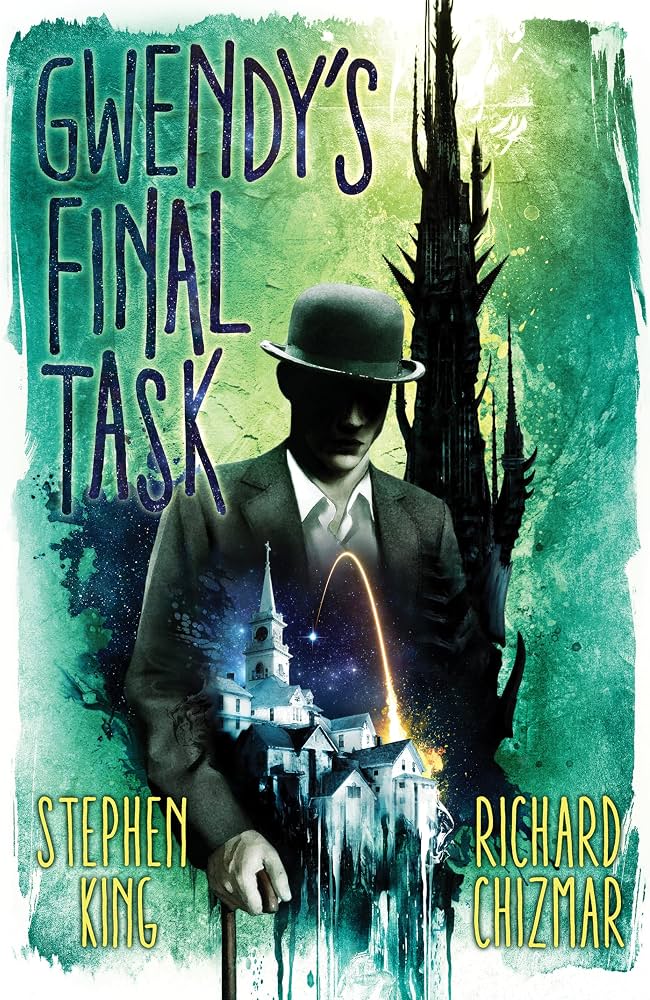
Gwendy’s Final Task (2022, 412 pages; co-written with Richard Chizmar)
As a young girl, Gwendy Peterson received a mysterious, powerful box from a strange man. She did her best to use the box only for good, but tragedy struck nonetheless. As a grown woman and freshman state representative, the box returned to Gwendy, and she used it to track down some girls who had gone missing and their captor.
Now, in her twilight years and as dementia begins to erode her faculties, Gwendy has the box once more. The box has grown more powerful and more malevolent over the years, and the man who’s given Gwendy the box time after time sees only one solution: hurl it into the void of space, where no one can use it. So Gwendy’s going on a trip in her favorite only rocket ship, weaving through bad guys to not have the box any more times.
Brief review: The Button Box trilogy is pretty great, and Gwendy’s Final Task is the best book of the trilogy. It features (in my opinion) one of Stephen King’s craziest endings, but not in the blood-and–gore way, more in the toss-the–finished-book-aside-and-ugly–cry kind of way.
Good first King read? No. Read Gwendy’s Button Box and Gwendy’s Magic Feather first. Duh.
The Dead Zone (1979, 402 pages)
A car accident leaves young English teacher Johnny Smith in a coma. When he wakes up five years later, he has brain damage, but also psychic powers. He can touch people or objects and see psychic flashes. Johnny doesn’t want to be a celebrity, no matter how many journalists beat down his door or how many grifters try to make him their money horse. He simply wants to start teaching again and return to his normal life. But when the police come to him for help in catching a serial killer, and shaking hands with an up-and-coming politician shows him horrific visions of the future, Johnny has no choice but to act.
Brief review: Another one I had to Google to jog my memory. I read it ten years ago, it happens. My memory’s refreshed. I liked it! King’s first try at sci-fi, and I think he did well. I’ve also heard the movie adaptation is pretty good. (I really need to start watching Stephen King adaptations so I can stop relying on word of mouth.)
Good first King read? Yes.
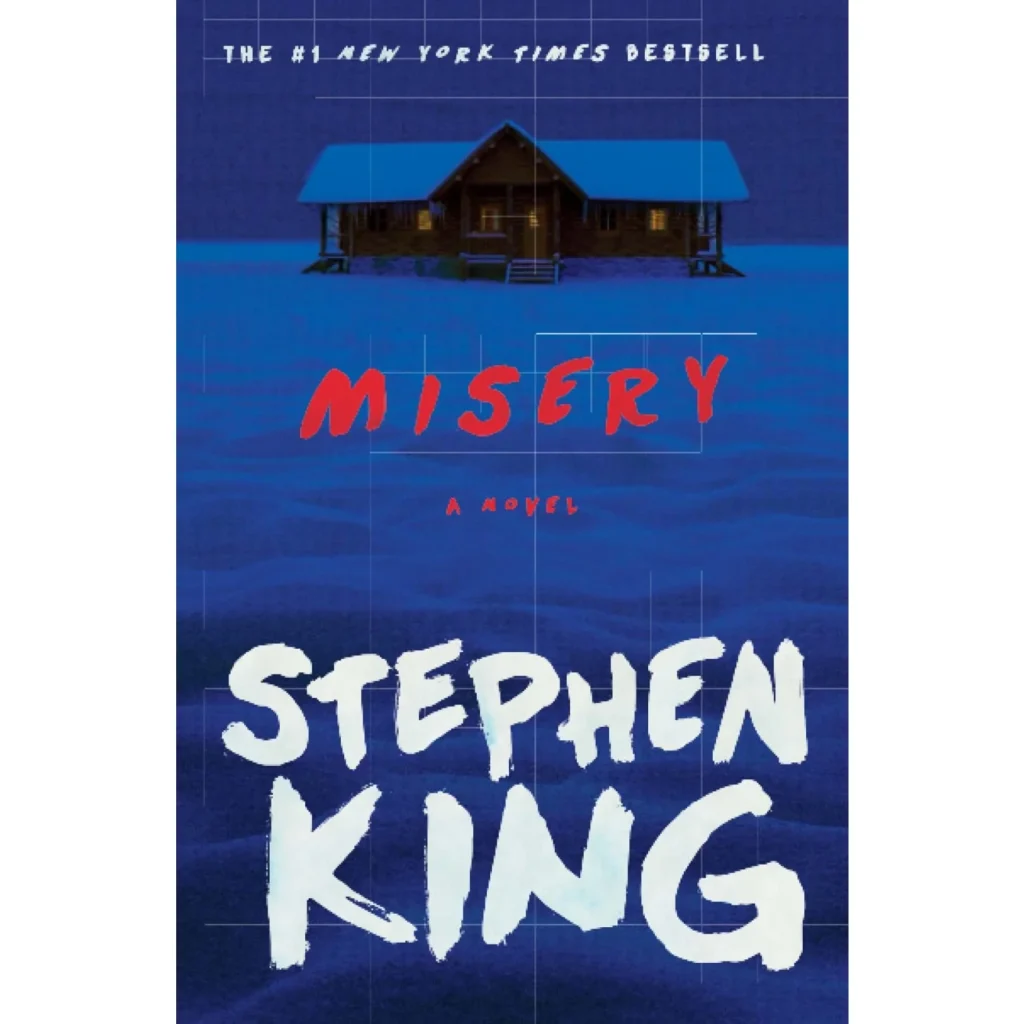
Misery (1987, 368 pages)
Bestselling novelist Paul Sheldon is about to bring his moneymaker, a series of Victorian romance novels following Misery Chastain, to an end. Or that was the plan before he crashed his car in a Colorado blizzard and woke up with shattered bones in a strange woman’s guest room.
His supposed savior, Annie Wilkes, is a huge fan of the Misery Chastain novels. She, to say the least, takes it poorly when she learns Paul intends to end the series and kill Misery off. Paul’s recovery room becomes a prison as Annie forces him to write a new novel, one where Misery survives. Paul’s living every celebrity’s worst nightmare: trapped somewhere no one can help him, at the mercy of a so-called “fan.”
Can Paul find his way to freedom?
Or will he make like Misery in his original manuscript?
Brief review: The book is definitely overshadowed by its Academy Award-winning movie adaptation, the one where Kathy Bates had the unenviable task of having James Caan for a co-star and earned her icon status by acting her butt off, the one that (say it with me now) I haven’t seen…yet.
Misery is one of King’s scariest books because it’s the truest to life. Celebrities are frequently stalked, and an unfortunate few have been killed, by their supposed “fans.” I’d argue Misery has gotten scarier with the years, with the worst of fandom culture showing how many Annie Wilkeses are out there. If Pet Sematary and Revival were horrifying for their content, Misery is horrifying because of its plausibility…which is why you should read this!
Good first King read? For sure.
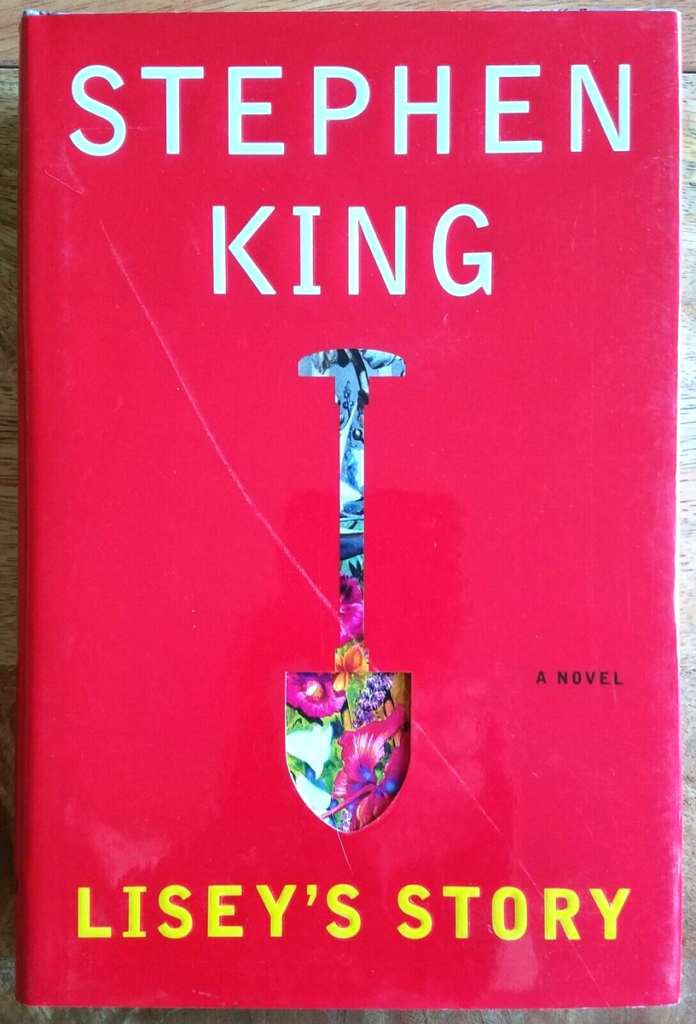
Lisey’s Story (2006, 513 pages)
It’s been two years since Lisa “Lisey” Landon lost her husband, bestselling novelist Scott Landon, to a mysterious illness. Only now does Lisey feel ready to begin cleaning out Scott’s office.
Lisey finds more than mementos and old writing notes as she roots through Scott’s things. She finds purposely forgotten memories. Memories of Scott doing the unexplainable. Stories of his awful childhood.
And indisputable evidence that the scariest, most unbelievable story Scott had to tell…was his own life story.
Brief review: Stephen King has gone on record saying Lisey’s Story is his favorite novel. It was inspired by his wife, fellow novelist Tabitha King, redecorating his writing office while he was in the hospital with pneumonia. King wondered what his writing office would look like after he was gone from this world, and that seed eventually grew into Lisey’s Story.
That being said, this is one of King’s more divisive outputs. The real fandom splitter is the baby talk: Lisey and Scott have their own nonsense language that’s essential to the plot, and it grinds some people’s nerves. I say: live with the baby talk, but fear the can opener. (If you know, you know.) A few years back, Apple TV adapted Lisey’s Story into a miniseries featuring wifey (Julianne Moore) as Lisey and Clive Owen as Scott. Haven’t seen it, although in this case it’s because I’m not shelling money out for an Apple TV subscription.
Good first King read? I mean, author’s favorite book. Do with that info what you will.
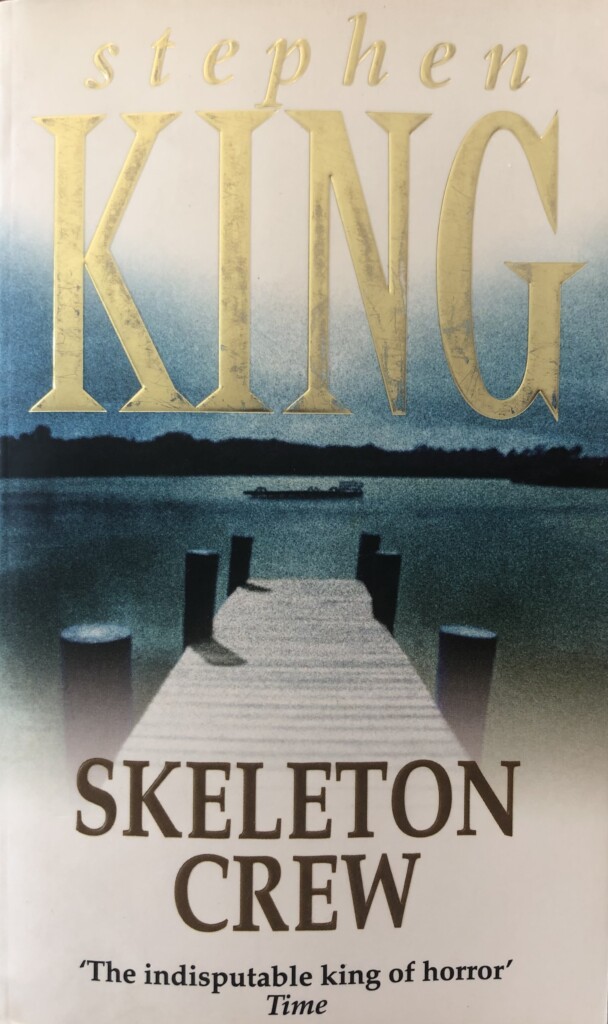
Skeleton Crew (1985, 672 pages)
Stephen King’s third short fiction collection and second short story collection. Contains some of his most famous stories, like “The Mist,” “The Jaunt, “The Raft,” and “The Monkey,” as well as a bunch of other stories without the naming convention of “The [Noun Out of a Grab Bag].”
Brief review: Stephen King had well-known problems with drugs and alcohol in the first few decades of his career. Having read my way through King’s nose candy era, this and IT feel the most like what someone would write while they had more powder than blood in their veins.
Like Night Shift from TSKB&WITAT: Spooky Season Edition, a bunch of these stories have been adapted. Unlike Night Shift, the form of adaptation varies. The stories “Word Processor of the Gods,” “Gramma,” “The Revelations of ‘Becka Paulson’,” and “Survivor Type” were made into (respectively) a Tales from the Darkside episode, an episode of The Twilight Zone’s 1985 iteration, an episode of The Outer Limits’s 1995 iteration, and a segment in the Creepshow series. “The Raft” was adapted into a segment of the same name in Creepshow 2. Frank Darabont, who also directed previous King adaptations The Shawshank Redemption and The Green Mile, adapted The Mist to film in 2007. “Gramma” received a second adaptation, Mercy, in 2014, starring Chandler Riggs of The Walking Dead fame and Dylan McDermott. Last year, Osgood Perkins adapted “The Monkey” into a film of the same name. Shocker: I haven’t seen any of them. I will say: apparently the Dead Meat YouTube channel has stepped their game up and gotten the rights to publish several horror movies in full on their channel, including The Mist and another King adaptation, 1408.
Good first King read? Yes.
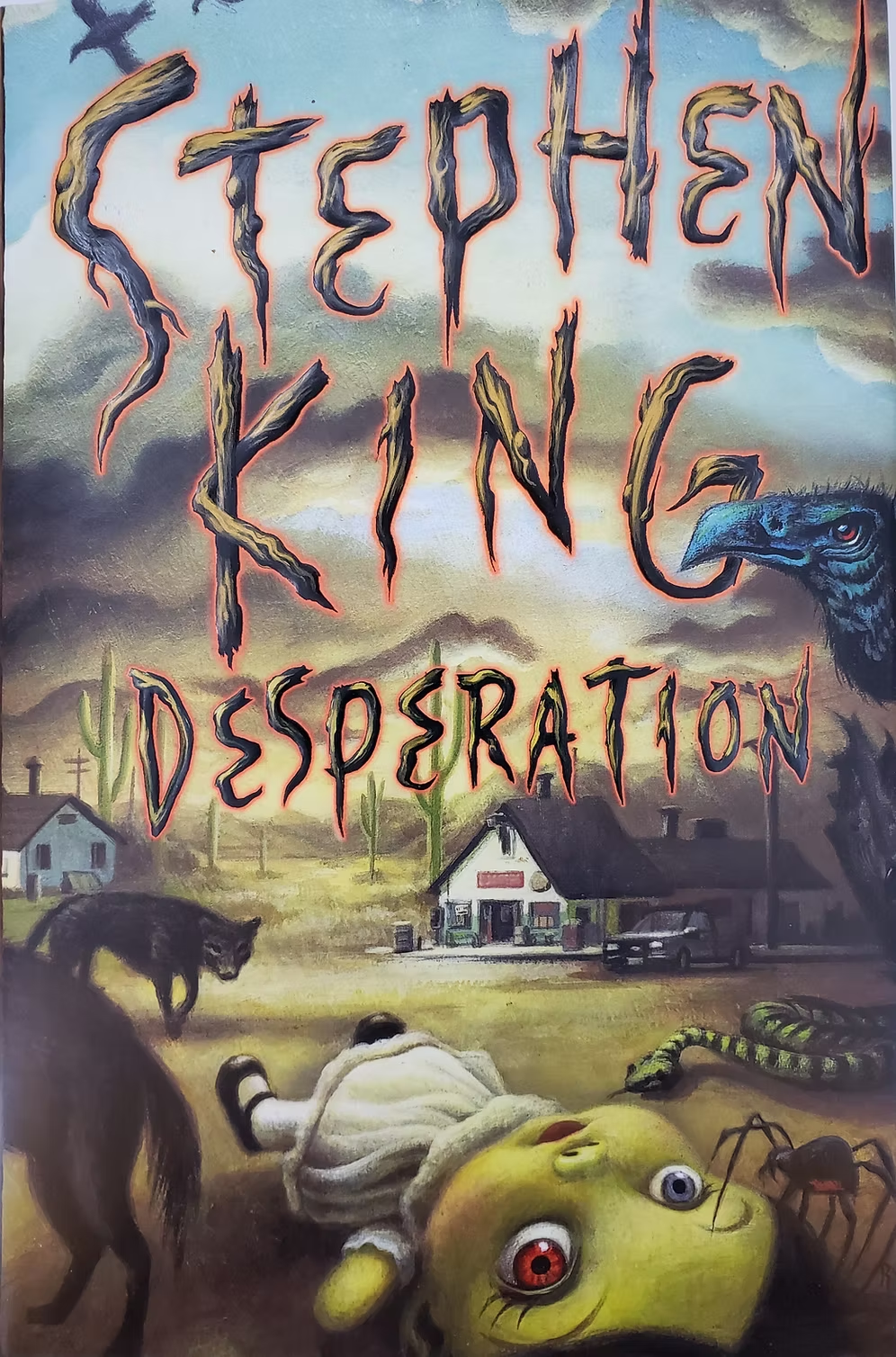
Desperation (1996, 690 pages)
Several different parties–— traveling suburban family, a freshly-widowed poet, a washed-up writer on the road looking for his comeback, and an elderly veterinarian—are brought together by Collie Entragian, a deranged police officer for the mostly-dead mining town of Desperation. ‘Mostly dead’ isn’t metaphorical, by the way—the bulk of Desperation’s population is attending a Janis Joplin concert.
Everyone manages to escape the jail and find themselves at war with a malevolent entity that Desperation’s mining inadvertently freed from its underground prison.
Brief review: If I’m correctly remembering, I’m almost certain Desperation was the first Stephen King novel I read in full. Pretty good intro. This also has a mirror novel, The Regulators, which I reviewed back in the Spooky Season Edition, so if you do want to give Desperation a whirl, chase it with The Regulators.
Good first King read? Based on my own personal experience [I’m pretty sure], YES!
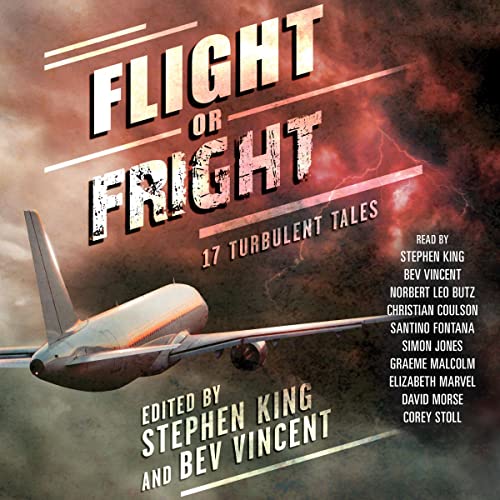
Flight or Fright (2018, 352 pages)
Seventeen different authors penned horror stories taking place on airplanes. Apparently, flying wasn’t scary enough without throwing zombies, evil ancient artifacts, or floating cities full of Lovecraftian horrors into the mix.
Brief review: if I have the choice between physical copies and an audiobook, I’ll pick the physical copy every time. I didn’t have the choice with Flight or Fright; I could get the audiobook on my library’s Libby or not read it. I chose the former, and I’m happy I did. Flight or Fright is the only time I can remember thinking I’d have enjoyed a book less had I read a physical copy. King edited this collection alongside Bev Vincent, but also contributed and narrated a story, “The Turbulence Expert.”
Good first King read? And Joe Hill read and Arthur Conan Doyle read and Ray Bradbury read and…
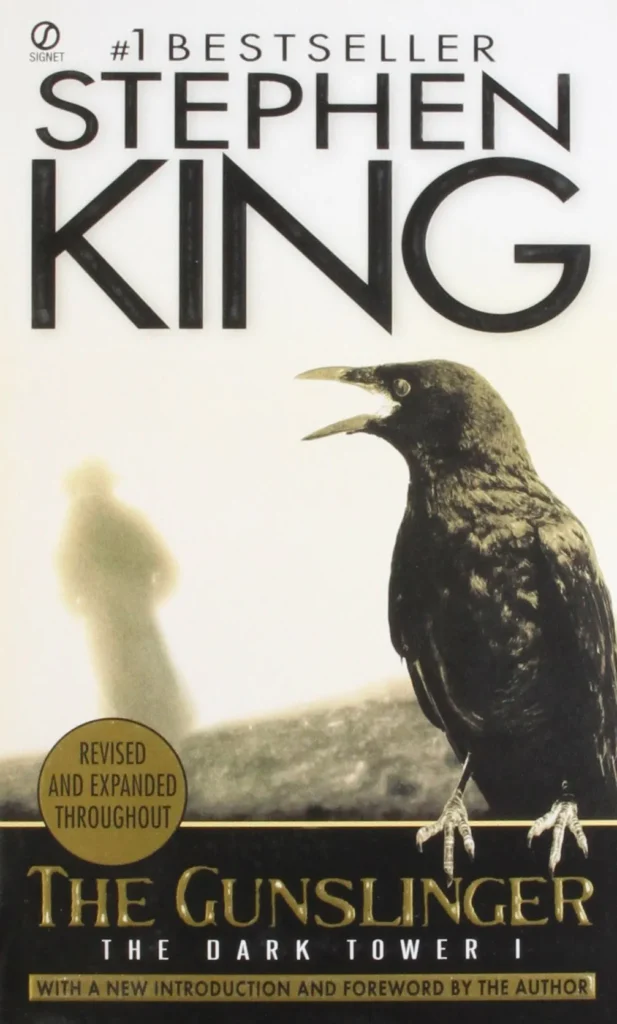
The Dark Tower: The Gunslinger (1982, 300 pages)
In the first book of The Dark Tower, the glue that holds Stephen King’s universe together, a sinister man in black leaves a trail of destruction, and wandering gunslinger Roland Deschain pursues him.
…that’s it.
Brief review: A slow start to an excellent (so far) series. Gabbie wasn’t a fan. I concur that the characters are pretty one-note, with the caveat that the second book turns that around from page one darn near. Gabbie, if you’re reading this, try The Drawing of the Three, I beg of you.
Good first King read? You start off with The Dark Tower, and eighty percent of King’s books and stories gain a whole new dimension. So…yeah.
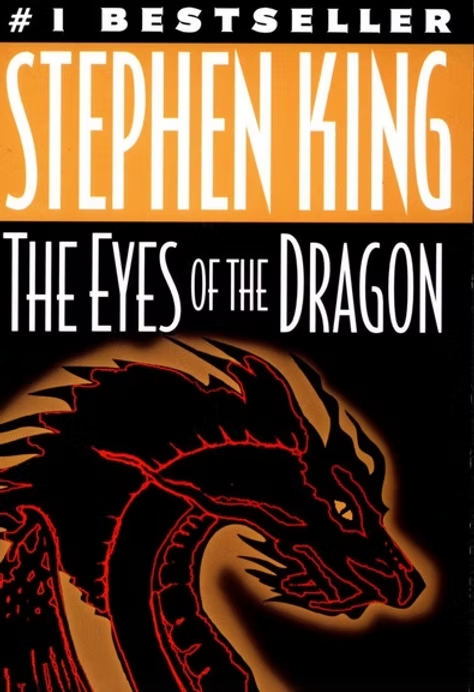
The Eyes of the Dragon (1987, 380 pages)
Peter, prince of the kingdom of Delain, is all set to inherit the throne from his father, King Roland the Good. Then his father dies, burned from the inside out by a magical poison, and Peter is found guilty and thrown in prison.
It’s all the work of Flagg, Delain’s court magician and agent of chaos, who wants to sow chaos by installing Peter’s backbone-free younger brother Thomas as king. Years pass, and Delain withers under Flagg’s rule by puppet king. But all the while, the rightful king has been working to clear his name…
Brief review: Adjacent to, but not a true part of, The Dark Tower lore, if you couldn’t guess by the familiar names. King wrote The Eyes of the Dragon because his child Naomi wasn’t into the horror novels he’d so far published, but was into dragons. So he wrote a novel about dragons!
Also, fun fact: I used to have a copy of The Eyes of the Dragon, but I lent it to a friend who never returned it. She got married a few months after borrowing it, so I called it a wedding gift and forgot about it…until now.
So that was Ten Stephen King Books and What I Thought of Them IV. Tune in next month as I close the year out talking about one of the following: why men like road trip stories so much; trying to reconcile how Christianity has been beneficial for me but harmful to others; patriarchy and how we’re all accomplices in it; or my hypothesis of what people mean when they say you stop giving a crap in your thirties. Depends on which one gets finished first. Hasta luego.
…
…
…
…
He didn’t get out of the cock-a-doodie car!

Noah Keene graduated from Calvin University in December 2021 with a major in creative writing and a minor in Spanish. He currently resides in his hometown of Detroit, Michigan. He spends his free time reading and putting his major to good use by working on his first novel. See what he’s reading by following him on Instagram @peachykeenebooks and read his other personal writing by going to thekeenechronicles.com.

