
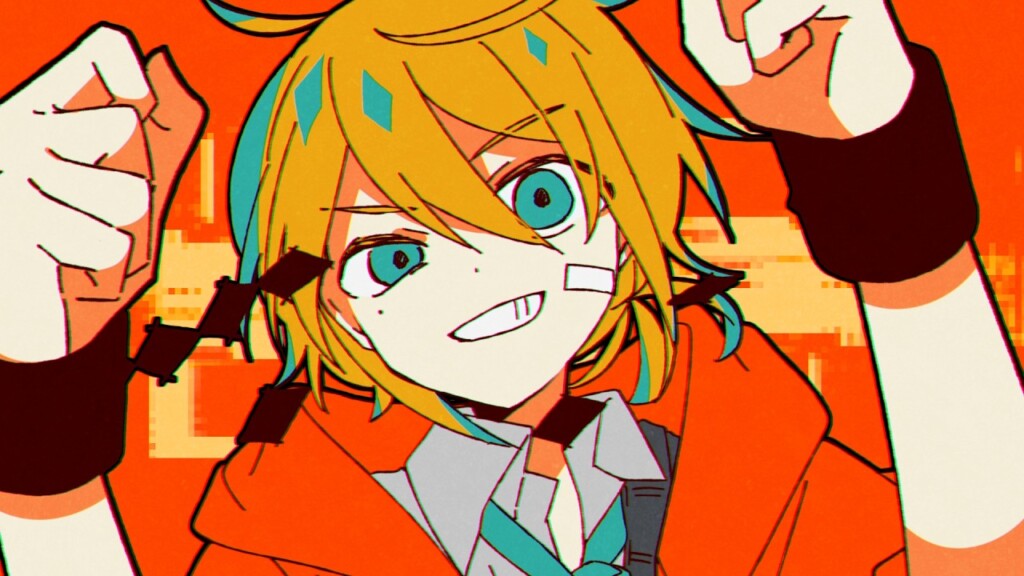
Image credit: cover art of “Ego Renegade Boy” official music video by Arusechika
Our theme for the month of March is “I was wrong about.”
“Would you not date a trans woman?”
I sputtered. “Well…” But my immediate gut answer was no.
I can make excuses. Just asking about dating is complicated for me. The question itself was hypothetical. I’ve only ever pictured myself in hetero relationships, so the idea of dating a woman, let alone a trans woman, transgresses a line in my head.
But those ultimately are excuses. If I’m honest with myself, I had never even considered dating a trans person. That isn’t a sin, but it’s indicative of something within myself: while I pay lip service to trans women being women and trans men being men and trans folk being allowed to fall outside of our strict gender binary, in my heart I still see them as separate and set apart.
The title falls a bit flat here. It’s not that I was wrong about transness; it’s that I am wrong about transness. Continually.
Similar to my experiences with the rest of the LGBTQ+ community, I didn’t really know that trans people existed for a long time. Caitlyn Jenner came out publicly my senior year of high school, and that’s the earliest example I can think of. There were people I knew who, looking back on it, were clearly trans, but I didn’t have the language or the awareness to name that, and it wasn’t mine to name.
I learned, I grew, I became more aware of the community, which had always been there, via books and social media and pop culture representation, and I had the gift of eventually knowing real trans people and doing life with them. I saw myself as a safe space, a trusting adult that my students could safely tell if they wanted to use different pronouns or a different name. I finally was right about all parts of LGBTQ+.
But real life is not as cut and dry as that. When a friend of mine expressed some Gender ThoughtsTM, I thought I was ready—give them affirmations, tell them that they should be who they feel they are regardless of the label society gives them, say “I believe you.” But this friend didn’t feel that way. They saw their feelings as a way of escaping the difficulties of their assigned gender at birth and believed they had a duty to remain—to go down with the ship and preach on the deck rather than grab a lifeboat.
I was flummoxed. How could I be an ally to someone who I don’t think is going about transness in the “right” way? How could I support them in shutting down a path that seems to lead to a more “authentic” self?
But, I do not know the “right way” to be trans, or to not be trans. Even my metaphor fails here: my friend choosing to not transition is not staying on a sinking ship, even though I may personally view it as detrimental. It is not my decision to make, nor is it one for me to pass judgement on.
For all my progressive posturing, believing I know how to support trans people, I am still getting it wrong. I am unsure how to walk the line between “trans women are women and trans men are men” and “trans people have unique struggles and joys that need to be acknowledged apart from cis people.” I am still fumbling my way through being a trans ally in trans unfriendly spaces, which seem to be increasing by the day. I say I love trans people, but then I unconsciously hold them to different standards.
But mostly I am wrong about transness because I still buy into the narrative that transness means struggle, it means difficulty, it means fighting tooth and nail to be seen for who you are. Transgender people are systematically oppressed, make no mistake, and it often feels like it’s getting worse in America every day. But I am learning, through the lives and the art of others, that transness is joy. It is freedom. It is grinning in the face of detractors and saying, “I’m still here. I’m alive. This life is mine!”

Alex Johnson (‘19) is a high school English teacher in Massachusetts. She spends her days being an uncool adult who enjoys reading romance novels and explaining niche rhythm game strategies.


I know this theme month encourages vulnerability, but thanks for being willing to be vulnerable about how your opinion has changed