
(You can read part one of this story here and part two here)
After one surgery, one round of 4-6 weeks of recovery, and one one-month delay, I was back in a pre-op room, putting on a surgical gown and a pair of those grippy socks. My mom helped put my belongings in the designated plastic bag. We joked about the differences between this room and the last one—no mysterious piece of tape on the wall for me to stare at this time.
In some ways I felt calmer this time around—I knew the answers to all of the questions the nurses asked me and felt less self-conscious wearing a hairnet. But then waves of too much knowledge would hit me and I’d remember the most frustrating bits of recovery or think about the chest tube I was going to wake up with. Last round I had a blessed dose of ignorance.
Eventually my surgeon came by to go over the game plan. I nodded along, not expecting to hear anything new since we’d talked at length about what they’d need to do, how much of my lung they might have to take out along with the mass, etc. I was surprised then when she asked me to make a decision.
Because of the location of the mass (snuggled up next to my heart), they may not be able to get the job done with the tiny robot arms. If the situation proved to be too precarious, she would need to open me up wider and get hands in there. The anesthesiologist gravely told me that this would cause more “disruption” to my ribs and would involve more pain in the recovery process. If I wanted, I could get an epidural catheter—essentially a port in my back—that they could use to give me more significant numbing. If need be. If we got into it and they couldn’t use the petite, beautiful, tiny, inoffensive robot hands.
He described the potential side effects of the epidural, how this was similar but also different from the kind they give to people birthing babies, how they would put it in and how it could help with pain management in the days ahead. But the decision was mine. He said that the process of the catheter being put in was painful for some, although of course they’d give me a local anesthetic first.
I wasn’t prepared to make any sort of decision at this point in the process, and he made it sound like if I chose to do this, I was agreeing to something pretty major. I looked to my mom, wide-eyed herself, but she just gave a small smile and said, “It’s your call.” A wave of uncertainty welled up as I imagined a cartoonishly large needle going into my back and felt fear at the possibility of the more major surgery, and the delayed reluctance to go through any of this again. I started tearing up as I agreed to the epidural and signed the paperwork.
Mom got up to squeeze my hand and generally be comforting, with tears in her own eyes. The junior anesthesiologist was very kind as she prepped my first dose of drugs to go into my IV, “This is a major surgery; I’d be emotional too. It’s totally fine to cry. Some people find a song or a prayer comforting?”
So, Mom said a quick prayer, which was comforting, as was the dose of meds. She squeezed my hand and then they rolled my bed down the hall and into the operating room. The anesthesia team talked around me while they sat me upright and felt for the right spot between my vertebrae. I focused on breathing and not crying until the meds from my IV and a numbing shot calmed things down enough that I couldn’t distinguish between their fingers on my back and the eventual big needle.
They laid me back down, I took some deep breaths from an oxygen mask, and then came to consciousness in a recovery room.
I had a blurry but rather pleasant time there. First, I clocked that I wasn’t in major pain. I could inhale without a tight band of pain around the bottom of my ribcage. I wasn’t sure which kind of operation I’d been dealt or if it was successful, but I wasn’t quite ready to find out, so I just focused on my lack of pain and my easy breathing and kept my eyes shut. The nurse kept apologizing for the guy yelling in the curtain area next to mine, but I just kept going back to sleep as soon as possible—I figured, unlike last time, that it wasn’t worth fighting to stay conscious and that it would be more pleasant to spend as much of recovery asleep as possible—and to delay finding out if they did in fact rustle around and between my ribs.
I heard two nurses talk about how I wasn’t on an epidural, so I was pretty sure they hadn’t resorted to the more invasive option. Later, or maybe before, one nurse crouched down next to me and asked for my story after reading the record of the first surgery attempt and being (understandably) confused.
He didn’t react cagily or apologetically after I finished, so I inferred that this time we got the job done.
I graduated from the recovery bay, and as a woman rolled me backwards into the elevator, I remember being so pleasantly surprised at how okay I felt, breathing without pain, mostly alert and comfortable.
“I didn’t consider that this time could be better.”
We had prayed that I’d get a room with a window—I got a whole wall of window. The room as a whole was bigger, my bed further away from the beeps and people in the hallway. Blue tones instead of brown—I told Mom it felt like a hospital room in the movies.
My parents and brother joined me in the room and confirmed that the surgery was in fact successful, they didn’t need to get up close and personal with my ribs, and they only had to remove part of the lobe.
I chatted happily about how I felt, voice hoarse but high on feeling miraculously pretty good.
I still felt nauseated at the sight of the hospital cloche by lunchtime on the first day, but my appetite was generally better. I still got constipated, and had to get blood thinner shots, and x-rays between 5 and 7 in the morning. But the suction on my chest tube got turned off the next day so I could go on walks without the generator, and my pain stayed below a 3, and I could sleep without the incredible and specific construct of pillows and blankets.
My mom had a convertible couch to sleep on this time, and my brother was in town to deliver food. I still had to swallow what felt like thousands of pills and count how many laps I walked but everything about it was easier, despite actually losing a chunk of my lung this time.
And really the rest is a blur. I could dig for more detailed memories of my recovery but I’m writing this sitting on my parents’ back patio with an iced coffee from that place near my best friend, and I’m looking at trees, and the temperature is perfect, and I’d rather not.
Suffice it to say, for whatever reason, it wasn’t as bad the second time. I got to go home after only three days. I should be able to get my lung capacity basically back to where it was, and I don’t have to say goodbye to sports or anything else life-altering.
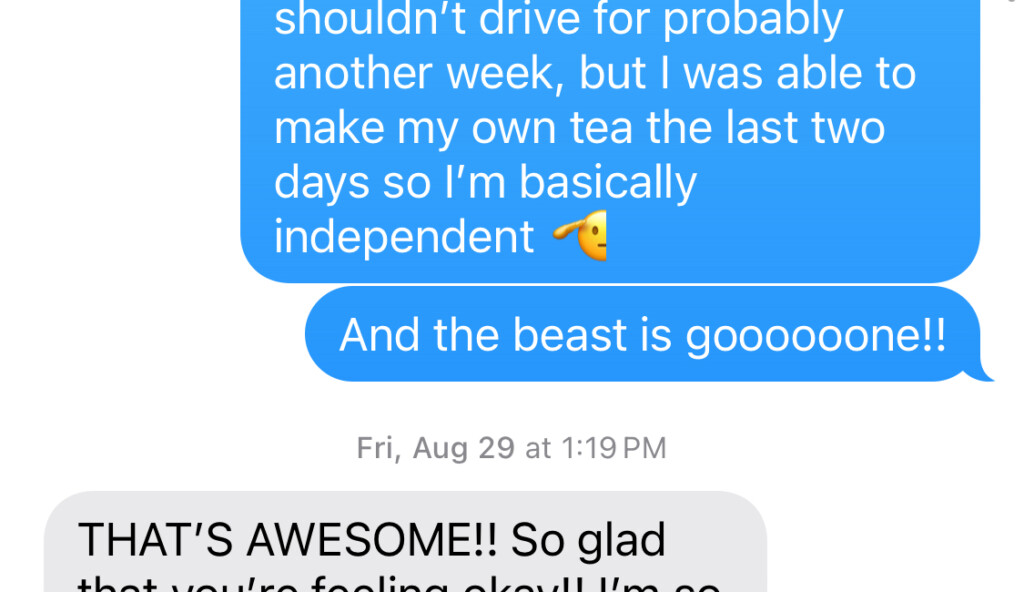
I don’t have a rattling, Civil-War-widow cough anymore and not even one month out I could walk to my local coffee shop and drive to my parents’ town and dolly a 60-pound box of bookshelf pieces into and back out of the elevator and into my apartment. (That one I probably shouldn’t have done but I was feeling independent and stubborn.)
I did cry when my medically trained friend took a look at my incisions, as I thought about how many there are and feeling that I may have been left a bit ugly. They’re the main things preventing this whole experience from being just a bizarre dream of a summer. Otherwise, I’d just be going back to work, back to walking around my neighborhood, occasionally reminiscing with friends about their having to bring me food or drive me to church. I’d be all serene and grateful about how doable it all turned out to be in the end.
Sitting here now—not feeling poorly, inhaling just about all the way and freshly able to lay down on either side in bed—the hospital seems a long way away. Maybe we can just close this chapter and move on…back to exactly where I was at the beginning of the year.
But I do have seven new scars on my body—six on my side, one on my back—parallel to each other and to my ribs, each about an inch long. Some are healing flat, others ragged and a bit lumpy. I’m supposed to massage them to loosen the scar tissue, but they’re unpleasant to touch. Most of that area is still numb, only registering touch in the tissue deeper down or when there’s a ghostly, muted, sour tug on a leftover scab at the end of an incision. Sometimes I brace and force myself to take a look in the mirror before I shower. Sometimes I don’t.
It’s certainly not how I would’ve planned for the summer to go but there is so much that I am genuinely grateful for—for generous parents and friends, for continued health insurance despite losing my job for a few months, for getting said job back, and of course, for the quicker and easier recovery of round two. I’m not sure that I learned any large life lessons. I’m not sure I’ve experienced great character growth or feel closer to God. But I was cared for. And it is over.
So, don’t worry about me anymore. It all worked out.
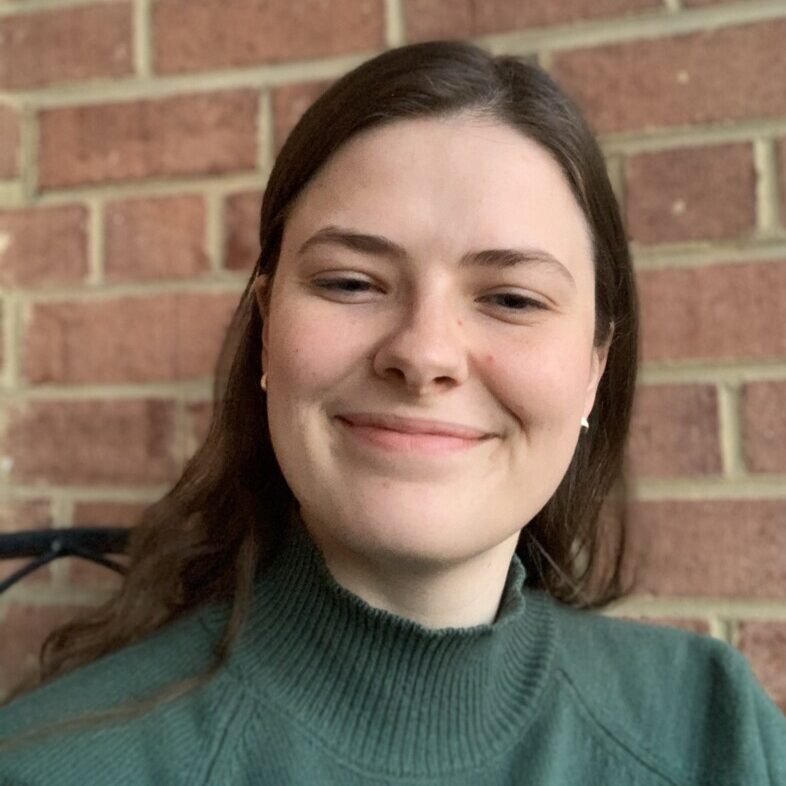
Christina Ribbens (’19) studied history, studio art, and data science at Calvin and public humanities at Georgetown. She now lives in the part of Virginia that’s almost Washington, DC where she helps award grants to arts nonprofits. She takes a lot of walks to admire the landscaping in peoples’ front yards, mostly listens to British comedians’ podcasts, and likes to make friends via sports.

