
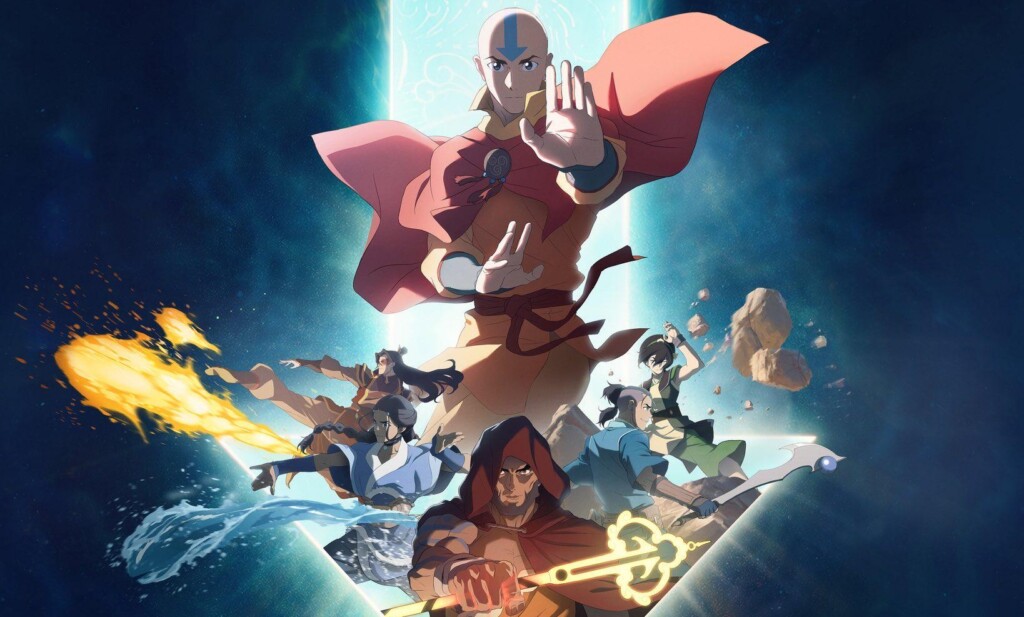
The following contains spoilers for the 2026 animated movie Avatar Aang: The Last Airbender.
I remember being so upset when I finished watching Avatar for the first time, just because I wanted there to be more. I’m pretty sure I cried. I wish I could go back and tell ten-year-old Phil that one day there would be a feature-length movie with all the characters as adults. If I could’ve watched it then, I probably would’ve loved it. But it just so happens that it didn’t come out until a couple of weeks ago. I’m twenty-seven now, and I watched it, and…it was alright.
First, to be fair, the cultural context for the movie is complicated. The original show is so highly revered, but its various iterations are more of a mixed bag. The sequel show, Legend of Korra, tends to be somewhat divisive, and both live adaptations of the original are almost universally panned. I’ve heard good things about the comics, though.
Additionally, two more controversies surrounded this movie’s release: first, Paramount ditched its original plans for a theatrical release in favor of sending it straight to their godforsaken streaming service, which fans (me) felt was not only a missed opportunity but also an added injury at the end of a long list that started with Korra’s various production complications. Second, the movie in its entirety was leaked several months early, to the chagrin of everyone who had worked so hard on it. This, at least, doesn’t reflect on the quality of the movie, it’s just a bummer.
In any case, I tried going into the movie with an open heart and all that, and almost the first thing I noticed was that everyone had been recast. It turns out that this is a small controversy in itself, but I felt basically neutral about this. The children of the original show have all grown up, and I thought the new voice actors did a great job emulating the personalities and quirks of their respective characters, as adults. Acting, in other words.
In fact, insisting that the old actors reprise their same roles probably would have felt fanservice-y to me, and I wouldn’t have liked that. I can say that with some certainty, because the movie was filled with other fanservice-y moments, and I kind of hated them. The cabbage merchant was probably the worst offender here—a gag that was funny two decades ago, but returned here inexplicably unchanged. Just the same guy doing the same joke, as if to say “Hey, remember when this was in the original show? He’s back! Haha. Here he is again! Isn’t that great?!” I don’t know. Maybe I’m not the target audience for that joke.
Conversely, I actually thought a lot of the dialogue was pretty good, both in dramatic moments and especially in the more casual interactions. Seeing the group quip amongst each other as adults was fun, but the movie barely gives those moments time to breathe, because it hits a breakneck pace early on and never really lets up. I know it’s easy to say this in contrast with a full 61-episode show, but I feel like they probably could’ve made the movie longer.
I can’t pretend, however, that the action sequences didn’t look amazing. They did, and the movie looked great in general, including the visual design of almost all of the new stuff they added. The animators certainly deserve their flowers for that. But good visuals have to rest on a good story, and I felt that the structure here was pretty weak. I love the premise of the setup, re: Aang learning to fully accept his past, including turning down the power that could grant people airbending—a move that would simultaneously shortcut his responsibility to carry on his culture and function as a workaround for his guilt about being absent for his people’s destruction. That through-line is great, but the scaffolding of the story is mostly just cool action sequences, overlaid with a lot of distracting moments that made the narrative beats feel very unearned.
For example, Tagah defeats the entire group sans Aang by himself, which…I guess is fine, but then we learn later that he actually killed them all? But then Katara landed in spirit water and brought herself and everyone back to life? Huh? Or when Tagah activates the staff in the right location and it turns him into a beefy glowing beastie monster man? And then the same thing happens to Aang? Or when Taika Waititi shows up to play a bombastic unpredictable spirit a la Aladdin’s genie and then solves their problem for no reason? Or when the spirit city started falling into the real world city and destroying it? Why was that happening? And why did we rehash the (theoretically interesting) non-bender thing from Korra only to give it even less attention than before? What a waste of potential!
All of these instances felt like they were probably trying to recapture things about the original show that were special, but they all fell flat. It’s a lot to live up to, but the writing decisions took what could have been a gratifying return to some of our favorite characters and made it into a rushed, confused, narratively hollow mess that looked really nice. Avatar Aang: The Last Airbender was fun to watch, but I don’t think it was very good.
I’ve had mostly negative things to say about this new Aang movie, so I suppose it may surprise you that I remain hopeful about the new Avatar: Seven Havens show that’s slated for October of this year. I like the visual designs we’re seeing, I like what we know of the premise so far, and I like the lean into West Asian influences. Maybe the creators got all the worst impulses out of their system, and they can let the new show breathe on its own and play to its strengths. Either way, I think ten-year old Phil would be happy that they’re still making more Avatar.

Phil Rienstra (they/he) (’21) studied writing and music, and since graduating has developed an interest in labor rights and coffee. They’re an amateur chef, a perennial bandana wearer, a fledgling dungeon master, and an Enneagram 4. He lives in St. Paul with his spouse, Heidi.


hey, I think the non-bender stuff from Korra IS interesting!
(I have yet to watch the movie, but I plan to in the next month or so)
The visuals are almost enough to make me bite the bullet and get a month of Paramount to watch it. I am not immune to the cartoon style propaganda! I am sad to hear that the story is less strong because that is a part of A:TLA that still holds up so well in my eyes (and, in my opinion, continued through that book series from F.C. Yee). But, unfortunately I’m also not surprised. When will original media come back in vogue