
Please welcome today’s guest writer, Heather Alexander-Leduc. Heather graduated from Calvin in 2016 with a degree in secondary education and currently teaches English and chemistry at City High/Middle School in Grand Rapids. She enjoys interdisciplinary endeavors (as her teaching schedule may imply), spoiling her two kittens, and creating unique meals sans recipe.
I don’t watch a lot of YouTube anymore, perhaps due to a newly shortened attention span after downloading TikTok. But in 2013, emboldened with the power to make whatever decisions I wanted to make (and consume whatever media I wanted to consume) that comes after completing one year of college, I watched YouTube. Mostly, I was interested in the pop science channels—Veritasium, AsapSCIENCE, SciShow, VSauce—because I was a woman in STEM! Sort of. I was a woman in science education. Regardless, the VSauce video “Why Are Things Creepy?” introduced to me for the first time the concept of the uncanny valley, which I still think about at least once a week.
The uncanny valley is the term for the relationship between the human likeness of a nonhuman object (robot, cartoon character, toy, etc.) and the emotional response humans have towards them. The relationship is mostly positive with things that are only slightly humanoid, moderately humanoid, and indistinguishable from real people. But there’s a small area, the uncanny valley, where something is just the right amount of “off” that people’s reactions are overwhelmingly negative. The roboticist Masahiro Mori first introduced this concept in the 1970s, and it has since taken off from there.
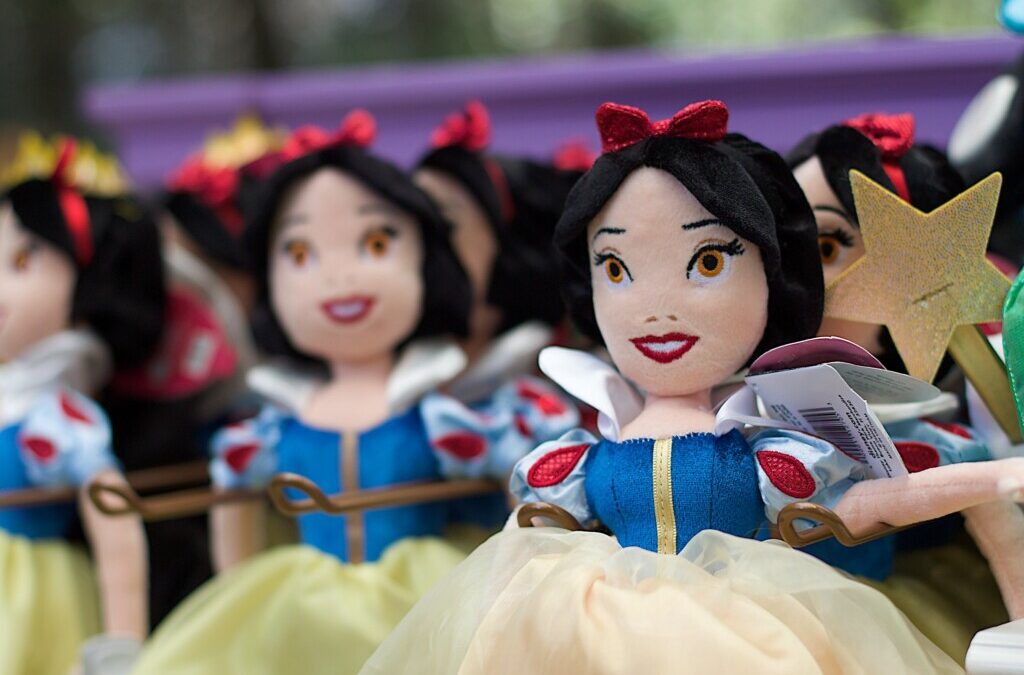
And while this may just seem like a fun thought experiment or a problem for animators to deal with, sometimes I think we can fall into seeing the world through the lens of the uncanny valley. It is an easy explanation for why people are so afraid of clowns—or dolls, for that matter. They’re so close to looking human, but are also unnervingly the slightest bit off. But with no real danger present, the uncanny valley can also be used for entertainment. Thrillers are successful partially for this reason, but my personal favorite example is the book Crap Taxidermy. I thrifted this book on a whim for about six dollars, and it is easily one of the favorite books in my classroom library. Middle and high schoolers love all things weird, kind of gross, and apparently somewhere around sixty examples of poorly taxidermied animals.
I see this in more than just human or animal things, though. The jarred queso I bought from Meijer that tasted horrible, for example. My theory is that it fell into the uncanny valley of cheese: not fake enough to be the delightfully artificial, orange nacho cheese, but not real enough to be convincingly authentic queso. Think also of veggie burgers. I’m all for eating plant-based, but if you’re going to go for a burger, you have to commit one way or another. Go for the real beef or the portobello mushroom. The uncanny valley of highly processed vegetables, wheat, soy, and binding agents into something that resembles a burger just is not worth it to me.
But maybe the thing that intrigues me most about the uncanny valley is it brings up questions about how we identify that which is human, or like us. As far as we know, no other species of animal experiences this phenomenon to the extent that we do. As incredible as AI can be, it doesn’t do well with ambiguity and vagueness. Humans, on the other hand, are full of nuance and subtleties. While these may be part of a great number of things that set us apart from one another, I will rely on my perception to recognize and acknowledge the humanity in each of us.


I’ve heard one theory that the uncanny valley effect evolved as an instinctual aversion to corpses and the associated threat of disease and decay. After all, what better representation of something that’s almost alive, yet is fundamentally “off,” than a dead body?