

Our theme for the month of March is “I was wrong about.”
Or, not about the snake plant itself—but about my ability to keep it alive through five different living situations and four Michigan winters? Absolutely, completely, totally wrong.
The week before I left for college, I went to Stem’s in Grandville to poke around and admire the flowers; I wasn’t planning on buying anything. But then I found Marla. She was so cute in her little blue pot—the perfect size for a dorm windowsill. I couldn’t resist.
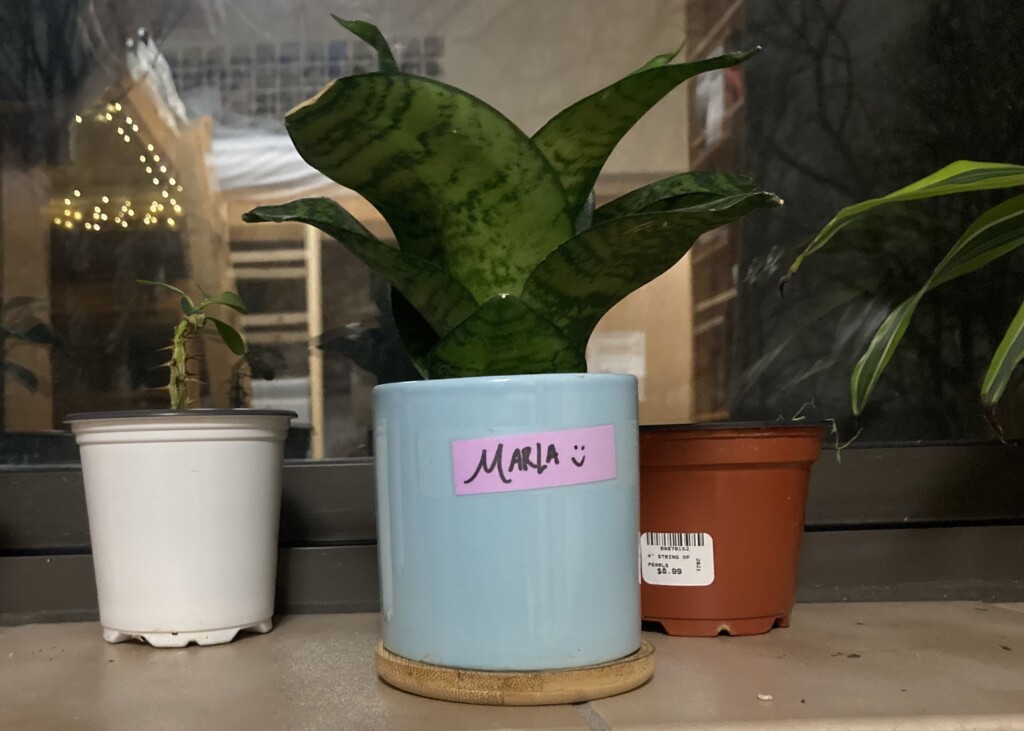
I brought her with me to school, and she sat on the west-facing windowsill of Kalsbeek 314, right above the heater, watching as I came and went to class, to choir, to dinner, to late-night study sessions. By the end of freshman year, she had grown out of her pretty blue pot and had even produced a pup; proof that Marla was doing well.
That summer she came home with me and soaked in the sun on my parents’ backyard deck. Before sophomore year, I bought a new pot and fresh soil, giving her more space to breathe and the pups their own separate homes. Marla was making her way in the world.
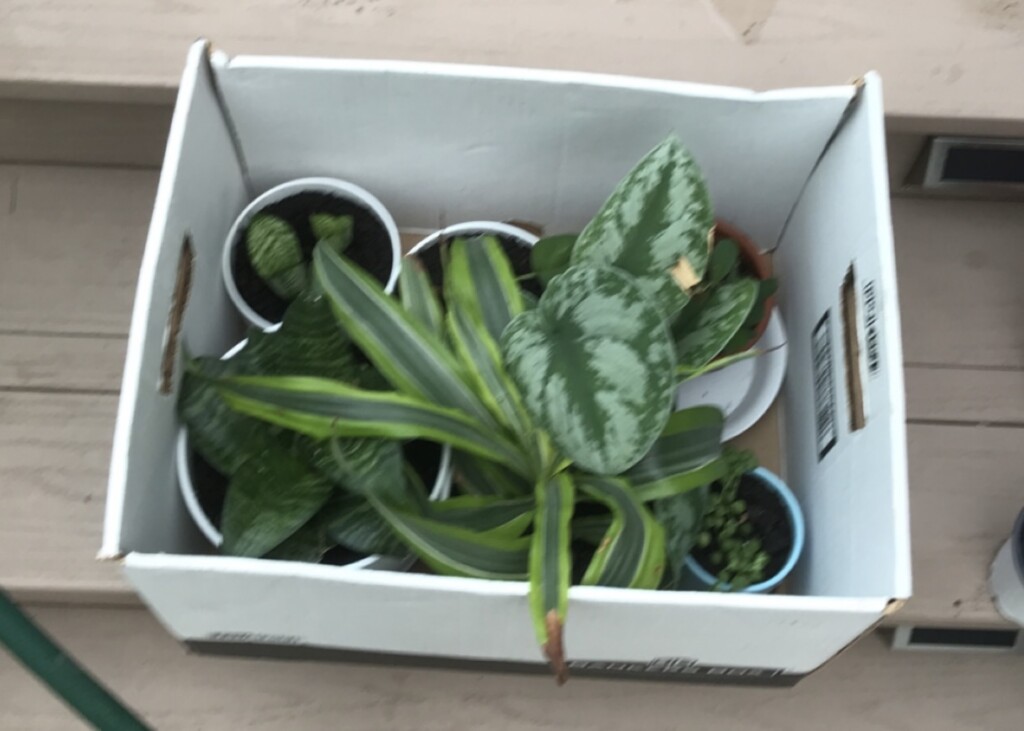
Sophomore year, she was joined by probably fifteen other plants that my roommate, Alison, and I had lined up along another west-facing windowsill. She’d probably tripled in size at that point.
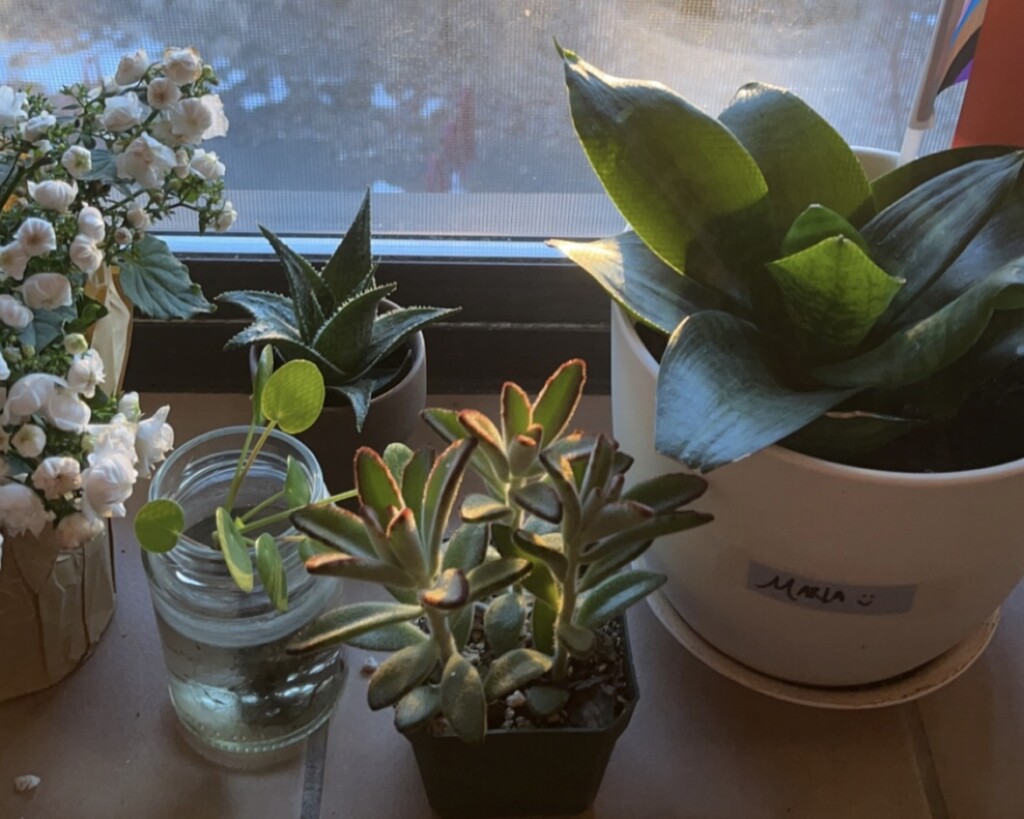
Junior year, she moved again—this time into an apartment. I bought a plant stand and arranged everything carefully in front of the south-facing window; but the sun struggled to reach past the neighboring buildings, and the soil stayed damp longer than it should have. Leaves yellowed—hers, and the others’. I hoped that the summer might remedy her.
Senior year, I moved into a house called “The Garden House,” which ironically, was what did her in. There wasn’t a good spot for her, and over the course of the Michigan winter, her leaves dried, then yellowed, then drooped.
I had failed her.
This wasn’t the first time I had tried to grow something and watched it fall apart.
When I was in first grade, my teacher read us Johnny Appleseed. Feeling inspired, my friend Eleyna and I decided we would plant our own apple tree. We asked our classmates for their apple seeds at lunch for a few weeks and tucked them carefully into a damp paper towel for safe keeping.
When the seasons had shifted and recess no longer required winter coats, we dug a softball-sized hole with the little pink shovel I had stolen from my family’s beach bag. Eleyna placed the seeds at the bottom of the hole, one by one. Together we filled it back in with dirt and said a prayer. Our seven-year-old selves imagined picking apples during recess. We’d be school-wide famous!
We checked on that spot every day; we watered it when it hadn’t rained and speculated about how tall the tree would be by sixth grade.
When a small green shoot finally pushed through the soil, we were thrilled. Our plan was working!
And then one afternoon, during a particularly heated game of Cops and Robbers, there was a sickening crunch.
The little green thing bent in two.
—
I now know that the little green thing was never going to become an apple-bearing tree at the edge of my elementary school playground—even by sixth grade. Turns out that’s not how apple trees work. Maybe Marla never stood a chance with all the moving and Michigan winters, especially in a spot that barely saw the sun.
But maybe one day I’ll have a big west-facing window and try again. I’ll get a monstera this time. Or another snake plant. Probably not an apple tree. Maybe it will grow.
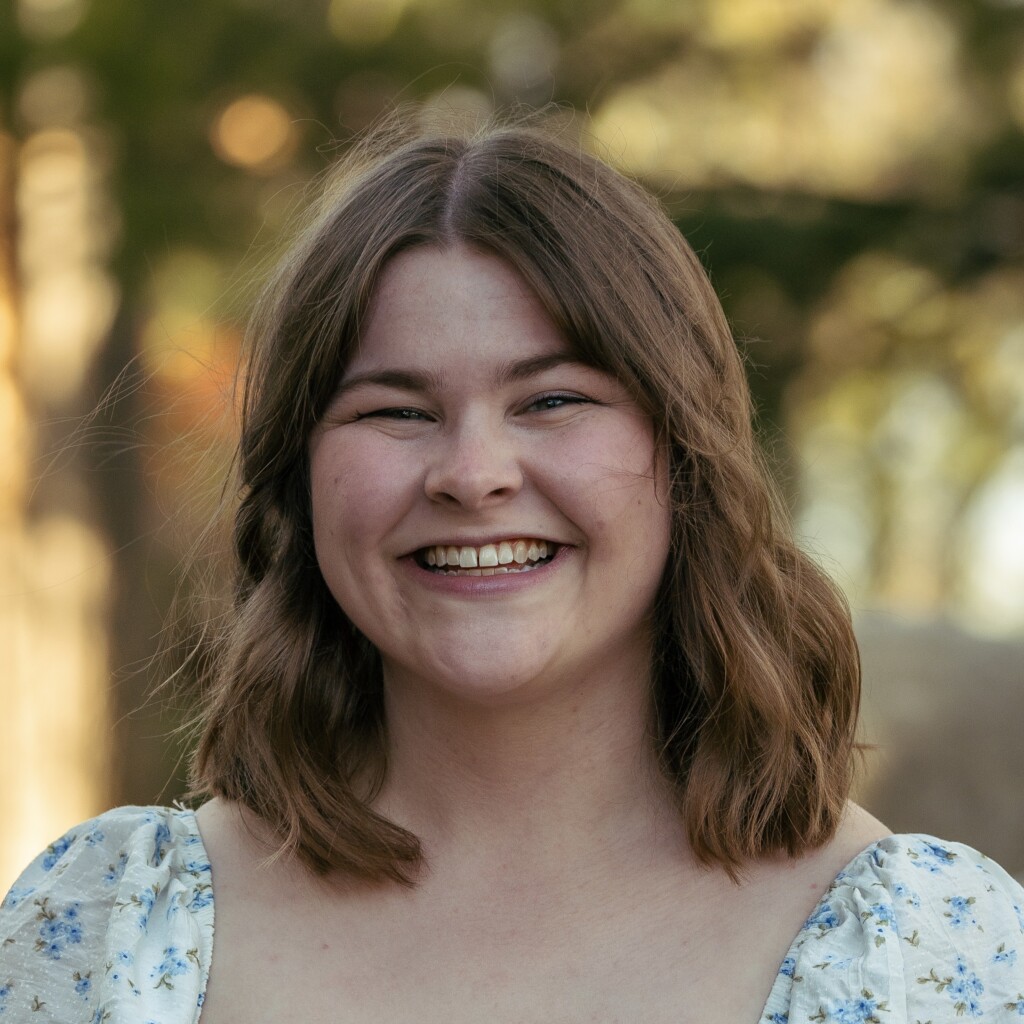
Madeline Witvliet (’25) graduated from Calvin with a degree in English. She can be found in coffee shops in Eastown, exploring Michigan’s state parks, or singing with Calvin’s Alumni Choir. Madeline enjoys spending time outdoors, crafting, and cooking Mediterranean-inspired meals.


Losing a plant is the absolute worst. Also, so glad to know that I’m not the only one here who was way over-confident in their apple-seed-growing abilities as a kid.
hi madeline hi marla i miss you hi kalsbeek 314 good to see you in your golden hour glory
Who needs ashes on the forehead to bring us into relationship with our mortality when you’ve already got houseplants at home
I know the struggle of keeping plants alive…secondhand. My mom’s the gardener, I’m the [unwitting] gardener’s assistant.