
I must be telling my fish stories wrong, because my catches only shrink in hindsight; the sun robs them of their iridescence, the dry air whisks away their liveliness, and time flakes their skin. I watch them atrophy before my eyes. I think about the stories I used to tell and I wonder: were they ever that big—that real—to begin with?
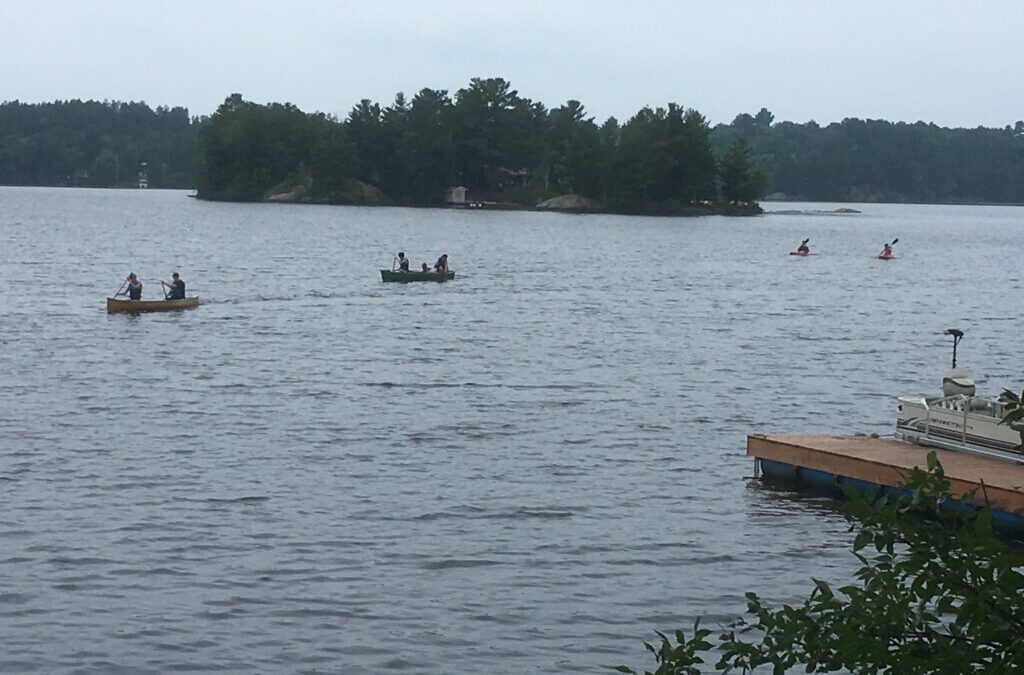
A week of every childhood summer was spent on the northwestern tip of Lake Nipissing, tubing off of my uncle’s boat and losing Euchre tournaments. And fishing. A lot of fishing. Trolling in the pontoon my opa rented. Adjusting my life jacket as I leaned over the edge to look into the murky, seaweed-rich water. Reapplying sunscreen. Dock fishing when we returned from boat fishing. Calling Mom over because I was too scared to touch the sunfish on my line.
Most years our catches were modest, but plenty enough to feed all twenty people on my mom’s side of the family. The trifecta of our freshwater fishing—pike, bass, and perch—were prepared for a Friday Fish Fry. The modesty of our catches didn’t stop us from story-swapping though. Fishermen brag about their catches. That’s the rule; you elaborate and dramatize. Hyperbole is the backbone of both fishing and storytelling.
Everyone has their fishing story; this is mine. When I was eight, I went fishing off the far west dock, right behind my family’s cabin and far away from everyone else. I felt a snag on my line. My eyes followed the near-invisible string into the water, where it disappeared next to a lodged piece of driftwood. Rats, I thought. Must just be stuck. I yanked, trying to free the hook. I reeled against the resistance. The hook came closer, before darting away again. This was no driftwood; this was my new white whale.
A battle of sorts ensued, this four-foot-nothing child in a pink baseball cap against whatever creature lurked in the depths. Eventually—and I don’t know how I did this—I reeled it to the dock. Shocked by the size of this beast, I called for my dad, who ran down the sunken wooden 4x4s that served as a staircase, and we heaved it out of the water. I remember his shock at the size of my catch—a ten-, no, maybe twelve-pound bass. The biggest catch of my life, and who would’ve imagined it came off a dock? It was the talk of the week.
But when I think about my miracle bass, I poke holes in my own story. The largest recorded smallmouth bass are about twelve pounds. My bass was big, but was it really record-breaking? Maybe it was closer to eight pounds. Maybe it only seemed big because I was so little. I remember the story I told about this fish, but I compare it against what I know is probably true. If I were to catch it again, I don’t think I would tell the story the same way. I think the same fish would seem much smaller.
I tend to approach the world as if fish stories are true, as if the world really is as big as we claim. I hear stories of being overwhelmed or pushed to the breaking point, and I wait for the same to happen to me. I wait to sob in my car on the way home after a bad day. I wait to get so angry I say things I regret. I wait to feel something so big that I cannot deny or downplay it, that I must ask for help to wrestle it onto the dock. But my fish are so much smaller than I thought they would be.
Sometimes the world feels small compared to the stories we tell about it. Sure, moving was hard, but loneliness doesn’t look like I thought it would. It’s smaller. I’ve barely cried since relocating my whole life to a new state. I don’t feel sharp pangs of emptiness or sorrow as I cook alone in my apartment. I walk through crowds as a comfortable stranger, alone but not lonely.
But when I go for late-night drives, I think of the people I wish were in my passenger seat. A shudder runs through me, and I am unable to continue singing whatever Noah Kahan song is playing in my car. I FaceTime into a friend’s game night and feel lonelier, unable to get a word into a conversation I desperately want to join. My family group chat explodes with conversations about wildfire smoke and I look out the window at my clear, blue skies.
These are the fish, the feelings, that I reel in. This is my catch of the day. My stories are smaller than I imagined, but they are worth telling.
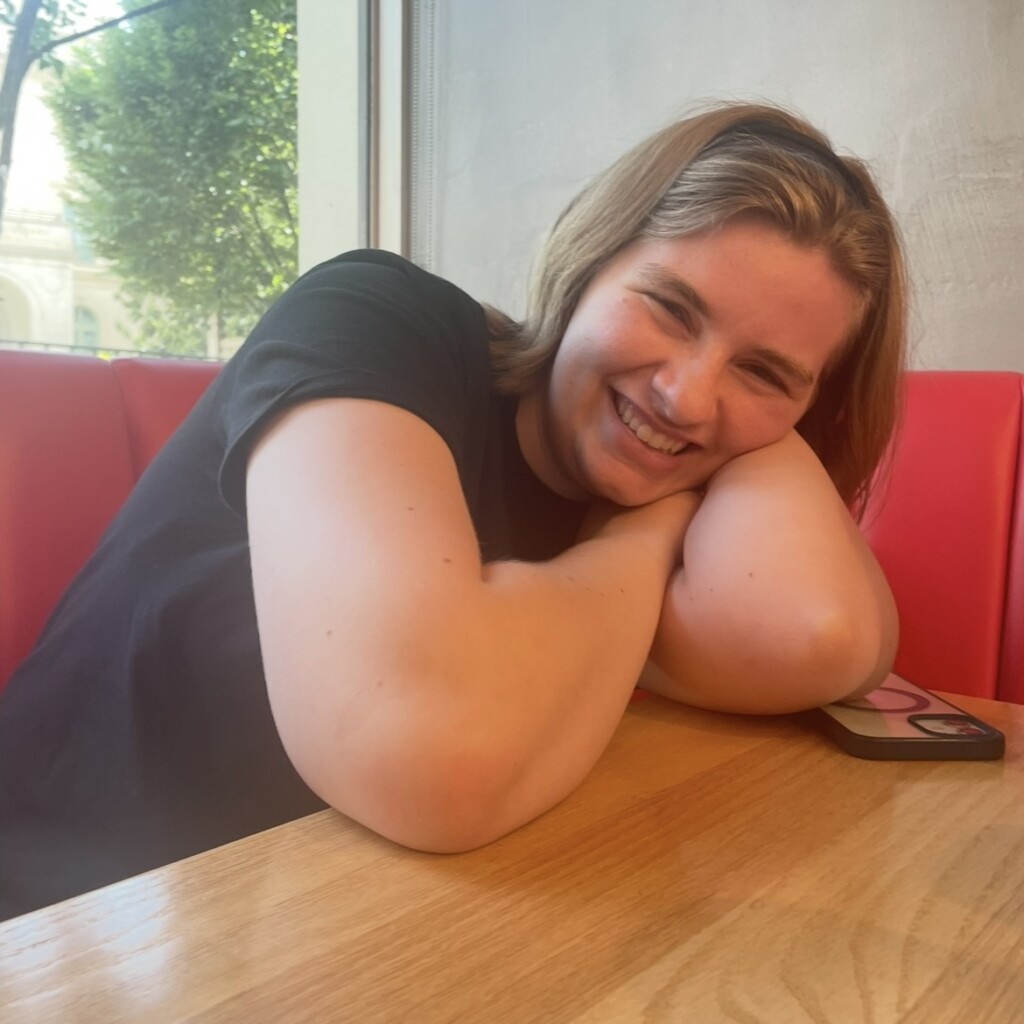
Karis Schoon (’26) graduated with degrees in social work and psychology and also a major in English because people and their stories are pretty cool. She’s currently getting her master’s while working at Baylor University in Texas, where she gets paid to play board games and grab coffee with students. When not working, she’s probably playing a role-playing game, reading somebody’s memoir, or brainstorming a new writing project.

