
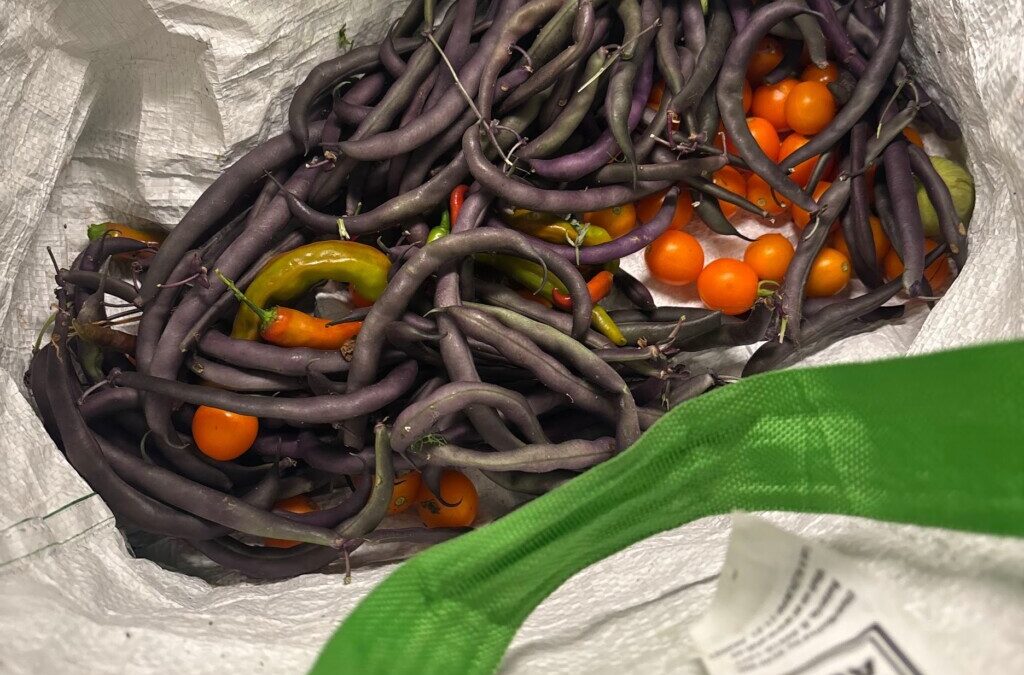
I had visions of what my return to West Park’s plot 5E would look like this summer. And, oh, they were glorious! But now, four months into the optimistic six of the community garden season, I fear I’ve let those visions down.
Gardening was a new endeavor for me last year. Devin and Paige, our neighbors across the hall in Apartment 4, helped my wife and I explore this untread frontier. They showed us where we could access Ann Arbor’s free compost, demonstrated how to support our tomatoes with the bounteous “Florida weave” method, and generously gifted us several plant starts they had been growing indoors to get a jump on the planting. Some things, too, we learned along the way—like preventing aggressive weed growth by planting into the leaf mulch, how slimming down our beds to the width of our squat would allow for more convenient weeding, and that bok choy is a much heartier green to grow than lettuce in our Midwest climate.
So I dreamed. I pictured what it would be like to begin our garden this year, benefiting from these earned nuggets of knowledge that had been stored away. In my mind, our pristine tomato plants were growing tall and unrestrained, suckers routinely pruned to keep them from spindling out of control. Our blanketed leaf mulch would save us hours of weeding. Our bok choy would keep my lunch sandwiches crisp and vitamin-rich throughout the summer.
We planted, composted, and mulched in May, all according to plan. We gleefully implemented what we had learned, thin and tidy rows replacing the previous summer’s girthy beds. We even were able to pass down some of Paige and Devin’s wisdom to Ingrid, their successor in Apartment 4. But all too quickly, I found myself grasping for control of the garden from the backfoot.
One week of family time in Holland provided the perfect opportunity for our tomato plants to burst forth in the heat, sprawling horizontally across our pathways rather than towering vertically. Triage upon our return resulted in traditional tomato cages, vaporizing my hopes for a large-scale Florida weave. A different week abroad on a European vacation handed an army of weeds the strategic advantage to mount their assault and overrun the compostable coffee bags that lined our pathways. The bok choy and arugula bolted in half the time it took them the previous year, leaving my sandwiches incomplete as we await ripe seed pods to use for succession planting. We weren’t even present enough to make use of our significant yield of basil before it rotted under the summer sun.
I’m still figuring out why these defeats have left me so deflated this year. Call it a sunken cost fallacy of time and energy, or a grieving of an idealized vision—but more often than not, I’ve found myself wanting to walk away from the garden this year.
As I’ve been struggling to reject this defeatist attitude, I’ve also coincidentally started reading John Ortberg’s Steps. This spiritual guidebook of sorts is one that several people close to me have been encouraging me towards for a while now. Ortberg structures this book around the twelve steps found in the recovery process for groups like Alcoholics Anonymous. He presents a case that these twelve steps originally came from the church’s teachings, and that it’s time the church reclaim them as we dwell and relish in our relationship with our Creator. Step One is identified as “I can’t”—realizing that we are powerless over our deepest problems, and that our lives have become unmanageable. Ortberg references Rick and Sheri Blackmon’s Scale of Acceptance as we consider our own inadequacy. When we confront where we hold our shame, or the parts of us that we deem as, “not enough,” how do we respond? Do we reject and refuse to acknowledge them? Fight them off? Is it possible to accept them, or, can we even dare to embrace them as a part of who we are as we wrestle with our limits?
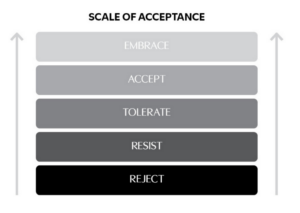
I’m loosely aware that Step One progresses into a Step Two of, “He can,” and then into a Step Three of, “I think I’ll let Him.” I really don’t have a clue about any of the nine steps after that—I’m only in Step One, after all. But while I didn’t start reading Steps because of the ultimately insignificant struggles with my garden this year, applying Step One to that situation is giving me a good chance to practice celebrating my inadequacy at a small level.
I’m choosing to let go of regretting that I can’t be everywhere at once, pruning tomato suckers in Ann Arbor while also playing with my nieces and nephews in West Michigan. I’m choosing to not fight my frail body’s desire for sleep instead of setting my alarm early to get in some extra weeding. I’m choosing to acknowledge my own inability to reduce my carbon footprint by utilizing every ounce of produce grown in my backyard this summer–and let’s be real, the trans-Atlantic flights for my European vacation kind of wiped that one out anyway.
It’s a practice that has felt relatively minute, but I’m hoping that embracing my inadequacy as a community gardener might leak into embracing some of my bigger inadequacies, too. Perhaps next summer I’ll be able to practice Step Two in the garden, as well. But for now, maybe it’s progress to simply not cringe at the sight of weeds in a pathway or at withering bok choy stalks stretching their arms towards the sun. I’ll work to stretch my arms out with them, hesitantly ready to embrace the next inadequacy I find.

Luke Brandsen graduated in 2019 and uses his business/HR degree to inform directing mission-focused programs. He currently lives in Ann Arbor, Michigan, where he squints at the players on his bootleg soccer stream, breaks guitar strings, and desperately tries to recall where the last D&D session he ran left off.


As the child of gardeners, I find myself wanting fresh garden veggies without the work of weeding. Kudos to you for taking more steps on that path than I, even if the outcome isn’t where you dreamed it’d be.