
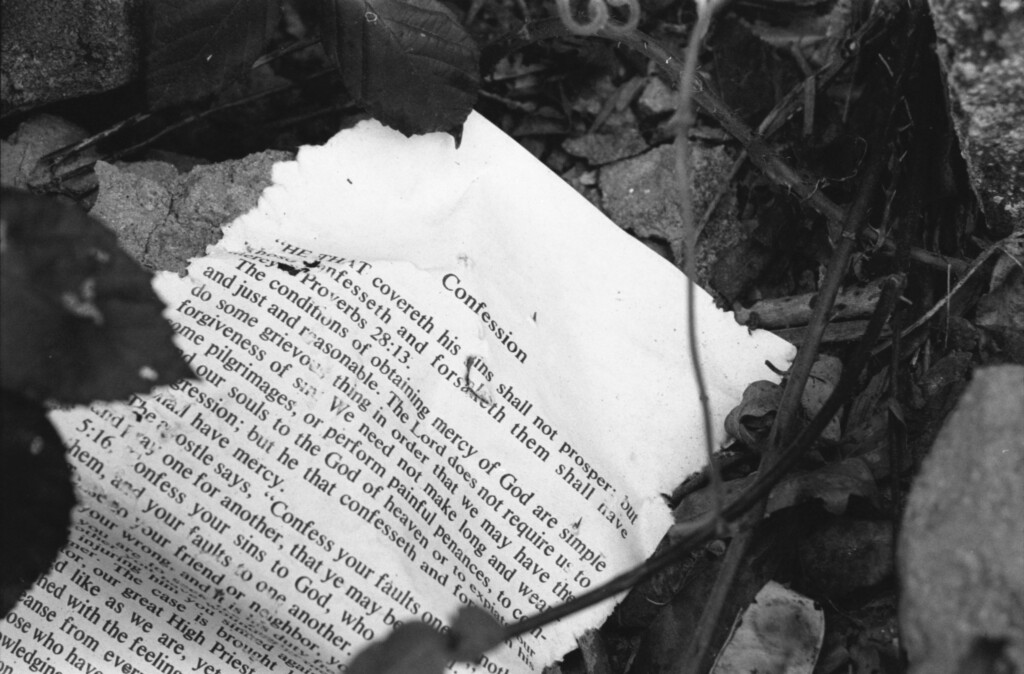
Our theme for the month of June is “confessions.”
In second grade, my Catholic school taught me that when we go against God, our souls become riddled with marks of sin. The more stained our souls get, the harder it will be to get into heaven.
But God wants us to be with Him in heaven, and in order to do that, we must confess our sins to Him. Reconciliation cleans our souls, giving us a clean slate.
Unlike many Christian sects, I was taught that having God’s grace wasn’t enough for redemption. I needed to be the best Catholic I could be. And when I failed to do so, that’s when I would turn to God, asking for a second chance.
At eight years old, I walked into the confessional for the first time with a piece of paper in my hands. I sat in front of the priest, my voice shaking as I read my list of sins.
After he absolved me of my sins, he gave me a smile. “Now, you can rip that paper up.”
From then on, I went to confession during the Advent and Lenten seasons. And when I attended Catholic overnight camp. There, we’d all sit around a campfire after confession, completing our penance and praying with counselors. We’d walk up to the fire and drop a piece of paper into the flames, watching our sins shrink into dying embers that floated away on the breeze.
Though my heart always raced as I waited to walk into the confessional, I was grateful for the sacrament. I was an impulsive kid, and sometimes, my thoughtless actions led to unexpected consequences.
Middle came and I became more reliant on confession.
It was a normal school-day mass: I sang the hymns loudly, and I tried and failed to listen to the readings.
But at some point during the service, a dark thought crept into my mind.
I hate God.
This thought terrified me. I tried to think it away, I tried rationalizing it, I tried canceling the awful thought out by thinking, I don’t hate God, I hate God never, but a few blasphemous thoughts always snuck through.
As the weeks went by, I hate God was joined by All hail Satan, and no matter how much I tried to stop the thoughts, they continued. To make things worse, they usually intensified as I received communion, when the Body of Christ was dissolving in my mouth.
These thoughts weren’t going away, but I wanted no part in them. I didn’t want to sin. That’s when I remembered an important prayer that you have to recite after confessing your sins to the priest:
Oh my God, I am sorry for my sins. In choosing to do wrong, and failing to do good, I have sinned against you and your Church. I firmly intend, with the help of your Son, to repent of my sins, and to love as I should. Amen.
This prayer became my crutch. Going to confession constantly seemed too daunting, so I figured this was the next best thing.
When the intrusive thoughts flooded my mind, I’d turn to this prayer. Whether I was in public or in my room, I’d close my eyes, whispering the prayer or reciting it in my mind. Then I’d close it out with an “amen” and a sign of the cross.
Praying and making the sign of the cross lost their original meaning, reduced to compulsions I needed to complete for my own peace of mind. Typically, I wouldn’t take my time praying the act of contrition. I hated these rituals; I hated that I needed to be doing them at all. So I’d rush through it, then rush through it again and again if a small voice told me that one time wasn’t good enough.
Reciting this prayer in my head or doing a hasty sign of the cross gave me brief moments of relief. God would see how sorry I felt for my sins, and I’d get a second chance. And I’d be sure to tell the priest about other “impure thoughts” I’ve had during my next confession.
Despite the acts of contrition, my blasphemous thoughts continued. It wasn’t though I was making an active effort to sin, but the thoughts were uncontrollable. Like I’d accidentally opened a damn in my mind, and now I had no idea how to close it.
Over time, I stopped thinking these thoughts, and their previous existence became unimportant as my life continued, and as high school came and other mental dams exploded.
It took me years to realize that the “sinful” thoughts I couldn’t stop thinking about were a clear sign that I’ve had Obsessive-compulsive disorder for quite some time.
The obsessive thoughts about God made me afraid that I was sinful, that I had thought this deliberately. The possibility that this could be true, that I could be deliberately sinning against God, was terrifying. So confession, and the elements that make up Reconciliation, became my safety net.
There’s something ironic about finding solace from intrusive thoughts with confession.
On paper, these two things seem like they’d work in tandem. Reconciliation was supposed to be my saving grace when I got caught up in sin’s snare. As a second grader nervously preparing for my first confession, I was told that afterward, all my nerves would fade and I’d feel nothing but relief. God would’ve taken the burden of sin from me.
My compulsive prayers had a similar goal. To bring me relief from the thoughts that made me question the validity of my faith. To free me from the guilt those thoughts brought.
But this type of confession did not bring the clarity of closure. It did not help me move on and learn from my mistakes, because these weren’t mistakes, but obsessions I couldn’t control. Reflecting on my experiences with spiritual OCD reminds me that not all kinds of confession bring relief, and not all kinds are healthy.
Becoming overly reliant on confession, needing validation every time a mistake is made, doesn’t help us grow as individuals who can rely on their own judgment.
Discerning whether a confession is necessary or not isn’t always easy, especially when you have OCD and your mind is often screaming at you to seek assurance or confess something that shouldn’t seem so consequential.
It’s a struggle that doesn’t go away easily.

Liana Hirner graduated from Calvin in 2024 with a bachelor’s in writing. She currently lives in her hometown of Aurora, Illinois and works full-time in a warehouse filled with books waiting to be sorted. Writing is her first love, followed swiftly by lattes and dark chocolate.


Okay, I know I’m always commenting on your OCD essays, but they’re too relatable. I never went to Catholic school, but I still somehow managed to develop a gnarly confession compulsion in high school (usually through emailing my mom lists of Bad Things I’d Done). When I saw this month’s theme, I was like “yeah, that’s the thing I explicitly make myself NOT do,” so it’s nice to see that side of confession addressed.