
Our theme for the month of June is “spirits.”
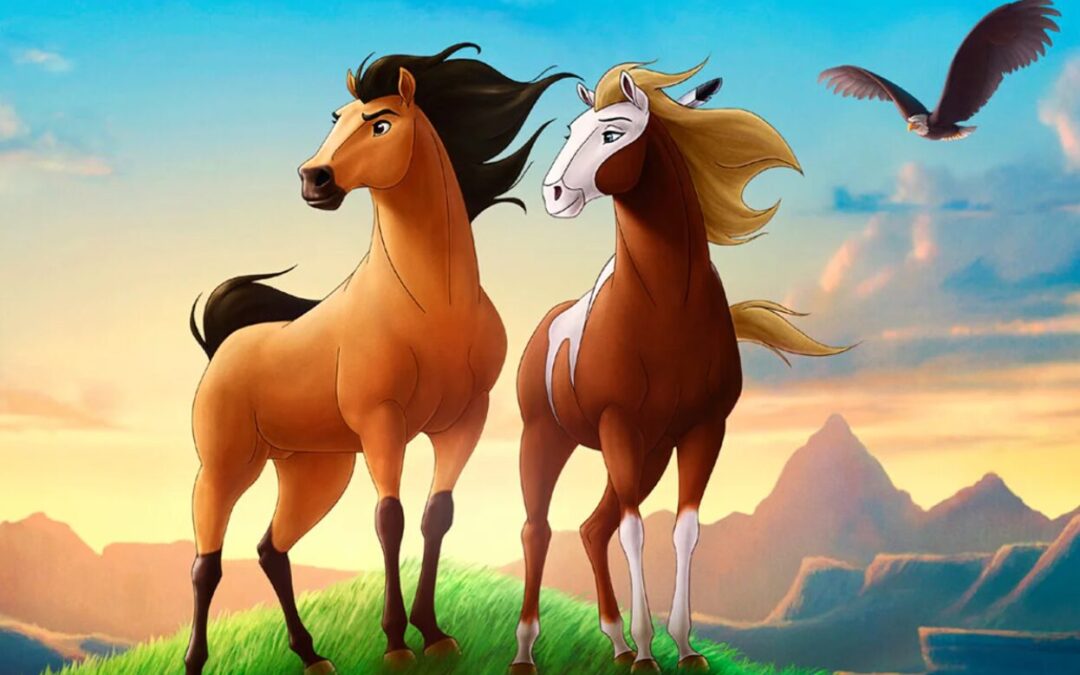
A few days ago, I had the pleasure of watching the 2002 animated film Spirit: Stallion of the Cimmaron, a movie that is somehow little known and also extremely famous, depending on who you ask. Previously, my exposure to this film was in three parts: first, I had heard it referenced online occasionally, as “the movie with the hot horse” or similar sentiments. Second, I saw an interview with Billie Eilish where she reported pulling up the movie to cry on command for the cover of Happier than Ever, which is as good of an endorsement as you could ask for. And third, I had seen it once, several years ago, but I must not have been paying much attention because I didn’t remember much.
If I had, I would have been prepared for the first moments of the movie, which begin with narration from none other than Matthew Damon as the voice of the main horse character. Before you as the viewer really have time to process this, let alone the fact that the horse is narrating, the opening number begins: a gravelly voice and guitar ballad by Canadian musician Bryan Adams, the first of eleven short songs that punctuate the soundtrack alongside a traditional orchestral score by—naturally—Hans Zimmer.
The combination of these three names in this animated horse movie really floored me, but I have to admit they are tied together surprisingly well by the 00s era transitional animation style to create a really unique, quirky charm. Visually speaking, some older animated movies age poorly, and this isn’t one of them. I especially like the choice to humanize the features of the horses to add expressiveness, which works specifically because they don’t speak in actual words in the movie. There are probably more horse noises and gestures in the movie than English dialogue, even including the Matt Damon narration, and this is a good thing. There are humans, but the movie isn’t really about them—it’s about the horses.
Admittedly, the design of the lead mare, Rain, suffers a bit from the “sexy dimorphism” trope, judging by her prominent eyeliner and mascara. But I’ve certainly seen worse, and I suppose you could argue that it’s at least egalitarian, judging by the way people talk about the titular stallion online (thirstily).
Other than that, I guess, I agreed with the political framing of the story overall, which is also not something I expected from Hot Horse Movie. The villains were unequivocally the abusive white men and their industrial operations that sought to exploit the land. Meanwhile, the Native Americans were sympathetic heroes who lived in collaboration with horses but ultimately respected their nature as wild animals. To my memory, not many movies from those years had this angle, especially not westerns.
Spirit: Stallion of the Cimarron runs at just under ninety minutes, and by the time it ended I was genuinely impressed. It’s well-paced, good storytelling, and doesn’t cut corners. With the help of the music, the emotional moments hit hard, and the action scenes are creative and fun. I think my favorite side character is the horse with the blue paint circle around its eye, who I discovered has no official name.
As a side note, Heidi told me that she owned the movie on DVD and there were some special features, which sort of bummed me out. I miss special features. In any case, I really enjoyed Spirit. Part of me wants to say that they just don’t make movies like this anymore, but I haven’t seen enough recent animated films enough to say that with confidence. Maybe what I really need is to watch more horse movies.

Phil Rienstra (they/he) (’21) studied writing and music, and since graduating has developed an interest in labor rights and coffee. They’re an amateur chef, a perennial bandana wearer, a fledgling dungeon master, and an Enneagram 4. He lives in St. Paul with his spouse, Heidi.


Girls don’t want flowers, we want a remastered re-release of Spirit!
My sister and I recently held a Great Horse Movie Night featuring Spirit and The Black Stallion, so there must be something horsey in the air this summer. Spirit isn’t a perfect movie, but the music really is spectacular; please know that “Homeland” and “Run Free” can make any road trip scenery feel more epic.
If you need another fabulous horse movie, The Black Stallion is also excellent 😉
as a MASSIVE fan of animated movies, i can confidently say “they just don’t make movies like this anymore”!!
So glad someone wrote about the horse movie for this theme month