
Our theme for the month of March is “I was wrong about.”
To quote author Eli Rallo, “The birth control industry is far from perfect. Birth control is far from perfect, and there are plenty of problems we need to address, but that does not mean it is justified to spread medical misinformation, fear-mongering, and insight mass hysteria over birth control, thus making women incredibly fearful of birth control. In turn, making it really easy for them to ban birth control.”
This pretty much sums up the current place American women find themselves in with regard to the pill (and other forms of contraception). When the Supreme Court overturned Roe v. Wade in 2022, many assumed the conservative right would leave birth control alone. But for those who have looked into the language in Project 2025, it is clear that there is a larger plan at play, one that would result in tens of millions of women no longer having access to no-cost contraception, like we do today.
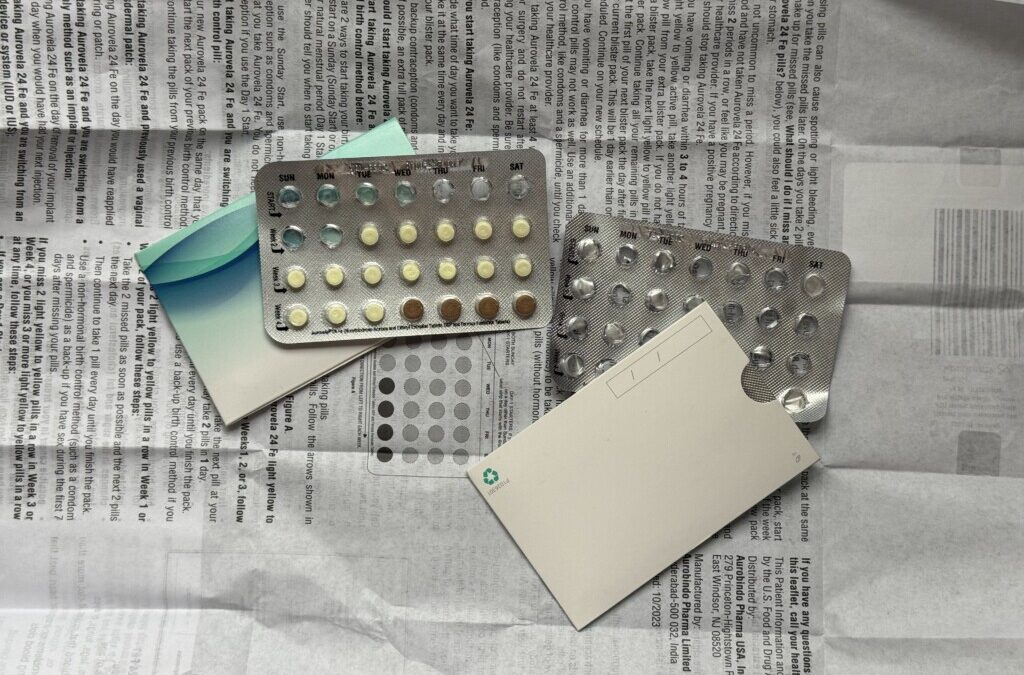
I’m not going to say when or why I started taking birth control (my specific prescription is for Junel, a low-estrogen contraceptive pill), but before I did I was a victim of the misinformation and fear-mongering. The language around birth control these days seems to say that the Natural Cycles app or an Oura ring are the only options that won’t cause lasting issues for your health and sounds as if it has been designed to deter young women from the medicine that liberated our mothers and grandmothers.
The choice to take the pill is a personal one. My mom had very few side effects (other than pregnancy prevention) from the pill, and since we are very genetically similar I felt reassured that this would be a safe and effective option for me. But I did not always feel that way.
Growing up there were pop culture references to the pill that I did not fully understand, but that stuck with me. On The Simpsons, Bart decides he wants a little brother so he replaces his mom’s birth control pills with Tic Tacs. He puts the discarded pills into the Tic Tacs container and gives it to the neighborhood bully, who eats them and then experiences mood swings, weeping openly. In the show New Girl, Schmidt takes Jess’s birth control pills in an effort to prevent her from sleeping with another character. He freaks out, later saying “I’m so aware of my nipples right now.” Are those the sorts of symptoms that await young women on the pill?
There were also real-life examples of birth control horror stories, from close friends to influencers to podcast hosts. One said it killed her sex drive. Another said she gained weight and had never been able to lose it until she stopped taking the pill. The podcast host described feeling intense suicidal ideation within two weeks of starting to take the pill. But I also heard from other people how effective it was, how it helped regulate not only their cycle, but their emotions. “Everyone reacts differently,” was how my gynecologist put it.
With regard to other types of contraception, I knew I did not want the birth control that goes in your arm. For my friends who have it, it has been effective, but comes with its own side effects, which range in manageability from person to person. When they inevitably ask, “do you wanna feel it?” while raising their arm, my answer is always, “Absolutely not, no, thank you.” I have heard the stories of misplaced IUDs or mismanaged pain prevention care for IUD placement, but I’ve also heard that the pain was nothing compared to labor, or that it was incredibly effective for the season of life it was required for. I know other people who decided to “just wing it” with their contraceptive efforts, and those people are now mothers.
There are a million stories out there about women’s reactions to birth control of many different kinds. Here’s mine: every morning when I swallow my itty bitty yellow circle of hormones I picture Gloria Steinem smiling and nodding at me, and I raise a fist in solidarity. I have had no untoward symptoms beyond the blessing of a two-daylong faux period at the end of every twenty-nine days. I am not pregnant and I am not worried about becoming pregnant unintentionally.
Gloria Steinem once said, “Controlling reproduction is the first step in any authoritarian government.” I love the pill and I love the reproductive freedom it gives me. And everyone deserves that sort of reproductive freedom: the kind where you are free to plan your family the way you choose, without fear or intimidation.

Carlisle Patete (‘22) came to Calvin University from the mountains of North Carolina and graduated with a double major in film & media and creative writing. After brief stints in Los Angeles and Chicago, she now resides in Chattanooga, Tennessee, where she enjoys sweet tea on her front porch and identifying every tree and bird she runs into on any hiking trail.


10/10
Honestly, pro move by Bart.
Loved reading this, thanks for bringing it to us.
This was so good!