
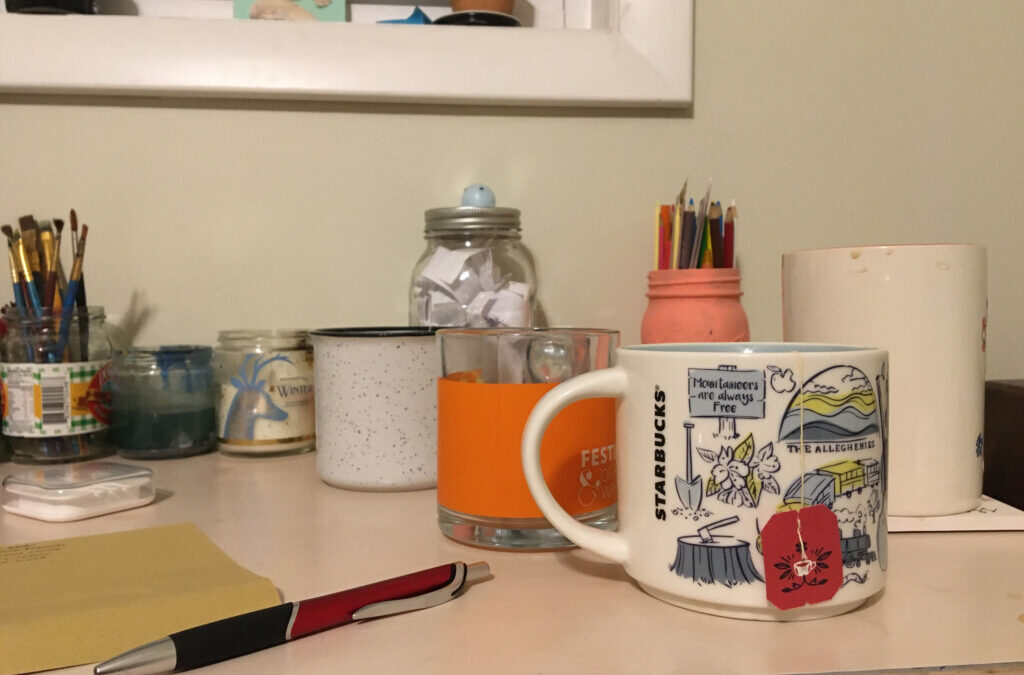
The first stage of being sick is denial.
That slight soreness in the back of your throat? It’s probably because you didn’t drink enough water. The headache? You didn’t drink enough water, and perhaps you haven’t eaten enough. Nausea and an uneasy feeling in your stomach? You didn’t drink enough water, and clearly you didn’t eat the right thing for your headache. Tight, painful shoulders, heavy weariness and a general malaise? Also potentially related to not drinking enough water.
All nonspecific symptoms can be traced back to dehydration, if you are optimistic enough.
(If you are less optimistic and start looking on WebMD and similar websites, they may tell you it’s cancer.)
With great hope in your heart, you sit down and drink a couple glasses of water, even though the idea of drinking anything right now is repulsive. (But of course, that is only the dehydration speaking; clearly, you are merely too deprived to recognize your own need.) To make the fluid more palatable, you might put the kettle on and make some tea. Not because you are sick or anything—tea is just a superb nighttime drink.
Sooner or later, however, you will be forced to admit the truth. Late at night, draped across the toilet, waiting for the inevitable to come, the queasiness unabated by hydration, or else shivering in bed, despite having a sweatshirt on over your pajamas, a bathrobe over the sweatshirt, and several blankets over all—no, these are not merely symptoms of dehydration.
With illness of the gastrointestinal variety, there might be some impulse to rush the process along, perhaps by shotgunning another glass or two of water.
Fevers, on the other hand, cannot be rushed. They can only be relieved. Resignedly, you must peel yourself from your pile of blankets, rummage through your desk drawer with aching fingers, and pull out the acetaminophen. You take a pill or two, washed down with the ever-useful water, and then, collapsing back into bed, hope that it will work miraculously fast.
Eventually, you must inform your workplace. This, even more than the acetaminophen, is an admission of illness. No, I will not be in tomorrow; I am sick.
Once you have done this, you can sink into bed. Being sick is far less climactic than trying to decide whether you are sick.
For most of the following day, you will alternate between dozing off and scrolling Wikipedia—its mostly black-and-white interface far less obnoxious than that of Instagram.
In your more wakeful moments, you drag yourself out of bed for tea, for pickles that taste preternaturally good, for ramen, for whatever leftovers you providentially cooked before your illness. Sometimes, while waiting for the kettle, you slump on the kitchen floor, regretting that you are an adult.
At other moments, you catch yourself prancing around the kitchen while watching the microwave, stop guiltily, and wonder if you imagined the whole malady up for the purpose of avoiding your responsibilities.
When you woke up this morning, you stared at the acetaminophen bottle next to your bed for a good twenty minutes, intimidated at the thought of sitting up long enough to take another dose.
Now, in the afternoon, that feels far off. The denial of the previous night feels much closer.
Perhaps you should have tried a little harder to tough it out. Perhaps if you’d given the water a little longer to work before taking the acetaminophen, you’d have woken up this morning feeling just fine. No need to call into work, or lay in bed all day.
By the time the microwave beeps at you, you are disheartened at the idea of eating. Walking all the way back to your bedroom is a daunting task. You’ve abandoned any ambitions of watching a movie and instead go straight to bed.
Being sick ends as it begins—with an element of disbelief.
In the morning, you awake feeling normal but tired. Is normalcy an illusion, a sign that you are once again in denial about being sick? Or are you tired because you haven’t been drinking enough water?
Cautiously, you test your convalescence: with breakfast, with tidying your room, with a more substantial lunch than the previous day, with a walk. All tasks which feel so much smaller today than yesterday, and yet bigger than most days. Nevertheless, you do them, and they don’t leave you feeling beat.
Which is a sign that, for the first time in 48 hours, any lingering symptoms might, in fact, just be dehydration.

After graduating from Calvin in May 2025 with a degree in writing and Spanish, G. E. Buller decided to stay in Grand Rapids. Currently, she is working as a special education aide. Her non-writing hobbies include fussing over her aquarium and reading about medieval/early modern nuns.

