
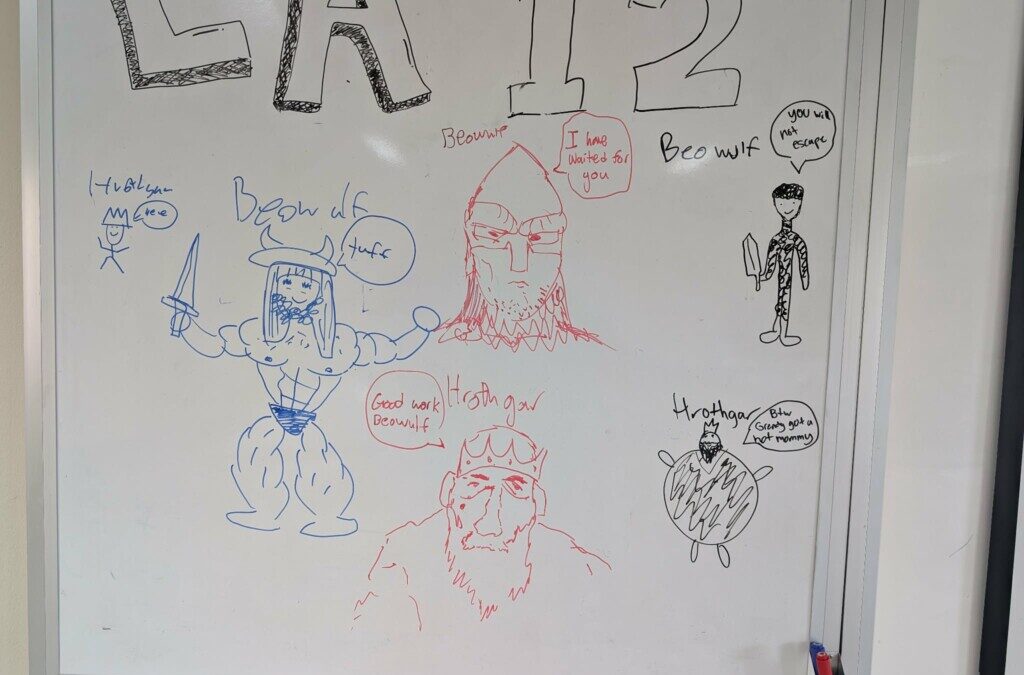
If the title confuses you, it should.
For the past year, I have worked as a Language Arts Teacher at a private Christian international school. Our school motto is “serving the servant,” meaning we aim to provide a place for the children of missionaries to receive a quality education while away from their home countries. This school is also run on the basis of “Missionary Teaching,” which means the teachers are here as missionaries; this is their mission work. So, to keep the overall cost of tuition low and be able to accommodate families with varying levels of income, all teachers live on mission support alone.
No paycheck.
All of this is to say that this school is always in desperate need of teachers, which makes their requirements to be a teacher a little less rigid than you would see in the States. Instead of an Education degree or teaching license, you just need a degree in the area of study you plan to teach in. So, with my degree in English Literature, I became a Language Arts Teacher.
Now, luckily enough, I wasn’t coming into this environment completely blind. I had actually graduated from this very Christian international school back in 2021 after spending four years there. I knew most of the teachers, who are now my colleagues, and was rather familiar with the school’s culture and expectations placed on its students. With that confidence, I proudly proclaimed to my supervisor that I could handle the very first unit of the year, teaching both the 11th and 12th grade classes. Boy, was I wrong.
Looking back on those lesson plans, I want to bury my head in a ditch.
Okay, that’s a little dramatic. Not all of it was bad.
I was able to impart some of my twenty-two years of wisdom upon my students. Many of them came out of it rather happy with our class time. Some felt challenged; others felt relaxed. It was “mid” as they say now. We had some fun with projects, got rather passionate about Shakespeare (they all now hate Claudio), and they learned quite a bit about how to write in the present tense. I also spent a lot of time just figuring out what my students needed. Slowly, I realized that they need a lot of different things. Those who struggled needed more time going over the basics. Those who were bored wanted to get into the meat of everything very quickly. My class of twenty felt like a class of a hundred different levels, needs, habits, desires, and motivations, and I, the twenty-two-year-old teacher, was lost in what seemed like an endless forest of confused faces and tired sighs. By the end of the year, I couldn’t help but feel disappointed in myself. I felt like I had failed my students. It wasn’t a crash and burn, but a slow engulfment by flames.
I’ve delved into dramatics again.
Let’s just say I was feeling like quite the imposter. This was made worse by the fact that I had actually been able to form some very good relationships with students. They liked me. They told me so. Other teachers and parents even praised me for it; and yes, that is an integral part of the job, but I’m a teacher and I felt like I couldn’t do the teaching part right.
So, now that I’ve entered my second year (I can’t just quit after one year!), what am I doing to feel like less of an imposter? I’m learning from my mistakes.
Well, sort of. I have decided to fully pursue teaching as a career. As of a couple of weeks ago, I’m taking online classes in the hopes of earning a Master’s degree in Education. Instead of simply relying on my mistakes, I am looking to experts to point them out and help correct them. So far, it’s actually been quite the validating experience. Things that came from instinct have been confirmed as good practices, and things I felt uncomfortable about have been shown as unfruitful and redirectable. Is it a lot of work? Yes! I like to joke to my students that I, too, have homework now and want to complain about it, but I can already see my mind easing with the knowledge I am gleaning from the work.
A lot of this is to say I am glad I didn’t quit. I am glad I reached out for help. I’m glad I didn’t let my failures carry into the future. I am happy to be knee-deep in learning about learning. And I am incredibly grateful for the community I have here. I get to speak with teaching missionaries from all walks of life, take their advice to heart, and be comforted by their words of encouragement.
So if you’re wondering what life after Calvin could look like, here’s my experience so far. I hope it encourages you!

Priscilla Chang (’25) majored in English literature and minored in linguistics at Calvin. She now works as a missionary teacher in Thailand, teaching language arts at Chiang Rai International Christian School. Apart from her love of reading and writing, she is also obsessed with learning languages, dancing, and watching the latest Korean dramas.

