
In August, we bring a set of new full-time writers to the blog. Today, please welcome Chantale Shuāng Van Tassel (‘26), who will be writing for us on the 8th of each month. Shuāng grew up in Hong Kong as an American-Taiwanese TCK, and studied writing, linguistics, and Asian studies at Calvin. A lover of tea and aspiring polyglot, she enjoys cooking for her loved ones and tromping around big cities on a never-ending quest for dessert and the perfect pair of jeans.
I got asked about the ghost three weeks into my job.
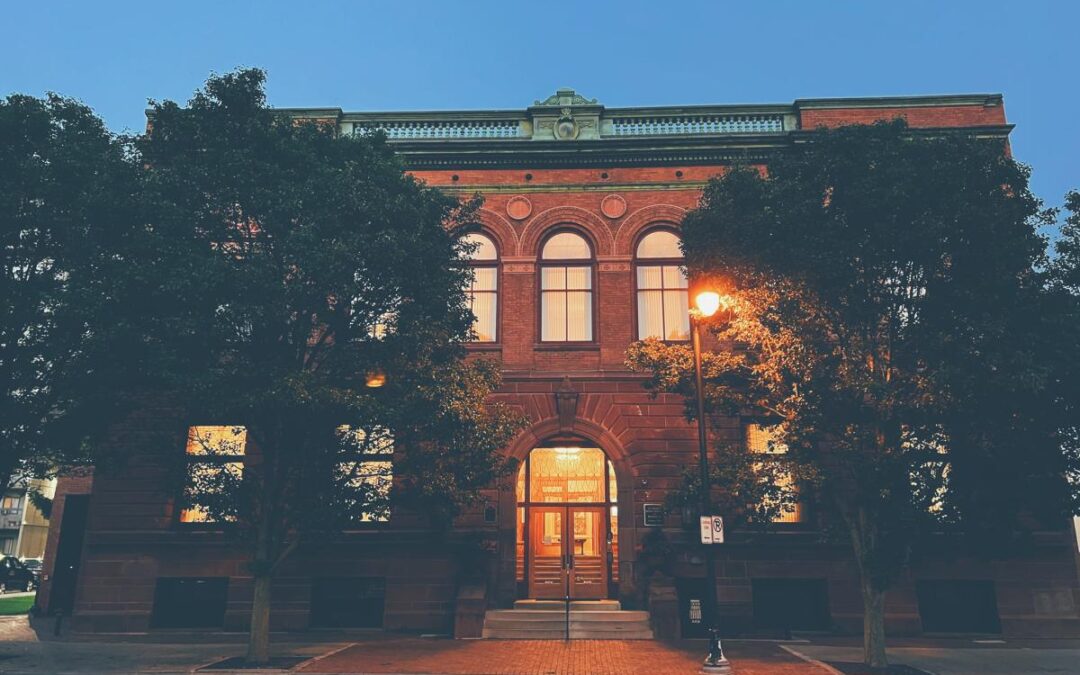
It was one of my first nights closing up by myself at Saint Cecilia Music Center. Built in the late 1800s and named after the patron saint of music, it’s all Italian Renaissance inside, with crystal chandeliers and glossy, dark wood panelling. Pressed glass sconces fan out light across cream-coloured walls and gilt borders like sets of angel wings.
I was overseeing a choir rehearsal that night. As part of events staff, I help manage the venue, hosting anything from piano recitals to weddings. This not only meant making sure guests’ needs were met, but locking up the premises once everybody left.
Alone. In the dark.
The lady in the rainbow tie-dye shirt adjusted her purple glasses. “The ghost,” she repeats. “Have you seen her yet?”
I hesitated, unsure of how to respond. As someone raised in the church, the existence of spirits had always been something that nested easily in my mental inventory. But I didn’t believe in ghosts. Spirits seemed like eternal entities without start or end, while ghosts were shades of deceased people, which—apart from creating far too many caveats concerning the afterlife—was just plain creepy. The blurring of the two unnerved me. How could I explain that I bought into one and not the other?
I thought of our ghost light, something I learned about my first night here. Ours was a tall, black rod of metal that caged a single lightbulb. Every theatre has one, my boss had explained. We set it out every night after a tear-down in the aud. It’s meant to keep the spirits happy.
Light-house, I’d thought.
But my boss had made no mention of a ghost, and I wasn’t excited about the notion that someone could have died here. I asked Rainbow Shirt what she meant.
“Ya know, there’s the poltergeist activity with the lights,” she waved her hand. “Though that’s usually chalked up to how old the place is. But there’s also been figures sighted upstairs in the ballroom and stuff.”
Yep. Definitely not in my training manual. But she did have a point; the building certainly had character. I’d spent my first couple weeks treading carefully, cringing at every creak and groan in fear I’d broken something. Bruises bloomed across my legs from tearing down eight-foot tables, carting around stacks of chairs rivaling my own height, and heaving against that one door that always, always stuck. The Lady Cecilia was an aloof dance partner, of whom I was still learning not to trip over her toes. She liked to laugh at me.
“She sounds friendly,” I finally said. “You’ll tell me if you see her?”
“Sure will,” Rainbow Shirt cackled. “It’s a beautiful place to haunt for all eternity.”
She ambled back into rehearsal as the choir resumed. I ran upstairs to do a lap around the definitely-empty ballroom for peace of mind.
In the places where humans feel the temporal wearing thin, I don’t think it is a coincidence that we tend to set out lights. We’re always sheltering beneath greater, invisible eaves of things bigger than us. Some burn joss sticks for their ancestors in their illuminated mini shrines, while others still knock on wood counters and skip over cracks in the pavement. For us at Saint Cecilia it was setting out the ghost light after closing. Perhaps deep down we all wish to honour something.
But for me, in that particular moment, it was listening to this choir sing. I realised I’d spent so much time participating in choirs over my college years I’d rarely ever sat still to listen to them. I realised how much I missed it.
It was then that the notion of a ghost became laughable: not so much in a ridiculous way, but how one might tenderly listen to a babbling child. The darkness softened. In this moment, Cecilia didn’t seem so much haunted as simply inhabited; imbued by the years of music gracing its walls. Sticky children’s hands slicking over grand pianos during recitals; R&B reverberating against champagne flutes at wedding receptions; choirs laughing as they stumbled and soared through their scores at practise. Music did indeed live here. In turn, the ghost light seemed more and more a placeholder. It was indeed a lighthouse; both an acknowledgment of a loftier existence and a ballast that keeps the lost soul in the night from stumbling in the dark. But more so, it was a promise that music will once again fill the house, come dawn.
The ghost light was the last thing I lugged out for the night. “Happy?” I called out into the dark auditorium.
The Lady creaked, satisfied.
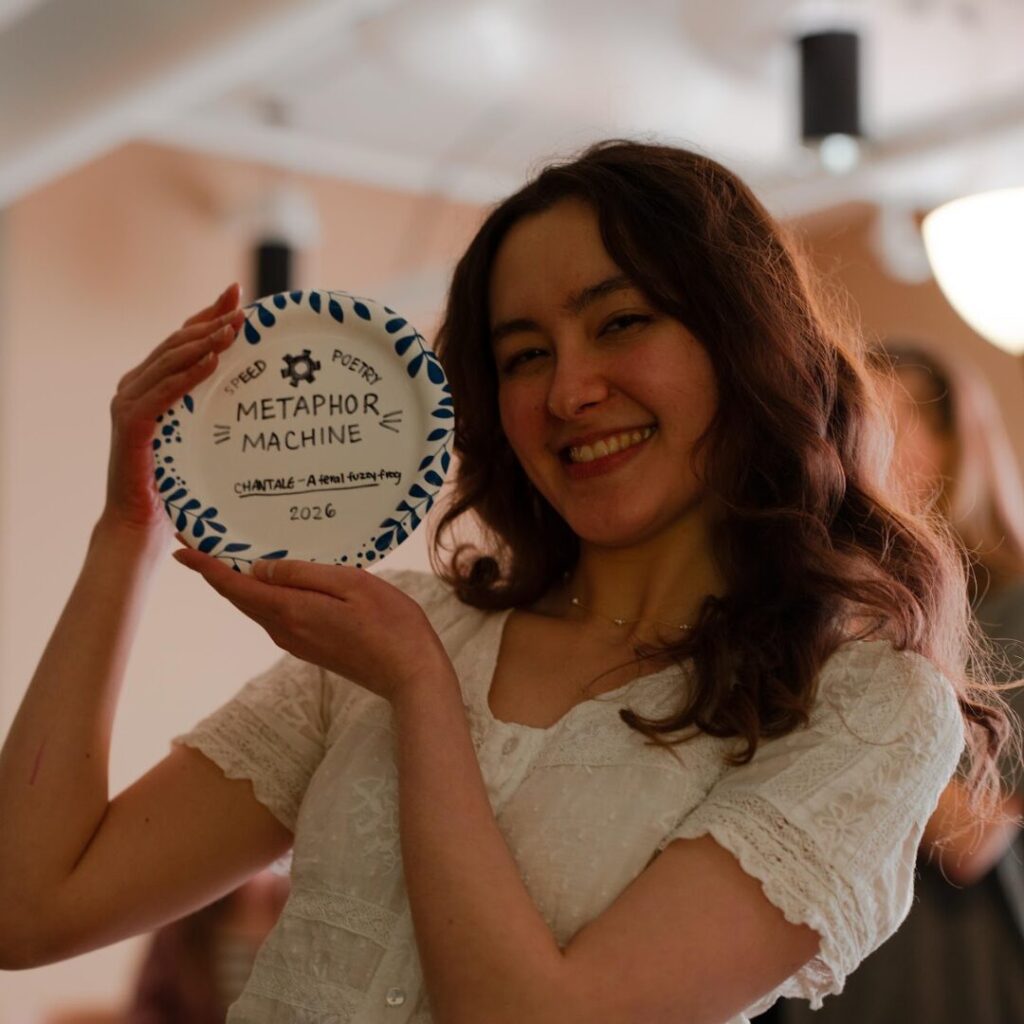
Chantale Shuāng Van Tassel (‘26) grew up in Hong Kong as an American-Taiwanese TCK and studied writing, linguistics, and Asian studies at Calvin. A lover of tea and aspiring polyglot, she enjoys cooking for her loved ones and tromping around big cities on a never-ending quest for dessert and the perfect pair of jeans.


What a beautiful opening piece! As always, love your evocative descriptions and smooth-flowing themes. Can’t wait to read more! 🙂
Wow! You created such a beautiful atmosphere. Can’t wait to read more!
Welcome to the post!
I love your descriptions and storytelling.