
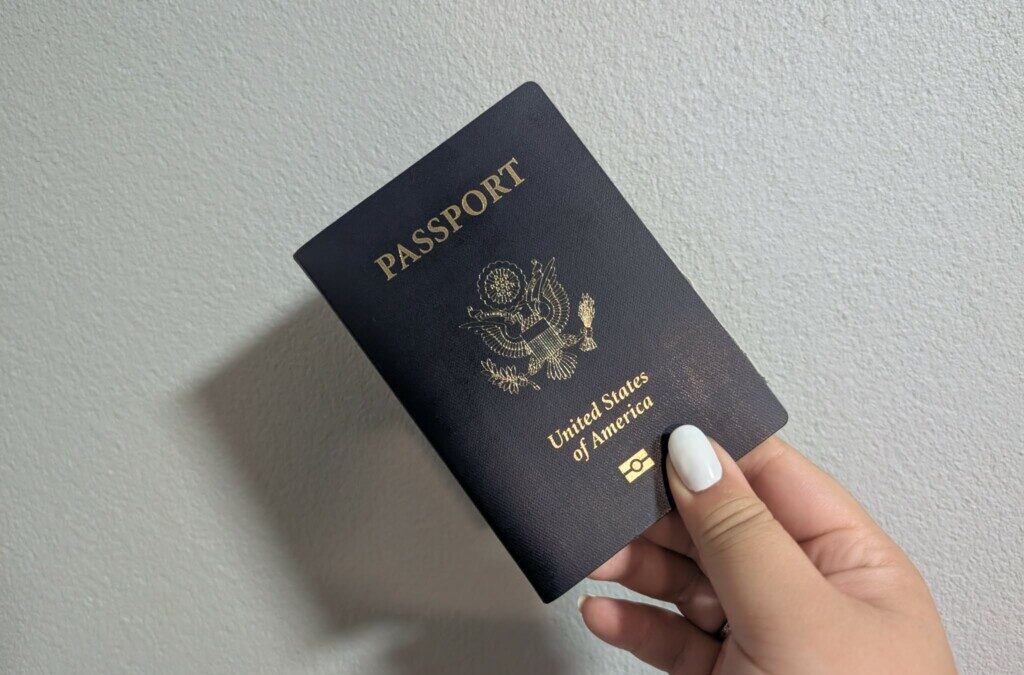
In middle school, I became obsessed with American history.
As a rather introverted homeschooled kid, I found myself hyperfixated on the history of the country I called home. I credit the presence of multiple low-budget kids cartoons about the 200+ years of events sitting in our family’s DVD shelves for the obsession. These cartoons often explored the emotions and motivations behind the birth of America and did a rather good job of instilling those same emotions and motivations into their viewers. Eventually, I became quite the red-blooded American, proud to call the fifty states my home.
At the same time, I was still Chinese.
If you read my piece about the C-drama that cured my internal racism, you’d have seen the Asian side of this identity struggle. The American side is a little different. Instead of a distaste for the American elements of myself, I glorified them. My civil freedoms became a boasting point, something I could use to hold my head high in this world. I loved that I held an American passport and could enjoy every incredible thing this country had to offer.
This interest followed me through high school, especially after I had moved to Thailand as a missionary kid. The pride that came with my citizenship became more intense. I wanted my citizenship to be self-evident. I learned how to speak well, write well, and present myself in a way that was expected of an American child. On our school’s International Day, I wore those Old Navy t-shirts sold on Independence Day and a hat with the state flag of California on it. I didn’t want people to assume I was from Asia. I wanted to show the world that I was an American.
Then I moved back to America.
To say it was a rude awakening is an understatement. I moved to Calvin’s campus thinking I knew what America was. I was very wrong. It had changed. I had changed. Without the veil of my childhood innocence and my sheltered upbringing, I saw America for what it was: a messed-up place. And it wasn’t as devastating a discovery as I thought it would be.
Like many people, a revelation like this caused a rather hard pendulum swing toward disliking most of what America is known for. I started to vocalize the disappointment I had in some of the cultural, political, and social aspects of America. I began to praise the ways in which other countries upheld their values and presented themselves. I openly questioned the way immigrants have romanticised America as this place of endless opportunity. I opened up to my Chinese ethnicity and began to identify more strongly with the way I looked rather than the country listed on my passport. In a way, this was freeing. I had finally stepped away from having to explain how firmly of an American I was. I could just let people assume I was from another country and be fine with it. I didn’t feel the need to correct them anymore because I didn’t feel the need to be associated with America anymore.
But I don’t think that’s entirely right either.
At some point, I started to wish I wasn’t an American. I was a little embarrassed. I see how America influences so many aspects of geopolitics today and physically cringe at the way our leaders have decided to conduct themselves. But then I had some more conversations with my international friends. They too didn’t quite agree with what the government was doing, but it was still offering them opportunities they would not have had somewhere else. Their families worked hard to get them to America. They had dreamt of what it could be like to live in a place where their faith was not criminalized. They knew their educations would be taken seriously if their diplomas came from the States. I had to sit there and realize that I had taken everything about America for granted.
The good, the bad, and the ugly aspects of this country had long been tucked away under the images that were fed to me. America is messy, but it was once really trying to be the home of the brave and the land of the free it had promised to be. In fact, many people still see it that way. I may have become disillusioned with the way I used to see America, but I cannot deny its place in a world where people are still looking to it as a way to live better.
So, to answer the question in the title: Yes, I am still an American, just not as zealous of a patriot as middle-school me

Priscilla Chang (’25) majored in English literature and minored in linguistics at Calvin. She now works as a missionary teacher in Thailand, teaching language arts at Chiang Rai International Christian School. Apart from her love of reading and writing, she is also obsessed with learning languages, dancing, and watching the latest Korean dramas.


Thank you for sharing your journey …. a triadic pattern of which I’ve heard others speak in terms of faith … an original naiveté, then a confrontation, and rejection, and then a recovery, what Marcus Borg called “a second naiveté” – yes, “I believe” but now informed by critical reflection.
Priscilla! Thanks for sharing something so tricky to articulate, you did it so thoughtfully and cogently. Good to hear from you. 🙂
Thank you for this, Priscilla.