
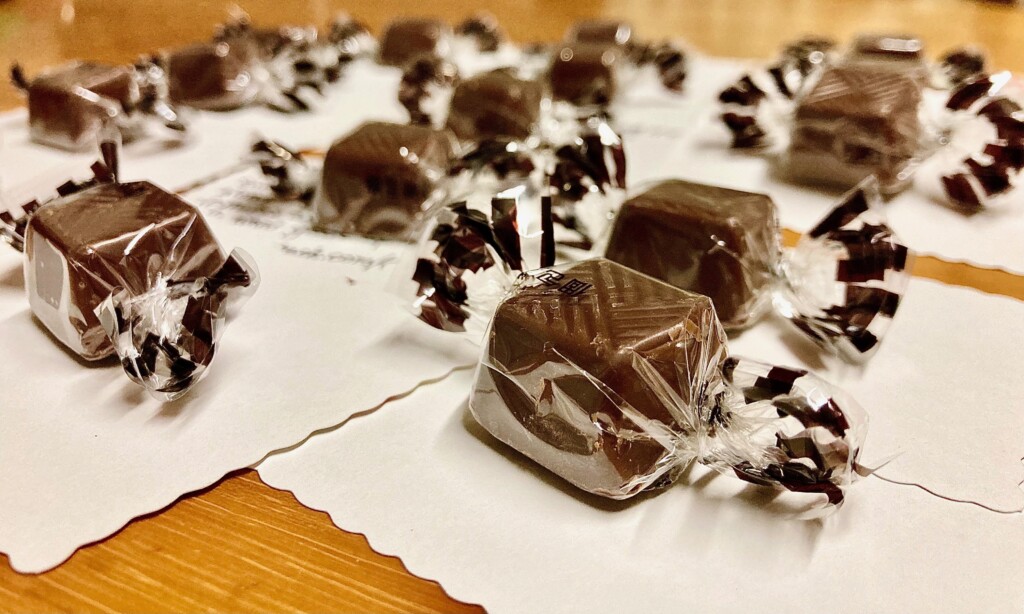
One of my aunts shops as a hobby. When I was a child, one of her favorite things was to absolutely bombard us children with gifts on Christmas and birthdays, to the point where she would bring the presents in big trash bags simply for logistical ease. You might imagine, then, how being raised on trash-bag gift hauls might lead me to believe that the gift is more important than its wrapping. Well, a child raised in Japan might think differently. In fact, I’m fairly sure they do. They also would know about all the different times in which a gift is expected in Japan, which I had no idea about before hearing the most surprising conversations during my study abroad here.
It started when a couple of my friends graduated and handed out little snack baggies to everyone as goodbye gifts—like a party favor bag filled with a handful of different snacks and sweets and a card. And it occurred to me: you’re leaving, so I get a gift? And then one of my classmates mentioned how, during grade school, she would bring cookies or some sort of dessert to class on her birthday to celebrate. It’s your birthday, so you bring cookies for everyone else? And of course each of these gifts is carefully individually packaged in cute bags with little sparkly twist ties or ribbons, complements of the nearest Daiso or Seria 100-yen store (essentially a dollar store). One of the girls on my team for a trip recently knocked on my door to give me homemade cookies as a “looking forward to working with you!” gift. I had never once thought to make and package treats to declare my intention to begin a positive relationship with someone. But the cookies were tasty, and I think I do look forward to working with her more because of them.
From the little I have gleaned in the past ten months, there are many, many different types of gifts for every variety of occasion in Japanese culture. It is expected that you get a gift of some kind for your hosts when you visit someone’s house or gathering (and present it while humbly saying, “This is a boring thing, but please accept it”). Every time you take a trip, you are expected to bring back small souvenir gifts for colleagues and friends. Every Valentine’s Day, there is a complex system of chocolate-giving from women to men, and, a month later on White Day, from the men back to the women. (This system extends beyond romance, by the way, to involve friends, coworkers, colleagues, and even chocolates given to oneself, called “reverse chocolates”). But if these weren’t enough gifts for you, don’t worry: many people also give gratitude gifts every six months in December and June just to thank people for existing.
Each of these gifts has a completely unique visual presentation, too. On New Years, for example, children receive money in cute decorative envelopes (traditionally red) from parents and relatives. Money envelopes for weddings, funerals, and birthdays also sport designs completely unique to themselves, with a long history of symbolism behind every element of the envelope. The following is a small sampling of the types of envelopes made so readily available as to occupy a shelf at the convenience store, each to present a monetary gift for a different occasion.
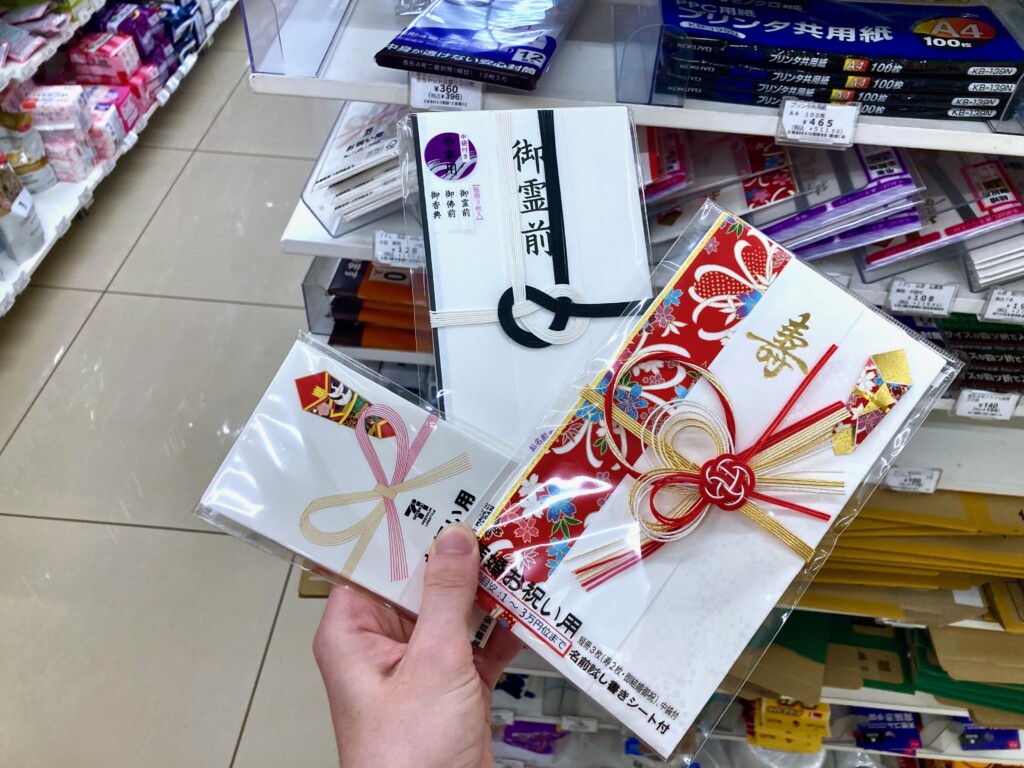
In my experience, the fact that gifts are so numerous in Japan means that often they are much smaller or simpler than one might expect in the States. A little keychain, for example. A couple of cookies. In many cases, the thought matters more than the gift itself, like the gift is really a formality within the real goal of conveying one’s feelings. And each gift must be packaged in aesthetically pleasing baggies or obscenely neat wrapping, which becomes increasingly ornate and traditional with the formality of the gift, to the point of becoming literal art pieces. Just look up “Japanese speed wrapping” for an example of the importance of neat presentation. There are entire books on gift wrapping techniques.
Is it a good thing, then, to give so many gifts? Well, it is psychologically proven that we humans find more joy in giving gifts than receiving them, and it is somewhat nice to declare one’s positive feelings or intentions through a little treat instead of words, which can be awkward or fall flat. And the treats are nice to eat. But all these gifts and packaging products also make a huge contribution to consumerism and waste production, and the complexity and rigidity of such non-verbal communication rules, which so easily fall away from genuineness to obligation, can quickly become cumbersome and restrictive. This vein of social obligation is one of the biggest complaints I hear from Japanese expats.
As for me? I personally still appreciate trash bag gifts, and I also just assembled twenty-something little cards with chocolates to give to my community in Japan as goodbye gifts. The thought does matter more than the gift, and whether a little gift or a couple of kind words is what conveys that thought, the most important thing is that we receive it and show our own version of love in return.

Emilyn Shortridge (’25) spent her Calvin years studying English linguistics, Asian studies, and ministry leadership, and intends to finish her Asian studies program in Chiba, Japan, in 2026. When at home in Plymouth, Michigan, she thrives anywhere near fantasy novels, houseplants, hot tea, or her calico cat, Genie, but she plans to live and learn in many cultures before deciding which corner of the world needs her most.

