
Our theme for the month of June is “spirits.”
Gently, the toddler I’m reading to in the Sunday school room reaches up and pats my breast. A curious gesture.
“Oh,” I say, a little surprised, holding my hand up like a stop sign. “We don’t touch other people’s bodies without permission. Would you like a hug? You can ask for a hug.”
She throws her little arms around me.
“Do you have a baby?” The child asks.
“No,” I reply. “I don’t have kids of my own.”
“Then why are you like that?” As with many little kids, she understands people in two categories: parents and kids. If you aren’t one, you must be the other. To her, I am shaped like her mom who feeds her baby sibling. But I am not a mom and not a kid. What am I?
“Because God made my body this way. Everybody’s body is different and special. God made your body special. God gave you strong legs so you can dance. What else do you think God made your body to do? What about your nose?”
It’s a teachable moment, but the kiddo has lost interest in it. So, we go back to the book.
To date, this is the longest and most substantial conversation I have had about bodies in the context of not just church, but faith.
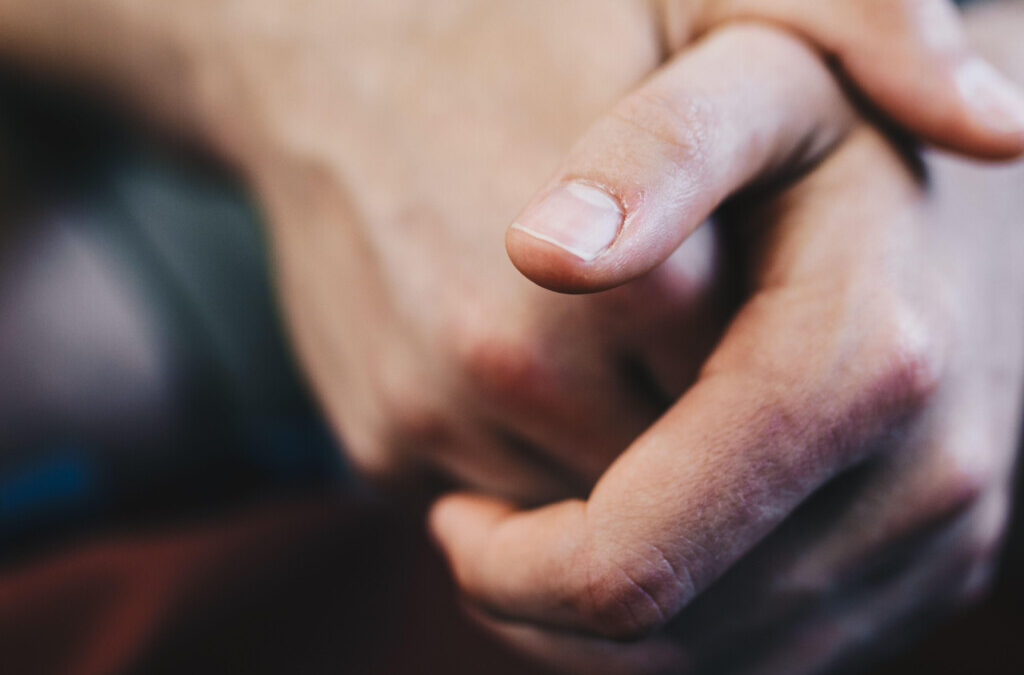
Most of what I remember hearing about the body within The Body is some version of: “For the love of God, don’t have sex with it.” Or some vague prescriptions to maintain one’s “temple.”
Most of what we talk about in church is concerned with the soul: How is it doing? Where is it going? I’ve heard many sermons on charity, on prayer, and maybe one or two on hospitality; these things at least approach embodiment, but mostly in service of the soul.
What is my soul anyway?
Is my personality an attribute of my soul? Is my gender? There’s an implicit assumption in the cultural theology that surrounds me that the soul is the bit that God is most concerned with, the part that really matters.
C.S. Lewis is quoted as saying, “You are a soul, you have a body.”
I disagree.
Since I have already said “sex” in this essay, I may as well add to my tab of offenses and pick a fight with C.S. Lewis. But I don’t have to because good old Clive Staples didn’t actually say it. George MacDonald, a writer Lewis very much admired, did.
Lewis, though, may have agreed. Lewis leaned neo-platonist in his theology. So did I, for a time.
As a bookish middle schooler with no discernable athletic ability, feeling awkward in a body in flux, Plato’s idea that the body is mostly transportation and the mind is where “it’s” at, appealed to me. I was good at brain things. I was good at creativity. I was good at knowing. I was good at belief, at least those aspects of belief which are more like recitations than convictions. Thank God, I thought, I was best at the best things.
But now, I’m not so sure.
The soul requires the body as mediator. Worship, prayer, love, goodness, beauty are all pumped through the various slimy plumbing of the flesh, becoming song, posture, action, art.
When God invites us to know him, the invitation is often to “taste and see,” to “touch the wounds,” to witness pillars of smoke and tongues of fire. The God who is spirit goes to a lot of trouble to communicate physically.
Maybe failing to talk about bodies in the context of our spirituality is part of where we have gone wrong. Maybe talking about disability, or inviting movement into worship, or making space for more of our senses in services is a prerequisite to talking about stewarding the natural world. If we recognized our bodies as more than packaging for our spirit, perhaps we’d think more about the spiritual implications of packaging.
And maybe the problem with large language models or artificial intelligence, aside from the water and energy they consume and the communities and lives they are designed to disembowel, is not merely that LLMs and AIs are soulless, but that they are bodyless.
People speak of training AI, as if it were a being: simple, innocent, in need of education. But an AI cannot truly be taught. A prompt is not a teachable moment. A chat is not a conversation. These things are just settings on a machine designed to strip-mine, to efficiently scrape out the marrow from every bone it finds. It experiences no joy or suffering in this work. It can form no scars and experiences no stakes. It has no adrenaline or oxytocin to propel it toward bravery or love. It has no amygdala to light up white-hot with empathetic rage at the wrong things. It has none of the delicate sensors and organs required to receive communion at the altar of a honeysuckle blossom, pinched between nervy fingers, smelling like amber evening light and tasting, when dripped into an upturned, supplicant, baby-bird mouth, like love. It can’t receive anything at all. An AI can take but never experience satisfaction. It cannot conceive of an end. There’s always another question.
The idea of a disembodied intelligence made to serve is so much easier to humanize, accept, and use if you have already dehumanized yourself into a mind in an unimportant flesh suit. It’s easier to ignore how the thing gluts itself on art or the planet itself if it’s all temporary and disposable anyway.
So, if communities of faith want to start talking about and combating what is artificial, harmful, hollow, and craven—and we should—we need to start talking about what is real.

Emily Stroble is a writer of bits and pieces and is distractedly pursuing lots of novel ideas and nonfiction projects as inspiration strikes. As an editorial assistant at Zondervan, she helps put the pieces of children’s books and Bibles together. A lover of the ridiculous, inexplicable, and wondrous as well as stories of all kinds, Emily enjoys getting lost in museums, movies old and new, making art, the mountains of Colorado, and the unsalted oceans near Grand Rapids. Her movie reviews also appear in the Mixed Media section of The Banner and her strange little stories of the fantastic are on the Calvin alumni fiction blog Presticogitation. Her big dream is to dig her hands deep into the soil of making children’s books as an editor…and to finally finish her children’s novel.


I swear the damage to the faith the Gnostics did will never be repaired.
I am not a ghost piloting a meat machine. I AM the meat machine.
This is really insightful and important. Hopefully AI is exposing our obsession both with reason and the soul. Obviously those things are good, but there is so much more that goes into our humanity.