

I’ve been an AI skeptic. I also think ignoring the development of globe warping technology is irresponsible. So, I’ve kept an eye on it.
When some of the first GPT models rolled out, I remember asking it how to propose in the kitchen of my college house, and we all got a good laugh at how generic the response was. “Talk to your partner first. Buy a ring. Make a plan.”
But, those around me pointed out that that answer skews toward western cultural norms, which is by design.
I also experimented with those early chats for a few of my classes and found it unhelpful. It hallucinated wildly, giving inaccurate info about basic biographical facts of various philosophers that I was reading. Not worth my time, so I ignored the AI noise.
Flash forward a few years to last summer and I got curious again. I was hearing a lot about how great the newest tools were, so I gave a few a try. I integrated it into my work inbox and started trying out some of the deeper research modes.
And, to little surprise, it was still unhelpful. It was as if the worst intern in the world was drafting my messages and building reports. I had to scrap the work and start over with my own brain.
On top of that, the environmental and cultural dominance concerns have only gotten worse. Not worth participating on so many levels.
Now again, this spring, I’m hearing that the newest models are different. Something changed, and having to redo the AI work is over. We have arrived at the AI promised land.
On top of this, I work at a very AI forward company and my workload has increased exponentially as the company grows. And, it’s not just more work, it’s different work. Drafting company policy, beefing up existing procedures, finding solutions to breaking points as the team expands. It’s ‘figure it out’ work, which I find extremely rewarding.
So I thought, “Hell. Let’s give the newest stuff a try.” And, people. This stuff is beyond powerful.
I can skip hours of frustrating drafting and get straight to a third or fourth version and then improve from there without having to rewrite whole pages at a time. I get a daily briefing that summarizes my inbox and meetings. I took a random .pdf from a company chat and ran a full digital forensics, getting matching summaries of the metadata from three independent LLMs. I have no experience in digital forensics.
At least in my context, this is the supercharging of one person’s work that I keep hearing about.
But I don’t want to be the fool. Behind a lot of my own experimentation with this technology is an anxiety that I’ll get left behind if I don’t adapt and learn how to use it. It’s the push of the invisible hand that drives these things forward, but I still have a mountain of questions and concerns.
The environmental concerns are only getting worse. Energy and water use are exploding. Electronic and mining waste need to be handled properly. There are dystopian levels of datacenter colonization in communities. These issues only get bigger as the technology scales and so far the only solution is to just not do it.
The abuse of underprivileged people and cultures is only exaggerated as the demands of development increase. The ‘inevitable march of progress’ is stomping on those below. We did this before with land, now, it seems, we’re doing it with our digital infrastructure.
And, the technology is distributed in a way that continues to favor those at the top who can pay to access the most powerful tools. Compute is one of the buzzwords that you’ll come across as soon as you start looking into this. How do you get more compute? You pay. We’ve paywalled the seriously powerful tools. That doesn’t even step into the world in which the people building this technology are sure to have tools the public cannot even imagine.
William Gibson is credited with the quote, “The future is already here – it’s just not very evenly distributed.” Which, the first time I heard, gave me a lot to think about.
We failed that test with the internet, and the new digital frontier is giving us another chance to try again, but I fear we are not rising to the task of developing and distributing this technology responsibly and equally.
Opting out of the tech disturbs me because I know people are pushing this forward regardless. And despite all my concerns, I feel stuck using it just to keep up. I have agency, no doubt. I choose to use it, and it continues to be a technology that adds to my life, so I’m likely to keep using it. But I don’t like it, and whether I use it or not, I’m stuck awake at night concerned about what is to come.
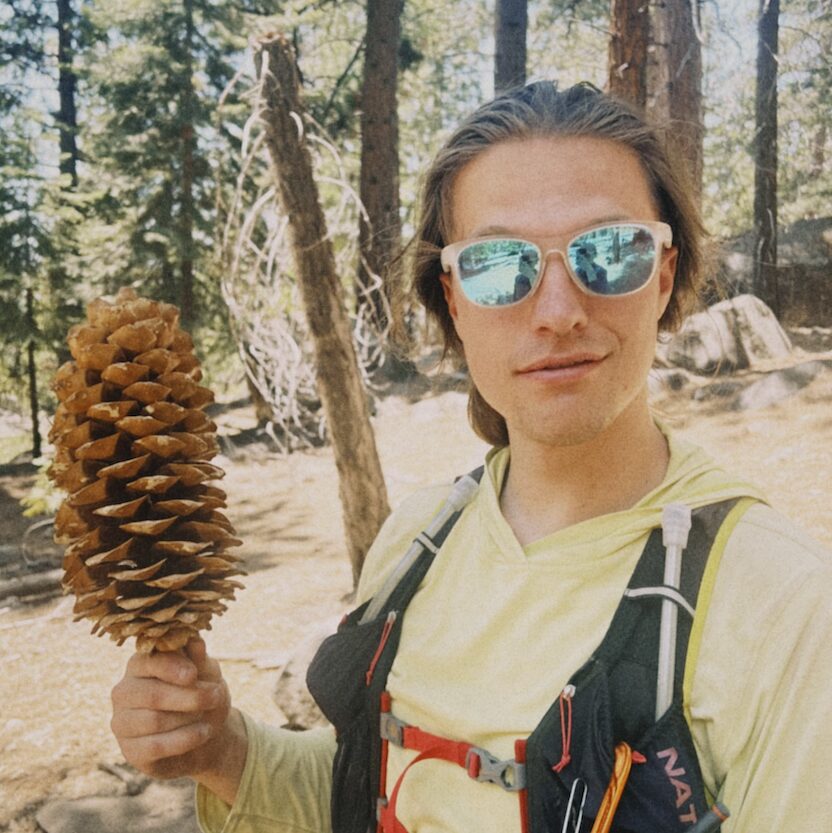
Clint Wilson (‘23) graduated from Calvin with an official degree in philosophy and unofficial degree in outdoor rec. They currently live in Denver and are working remotely for an LSAT prep company. You’ll likely find them slowly jogging a trail, belaying their wife up some rocks, or reading beneath a heap of blankets.


Well said – thank you.
This is good. AI has gotten out of control, and we need more thoughtful people.