
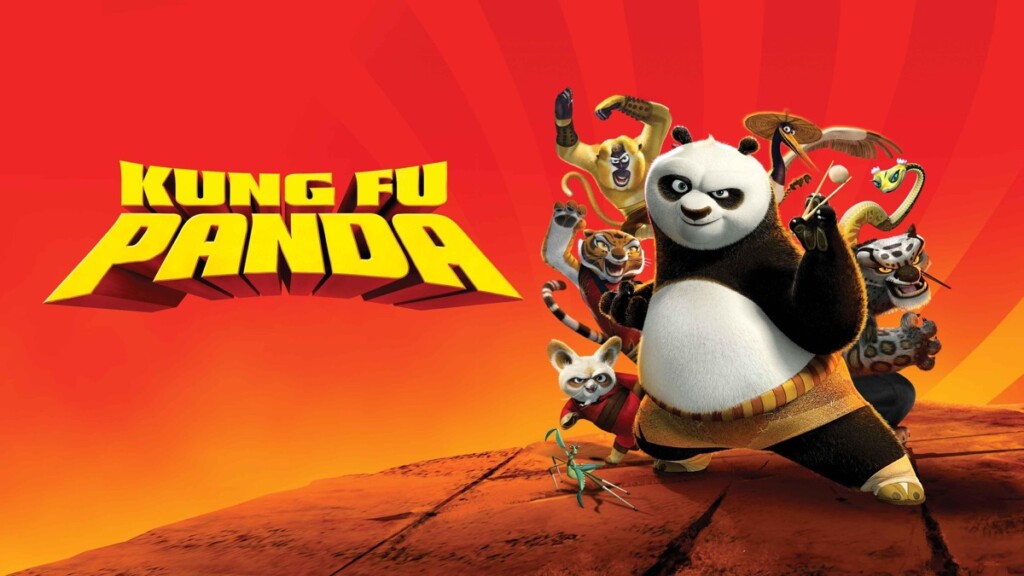
This opinion of mine has become a meme among my work lunch friends, who have started responding to particularly out-of-pocket takes with “And Po is actually a lot like Jesus.”
Some have gone so far as to call my argument “heresy.” I’m sensitive to this criticism, but I think it’s unwarranted, given that I’m merely pointing out Christological motifs in the Kung Fu Panda movies. I don’t wish to imply that DreamWorks Pictures are the gospel, that Jack Black is closer to Christ than the rest of us (no offense, Mr. Black), etc. I just think it’s worth noting, in a tongue-in-cheek manner.
(Fair warning: I’m about to spoil key plot points of Kung Fu Panda 1-3.)
Threat to Established Rulers at Birth
Kung Fu Panda 2 reveals that Po was separated from his birth parents when the heir to the empire, Lord Shen, led his army on a “genocidal raid” of the panda population. Why did Shen do this? Because a prophecy foretold his defeat by “a warrior of black and white.”
Shen’s attempt to eliminate his future opponent through mass murder bears a clear resemblance to King Herod in Matthew, who killed every young boy in Bethlehem after failing to locate the infant Christ—because it was prophesied that someone from Bethlehem would replace Herod as king of the Jews. As Po’s mother hides him from Shen’s soldiers in a basket of radishes (where he’s later discovered by his adoptive father), we also see parallels to the infant Moses, a proto-Christ figure in the Old Testament.
Returns Victorious from Death
Kung Fu Panda 3 introduces the villain General Kai, a Spirit Warrior who is able to steal the chi (life force) of others. Kai returns to earth from the “spirit realm,” where he resided with Master Oogway and other kung fu masters who had passed on.
Po battles Kai and attempts to send him back to the spirit realm via the wuxi finger hold. But the hold doesn’t work on Kai (apparently because he’s immortal, and the hold only works on mortals). Po then grabs onto Kai and performs the wuxi finger hold on himself—effectively sacrificing himself to send them both to the spirit realm. There, Po defeats Kai and is able to return victorious to earth (slightly transfigured by a new staff from Master Oogway).
So technically, Po “died” to defeat a powerful enemy, then came back to life. This is, of course, not spiritually equivalent to Jesus’ resurrection after defeating Death and Hell. Kai is just a run-of-the-mill villain, and Po’s victory has no lasting significance for the rest of the world. But it is, otherwise, a similar plot pattern.
Subversive Hero
The original Kung Fu Panda tells the story of an unlikely hero—a hero who looked vastly different from what the Valley of Peace expected. When Master Oogway selects Po as the Dragon Warrior, everyone is aghast. They expected someone like Tigress—a fierce, intimidating fighter—not a food-service worker whose belly occludes his view of his toes.
Since Po is not actually Jesus, he also struggles to believe that he’s the valley’s savior. The movie’s solution to Po’s apparent skill deficit is for him to develop an unconventional fighting style, which exploits his innate drive to acquire food at all costs. This is also not Christological—Jesus was uninterested in earthly battles. But Kung Fu Panda demonstrates that, as in Christ’s case, true strength doesn’t look like what we expect. Only Po is immune to Tai Lung (the villain)’s nerve attack; only Po can belly-bump him into oblivion before “skadoosh”ing him with the Wuxi finger hold. The movie’s plot, however goofy, appeals to the parts of us that tire of the earthly standards of brute strength, of pride and ruthlessness and the desire for power.
In Conclusion
I’d like to return to the “heresy” accusations. I understand that it can be uncomfortable to think of a secular animated character as bearing any resemblance to Jesus. I think that the literary tradition of Christ figures suggests that humans are drawn to the person of Christ. Motifs from his life are so richly compelling that we can’t help incorporating them into the stories we create, even when those stories aren’t explicitly “Christian.”
And, too, discussing Christ figures in film and literature helps to build our understanding of Christ. When we identify similarities, we gain a new example of gospel themes resounding in our present age. When we identify differences, we practice discernment, and we gain appreciation for how perfect, divine, and unsurpassable Jesus is. No Christ figure is Jesus, but all of them can help us know Him better. Even Po.

Eleanor Lee (‘23) graduated from Calvin with degrees in computer science and writing. She grew up in South Carolina but currently lives in Grand Rapids, Michigan. She loves coffee, laughing, and bringing emojis to the workplace.



I love this! I also think discussing the Christ-like motifs and character traits in media can help us see the different ways in which Christ-like character can exist in our own lives. Po is such an awesome example!
Anyone who calls this heretical hasn’t been paying attention for the last couple thousand years. Like, did you SEE Man of Steel?