
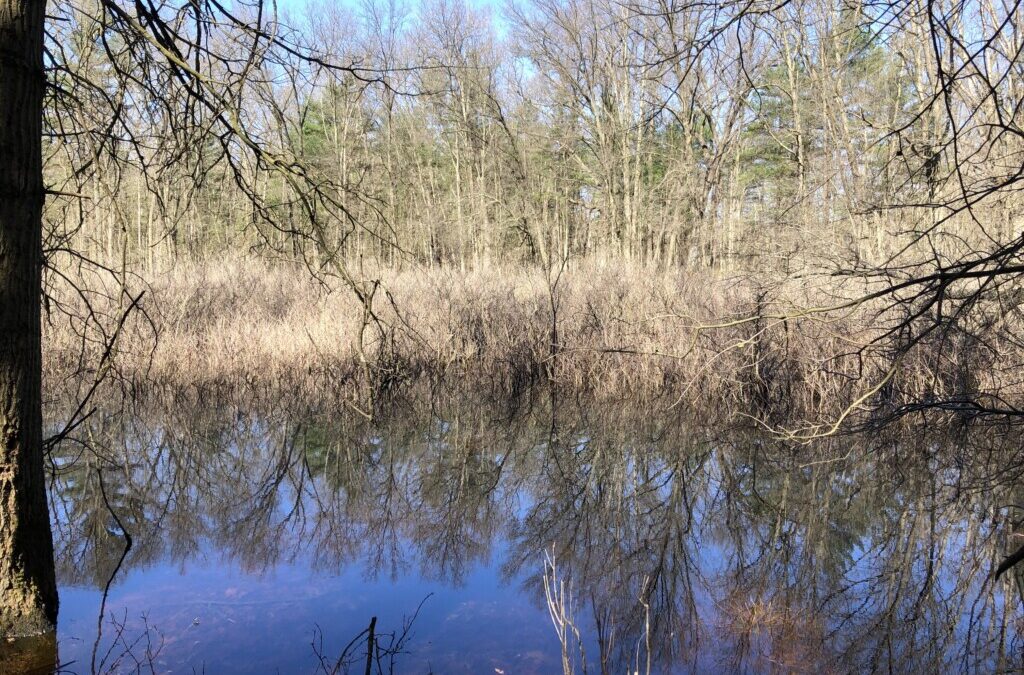
Early spring brings with it many profound changes to the landscape. As snowpacks begin to melt and early leaves emerge, a great unnoticed migration begins underneath our feet. Salamanders emerge from their hibernaculum during the first warm rainy night of the year. They make their slow, plodding way across the forest floor and over dangerous roadways. Looking for somewhere safe to lay their eggs, they converge in small forest ponds to mate.
Vernal pools are temporary wetlands that form from snowmelt and rainwater each spring. They may just look like puddles between the trees, but they’re a crucial part of our northern forest mosaic. As the rains slow and days grow warmer, the pools begin to dry up. A pool five feet deep in April may resemble a dry grass meadow in August. The ephemeral nature of these waterbodies is precisely why they are so important. No permanent water means no fish, and no fish means less predators. Because of the lack of fish, a complex ecosystem can thrive in these temporary worlds. Crustaceans, mollusks, insects, and amphibians use vernal pools as crucial breeding grounds and nurseries.
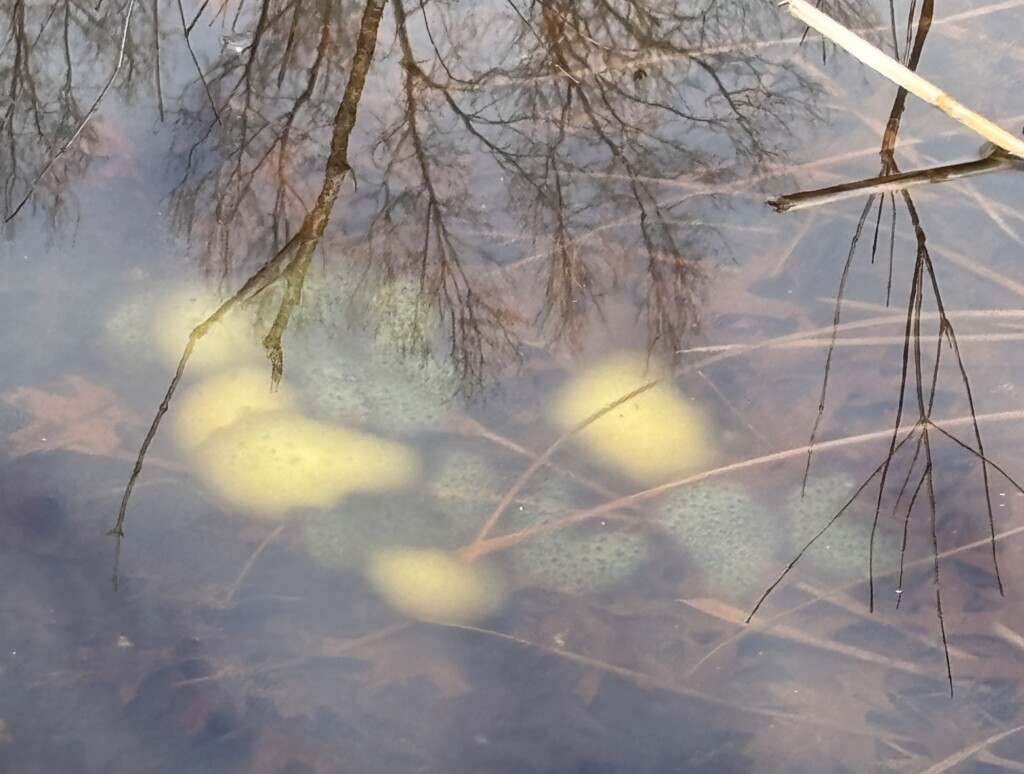
Stumble across a vernal pool on a sunny spring day in Michigan and the first thing you’ll likely notice is an overwhelming chorus of chuckling wood frogs. With a naturally produced sort of anti-freeze, wood frogs can survive further north than any other amphibians in the world, even thriving north of the Arctic Circle. Each spring, wood frogs will thaw and seek out somewhere to mate and lay their eggs, with some females laying over one thousand eggs in a year.
If you can still focus through the cacophony of frog calls and you look closely in the pool, you may find salamander egg masses. Spotted salamanders and blue spotted salamanders are the most common species to find in vernal pools in Michigan. The adults don’t hang around for long after mating, but their young will first develop through an aquatic lifestage similar to tadpoles. The eastern newt takes that development one stage further and metamorphoses back into an aquatic adult form after its terrestrial stage. Blue spotted salamanders are even more complicated. Unisexual, all-female, populations are known to reproduce through kleptogenesis, a process where they ‘steal’ DNA from the males of other salamander species.
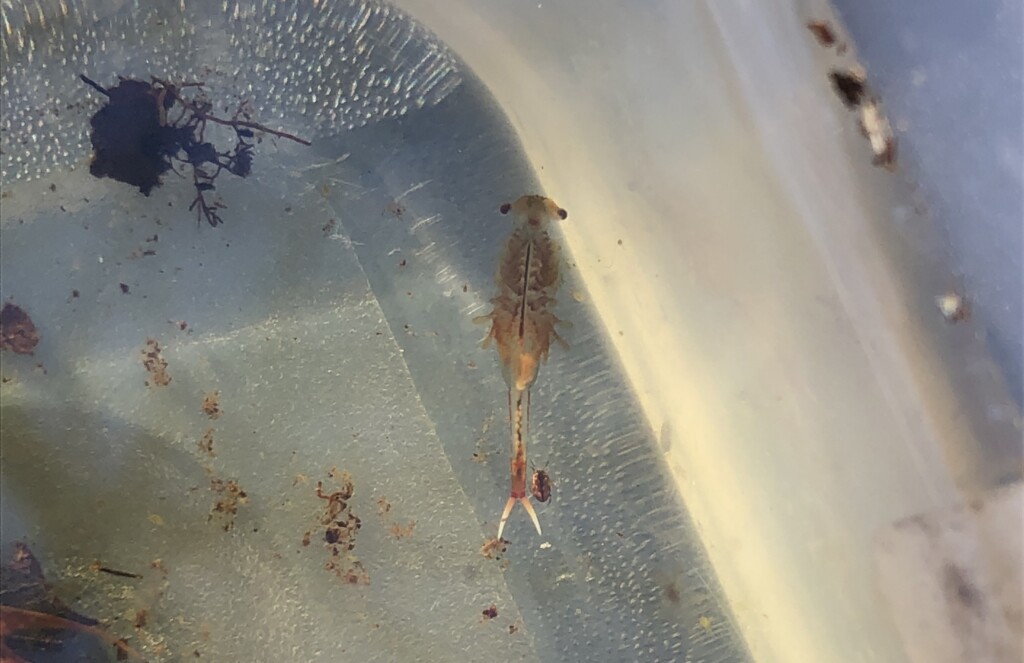
Perhaps the most exciting discovery when exploring a vernal pool is the abundance of invertebrates. Stare closely at seemingly barren leaf litter at the bottom of the pool and you’ll quickly notice an explosion of life. The larval stages of dragonflies, damselflies, and other insects act as predators in a rich miniature food web. Predaceous diving beetles can get large enough to even hunt tadpoles. Maybe the most charismatic of the invertebrates are the fairy shrimp. These small crustaceans are filter feeders that depend on the cyclical nature of vernal pools. Fairy shrimp eggs hatch in the spring as the pool fills with water. The adults swim, eat, lay their eggs, and die all in about a month. The eggs dry along with the pool over the summer, freeze in the winter, and then the next generation of fairy shrimp is born next spring. If the pool doesn’t fill up the next year, no problem. The eggs have been known to survive for decades out of the water.
These pools have been called the ‘coral reefs of the forest’ because of the wide range of biodiversity they support. Over 500 species of animals have been documented using vernal pools throughout the year in just the Northeastern United States alone. The fluctuating nature of vernal pools creates microhabitats that can support a myriad of plant species in what can be fairly homogenous forest systems. Different conditions support different species throughout the year in an ever changing cycle.
Because they are small and temporary, vernal pools often go unnoticed and fall between the cracks of wetland regulations. By Michigan law, wetlands that are connected to permanent waterbodies or are greater than five acres in size are protected. Vernal pools are by definition not connected to other waterbodies and are often quite small. Because they don’t fit the current regulations for protection, they are often filled in to create permanent ponds or drained and leveled by developers. Even well meaning land managers can log or burn within the pool’s basin while the pool is dry without ever knowing it was there. These wonderful ecosystems need our attention.
The next time you’re walking through the woods, take a moment to pause and really pay attention. Who knows what worlds you may find.

Nathan Hilbrands (’21) graduated with degrees in geography and environmental health and conservation. He is currently working for the Allegan Conservation District as a watershed technician. He enjoys collecting National Geographic issues that he rarely looks at again, playing disc golf a lot without improving, and trying new board games.


This was so good, Nathan! I knew what vernal pools were but not much else about them. I’ll be keeping a better eye out in the forest from now on.