
In August, we bring a set of new full-time writers to the blog. Today, please welcome Eleanor Lee (‘23), who will be writing for us on the 11th of each month. Eleanor graduated from Calvin with degrees in computer science and writing. She grew up in South Carolina but currently lives in Grand Rapids, Michigan. She loves coffee, laughing, and bringing emojis to the workplace.
As an insecure oldest daughter from a Christian home, I have a complex relationship with “acts of service.”
It all started long ago, in grade school, where I mingled uneasily with my classmates. I couldn’t figure out how to join their discussions of YouTube videos I hadn’t seen, or pop artists I wasn’t allowed to listen to. (I sang the KidzBop lyrics to more thematic songs way past society’s acceptable age range.) It seemed clear to me (perhaps due to the KidzBop incidents) that any odd social move leaves an opportunity for someone else—or the whole room—to start laughing at you. This risk was unbearable to my nine-year-old self.
So in a subconscious effort to guard against such humiliations, I trained my default reactions towards being nice. And quiet. Beyond reproach. In situations where I didn’t know how to act, I simply looked for something helpful to do. Because what would the other kids do—make fun of me for being a good person?
Thus began my Puritan coping mechanism. Classroom bunny’s cage needs changing? Pick me! Food needs to be set out? You got it. Pick up the basketballs after practice? For sure. Making conversation felt like jumping off the high dive, but I thrived on hearing compliments like: “She leads by example” “She’s so selfless” “She has such a servant’s heart.” These affirmations reassured me that I belonged in my various communities—that even if I couldn’t play sports or music or make friends especially well, I was doing something worthwhile and therefore I was worth including.
It wasn’t until I left high school, winded from years of giving my all to over half a dozen clubs and teams, that I began to wonder if this drive to be helpful—to feel needed?—was actually a crutch. Something propping up my self-esteem, which had long been too weak to stand on its own. And it wasn’t until I left college four years later—my schedule now crammed full of friends and events—that I began to wonder what it’d feel like to stop and ask myself if I really wanted to go the extra mile. To meet up for this hike, volunteer in this slot, give this person a ride, this time.
When I started asking myself those questions, it was unmooring. It’s eerie to peer into your mental depths to see what you really want, only to realize that your one motivation has been simply to be what you thought other people wanted. That there’s no baseline for your well-being that you’d protect. That your empathy and helping hand were not so much joyous, confident expressions of love as they were frantic reactions to the fear that your acts of service are the only worthwhile thing about you.
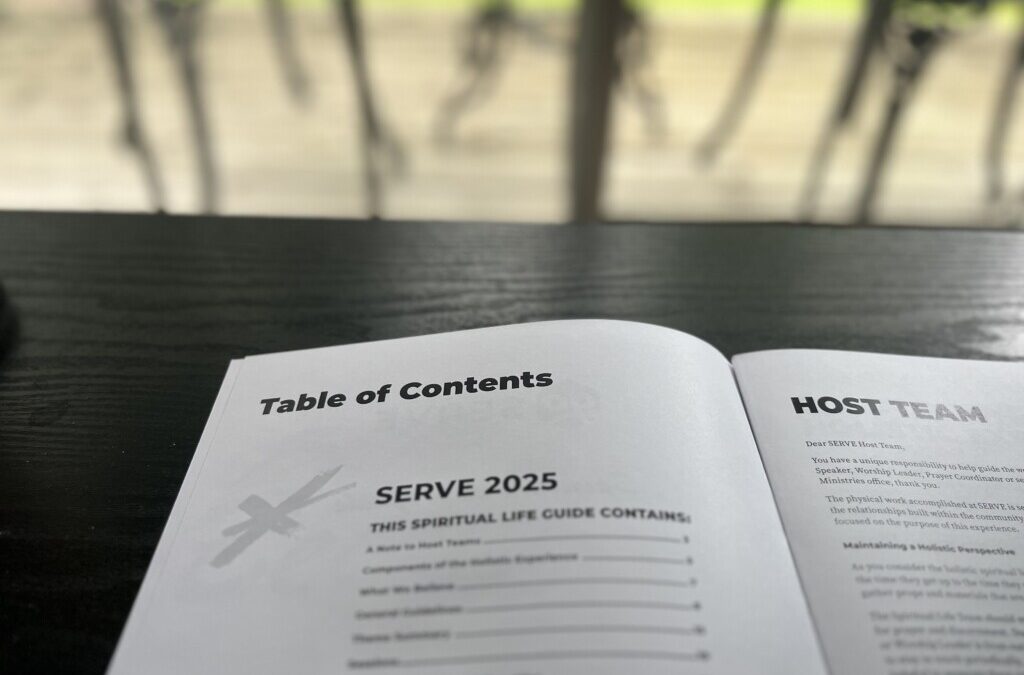
I’ve been reflecting on all this lately because I’m soon helping with a weeklong church camp (at the time of writing). To be honest, I’m kind of dreading it—the late nights, the hectic schedule, the pressure to encourage random high schoolers to grow in their faith. It seems like by my new metric of “what I really want,” saying “yes” to the SERVE week committee was an unhealthy decision. That if I don’t want to do SERVE, I have no business lending my time and energy to it.
Which could be true. But at the same time, I struggle with the idea that we aren’t obligated to help others when we don’t feel like it. What kind of world does that leave us in? I think trying to help in every situation—and taking full responsibility to find resolution—is different from recognizing when you have the capacity and the conviction to engage with something.
I also think of Esther and Ananias from the Bible. Neither of them particularly wanted to do what they’d been called to do. But still, they did—hopefully not because they had low self-esteem and couldn’t imagine saying no, but because they had hope that their actions would catalyze something much greater than themselves. Even when they weren’t sure what it was.
I don’t want to waste my energy trying to be “helpful enough” to convince myself I’m a good person. But I also don’t want to become someone who lends a hand only when she “feels like it.” I don’t feel excited about SERVE week, but I am hopeful. Hopeful to see what I—and everyone else involved—can learn through the complicated act of serving others.

Eleanor Lee (‘23) graduated from Calvin with degrees in computer science and writing. She grew up in South Carolina but currently lives in Grand Rapids, Michigan. She loves coffee, laughing, and bringing emojis to the workplace.



Eleanor! Welcome aboard. I enjoyed this first read (and resonated with it ever so slightly). Looking forward to the next one.
This is a very interesting read. Thank you.