
A few nights ago, I dreamed about breaking out of prison. Escaping from lock-up is astonishingly easy, it turns out, when wardens let you keep your purse, leave your car keys on their desk, and give inmates easy access to the concealing crowds of the prison gift shop. Since dream-me was still wearing street clothes, I just hid among the shoppers for a few minutes, then hustled out to my car, which waited conveniently in the prison parking lot. Completely unpursued, I took off on the East Beltline, heading north into the waiting night.
That’s when I woke up. As I lay in the predawn darkness, I contemplated my dream-self’s next move. My first instinct: to disappear. Cross the border into Canada, maybe. Start a new life. But reality kept creeping in, and I realized that if I ever get into trouble with the law, I’m doomed. I’m not savvy, not stealthy enough to fall off the radar. I don’t think I could make myself vanish.
In this world, we are tracked, monitored, verified. We know and are known. We complain about the NSA in lowered voices, as if government spooks might leap out of the next cubicle with handcuffs and hoods. If I tried to flee the country, I’d be thwarted at every turn by traffic cams and frozen accounts and phone taps. I’d fall. I’m sure of it.
So how, in our world of bar codes and ID cards and facial-recognition software, does anyone manage to disappear?
***
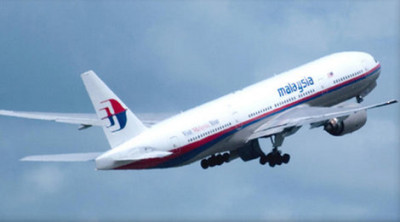
On March 8, a Malaysian airplane carrying 239 people left Kuala Lumpur, headed for Beijing. While crossing into Vietnamese airspace a mere hour after takeoff, the plane fell silent. Satellite tracking implies that the plane flew for another seven hours in an unknown direction after losing contact with air traffic control. And then…nothing. No wreckage, no black boxes, no hostage demands. The plane just vanished.
Authorities have gone over the situation with a fine-toothed comb. Police are digging into the pilots’ backstories. Planes and ships are plying a multi-nation-wide search area in hopes of finding a clue—any clue. In the past week, global news outlets have fixated on the missing plane, breathlessly conveying updates, conspiracies, and corrections.
For a day, the world believed that an ocean-surface oil slick came from the crashed plane (it didn’t). Next, Chinese satellites supposedly caught images of seaborne debris (they didn’t). Rumors hint that two passengers traveling on stolen passports hijacked the plane (they may have). Or maybe the plane is sitting on foreign tarmac in the hands of an oppressive and secretive regime (it could be). Perhaps aliens blasted the plane into another dimension (…sure).
Despite the lack of concrete developments, many Americans are riveted by the Malaysian enigma. How could something so hulking and so carefully tracked manage to slip through the global surveillance grid? It’s a passenger plane, for crying out loud, not a stealth jet. What good is all this technology—our GPS satellites, our naval cruisers, our sonar arrays and passport checks and aerial photographs—if it can’t produce real answers?
And without real answers, our imaginations are free to roam. By now, there is no best-case scenario. Even optimists are forced to hope that the plane has been hijacked, because that’s the only plotline in which the passengers could still be alive. Even so, we hold on. We pray for the families crowded into airports in Malaysia and China, waiting to hear if their loved ones will ever come home. Against the odds, we hope. And above all, we wonder.

Geneva Langeland (’13) survived graduate school with minimal blood loss, escaping with her ms in environmental policy and communication. She now works in Ann Arbor, Michigan, as the communications editor at Michigan Sea Grant. There, she gets to hang out with educators, researchers, and communicators who love the Great Lakes as much as she does.

