
In August, we bring a set of new full-time writers to the blog. Today, please welcome Emilyn Shortridge (’25), who will be writing for us on the 4th of each month. Emilyn spent her Calvin years studying English linguistics, Asian studies, and ministry leadership, and intends to finish her Asian studies program in Chiba, Japan in 2026. When at home in Plymouth, Michigan, she thrives anywhere near fantasy novels, houseplants, hot tea, or her calico cat Genie, but she plans to live and learn in many cultures before deciding which corner of the world needs her most.
Every year, my house is host to a different type of bug infestation. My mother describes it like a sort of insect “theme of the year.” The year we moved in, beads of red and orange bedecked several of the house’s doorknobs and windowsills, blanketed as they were with Japanese beetles. (My brother discovered that summer that they bite if provoked.) One year, flat brown stink bugs made a buzzing ruckus of the house; one year it was spiders (ick); another year fleas (they evidently decided people are as tasty as cats when you’re hungry); and this year it appears to be pantry moths, much to our chagrin as lovers of gluten and poorly sealed bags. What has troubled me most as of late, however, is the usual old ants.
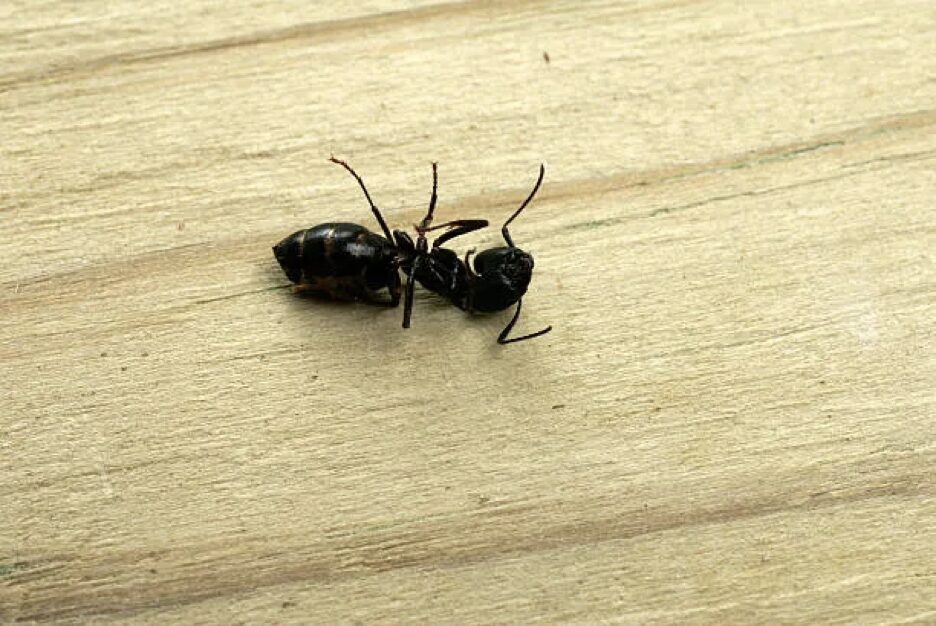
Several weeks ago, I stood in the bathroom staring at an ant on the wall, its three-portioned body and six thread-thin legs. It scrambled around the rugs and walls and mouthwash bottles at a frantic clip, fleeing from something that didn’t exist. Nothing and no one had so much as touched it to set it off so. It was then, as it scampered behind the sink mirror, that I realized I hate ants for their mindless wandering—meandering up legs, falling off ceilings, racing over hands typing at a laptop, crinkling around plastic garbage bags in the otherwise-quiet of night (unfortunately, I didn’t make this up). I hate ants for their determination and fearlessness. I hate them for their pervasiveness—there is no place on earth an ant will not go. And yet now I can confess that as of several days ago, I have watched an ant writhe in the sink as I washed dishes, and suddenly pictured myself as its caretaker. How nonchalantly I watched it drag itself out of each stray splash of water, my stare dull at its attempts not to drown. At least my mother had the sense to kill them. I didn’t want to. As it turns out, I would rather watch an ant die slowly and painstakingly on its own, even as a result of my own actions, than get my hands dirty ending its misery. A true picture of gentleness and love.
When I rinsed my last dish and the ant fell into the food trap, I plucked the trap up and stepped outside, emptying the ant and the scraps into the yard instead of the trashcan, and I wondered if this counted as benevolence. If the same God who made my cat also made these incorrigible ants, should I make more effort to be a good shepherd to the six-legged variety of Creation? But I can’t bring myself to allow bed bugs and mosquitoes to propagate on my blood, pantry moths on my cereal, or tapeworms on my pets. Ecosystems run on cycles of death, after all… but not usually cruelty. Perhaps it is simply my apathy to the ant that the Creator condemns most, and I shouldn’t twist myself into knots about insects as a whole, who outnumber humans a billion to one.
I don’t think this question is done metaphorically chewing at me (many bugs bite, but at least they don’t chew). When I’m kneeling in the garden pulling weeds, I still find myself saving hapless slugs and worms from my trowel, even as I hack up roots of plants that feed the animals that feed the soil that feeds the same slimy dirt bugs. They are disgusting and I somehow want to treat them well, as much as I’m able. I don’t know why some bugs are plagues and some keep us alive, but I think I’d rather try to care well where I can than assume it’s not important. Caring for the little things, after all, may someday translate to the bigger things when it matters.

Emilyn Shortridge (’25) spent her Calvin years studying English linguistics, Asian studies, and ministry leadership, and intends to finish her Asian studies program in Chiba, Japan, in 2026. When at home in Plymouth, Michigan, she thrives anywhere near fantasy novels, houseplants, hot tea, or her calico cat, Genie, but she plans to live and learn in many cultures before deciding which corner of the world needs her most.

