
Our theme for the month of June is “confessions.”
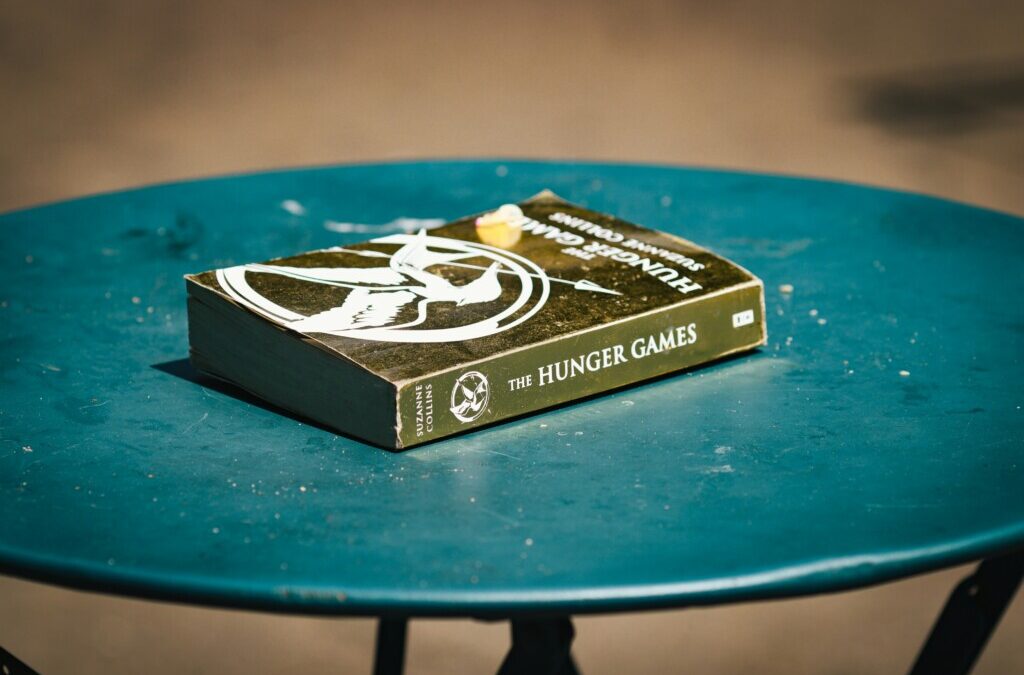
I started re-reading The Hunger Games in February. I did this for a few reasons, starting with childhood nostalgia and ending with a fascination for Suzanne Collins’ military brat childhood, but I found myself engrossed in this story of a teenage girl, the boy with the bread, and the dystopian messaging about romance and entertainment that reddit assures me is spot-on.
And I started wondering about this: is there any entertainment like the hunger games? Like, so close that it’s disturbing? Is there a show that starts with twenty-four-plus contestants that are whittled down to half by the end of the first night? Is there a show that places these contestants in a simulation of real life, where they explore completely unfamiliar surroundings in the haze one enters when they are constantly watched? A show where the audience roots for romances that will never come to fruition because of the very nature of the contest? A show where people are crucified for the camera, sometimes simply for “good TV”?
In March, when I was halfway through Catching Fire, I got home from a shift at Starbucks and tried to lay down for a nap. Couldn’t sleep—I hardly can when it’s daytime. I started flipping through streaming channels and lo and behold: the last episode of The Bachelor, season twenty-nine, had aired.
I guess you can tell where this is going.
I began to sit up straighter as the show—three hours long, no less—played before me, and when Caleb walked in the door from work, I was alive. I was watching these women get shamed or championed for their private living habits, their conversations, and their styles of kissing. I was watching this man get burned alive on screen by the women whom he had hurt, as if there was something deeply wrong with him that had caused their dismissal from the show, as if their chances had been better than one out of thirty-two to begin with. I watched as Dina attacked him for things he did or did not say during the brief simulations of alone time they had with him, as Sarafiena questioned his intentions, and as Carolina accused him of seeing through her.
Hours in, Caleb now sitting next to me and decompressing from work, Litia joins Jesse, the host, onstage. She starts out strong. She seems grateful for the experience, she wears a big smile, she’s respectful to Jesse and sweet with the crowd. But when Grant joins her onstage, things flip—back to the arena. She attacks his character, questioning his actions and his words and cutting him off when he tries to answer. She forces him into submission, and he quietly apologizes multiple times.
Caleb looked at me incredulously. “The audience is eating this up.” I nod. They are. They came to taste blood from the comfort of their normal, boring lives and plushy velvet seats.
Reader, as disturbed as I was, I have a confession: I watched every episode of this season.
I did it out of a sort of horrified fascination, which is, I guess, what a lot of entertainment feels like to me today. Rather than real loss of life, like in Collins’ series, I was watching the stretch and snap of twenty women’s emotional capacities, mitigated by a host with a smile that is too big and white to be real.
If The Hunger Games is physical death, The Bachelor is, at the very least, an emotional and social death. Why do I, then, join the masses of the Capitol for this Panem et Circuses?
I’m not sure I have a defense. Choosing to offer people like Litia and Juliana privacy when they have willingly signed off on it is not nearly as enticing as the entertainment itch that shows like The Bachelor or The Bachelorette scratch. There’s a part of me that wants to feel better about it because, unlike in The Hunger Games, these contestants are not forced onto the show, but I would also argue that a sex scene is pornographic regardless of contractual consent from the actors.
The internet, cable TV, and AI have made it so that the fabric of our loose relationships and internet friendships are built on this idea of authenticity that requires a level of vulnerability, “living your truth”, that should be meant only for those we can trust to speak wisely to it. It has become such that vulnerability now has an actor and an audience, rather than a confessor and a listener.
But I can’t look away, and neither can you, and so The Bachelor will run a thirth season next winter. When is it too much?
I guess that was Collins’ whole point.


